Quick Answer :
Modern Christmas tree decor combines coordinated color palettes, elegant ornaments, balanced lighting, and natural textures to create a stylish holiday display. Popular ideas include gold and champagne decorations, monochromatic white ornaments, black and gold accents, velvet ribbons, and Scandinavian-inspired wood details. Choose a style that complements your home, available space, and existing decorations for a beautiful, contemporary Christmas tree.
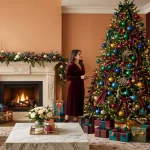
Modern Christmas tree decor is all about creating a festive display that feels stylish, balanced, and perfectly suited to your home. Whether you love elegant gold ornaments, minimalist white decorations, natural wood accents, or bold black and gold combinations, the right decorating choices can transform an ordinary Christmas tree into a beautiful holiday centerpiece.
The secret is to focus on a coordinated color palette, mix different ornament textures, and use lighting to create warmth and depth. You don’t need to purchase an entirely new collection of decorations to achieve a modern look. Even a few thoughtful changes to your existing ornaments, ribbon, and tree accessories can make a noticeable difference.
From elegant metallic finishes and Scandinavian-inspired designs to space-saving trees and personalized decorations, these modern Christmas tree ideas will help you create a festive look that complements your interior and makes your home feel special throughout the holiday season.
Choose a Simple, Coordinated Color Palette
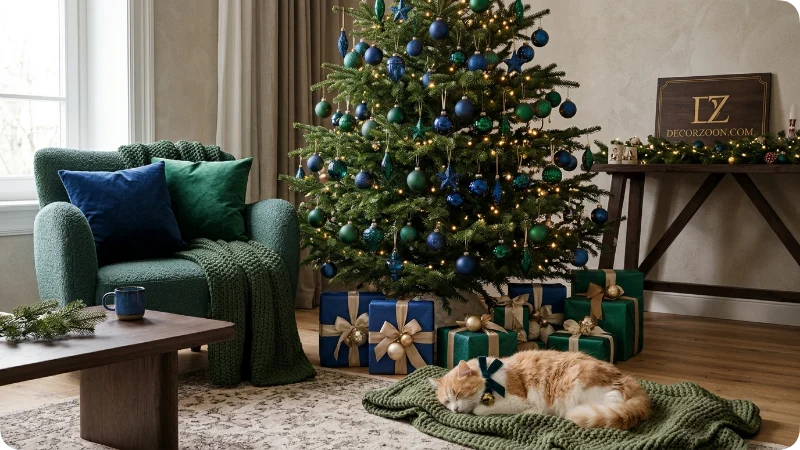
One of the easiest ways to create modern Christmas tree decor is to choose two or three complementary colors. A consistent palette helps different ornaments work together and makes the finished tree look intentional.
Consider these combinations:
- Cream, champagne, and warm white: Ideal for neutral living rooms and soft, understated styling.
- Black, gold, and deep green: A bold combination for contemporary interiors with darker accents.
- White, silver, and clear glass: Suitable for crisp, minimalist Christmas displays.
- Forest green, burgundy, and antique gold: A rich palette that gives traditional Christmas colors a more refined appearance.
- Wood, ivory, and muted sage: A natural combination for Scandinavian inspired homes.
Choose one dominant color, one supporting shade, and a third color for small accents. You can create visual interest by mixing matte, glossy, and textured ornaments within the same palette.
Avoid adding several unrelated colors simply because individual ornaments look attractive. A little consistency helps the tree complement the rest of your room.
Create a Monochromatic Christmas Tree
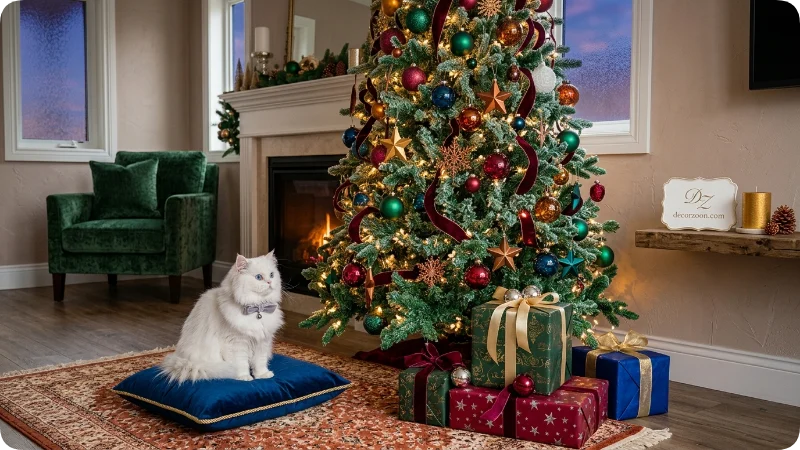
A monochromatic Christmas tree uses different shades and finishes of one main color. White, silver, ivory, and champagne are popular choices for a clean, contemporary appearance.
For example, combine ivory baubles, white ceramic ornaments, clear glass decorations, and warm white lights. The different textures prevent the tree from looking flat while keeping the overall design simple.
To create this look:
- Start with a green or flocked Christmas tree.
- Add larger ornaments throughout the branches.
- Fill gaps with smaller decorations in similar shades.
- Mix matte and reflective finishes for contrast.
- Finish with a simple topper and a neutral tree skirt.
A white and silver palette creates a cooler appearance, while cream and champagne introduce warmer tones. If your room already has white walls and pale furniture, a traditional green tree can provide a useful contrast.
Decorate With Gold and Champagne Ornaments
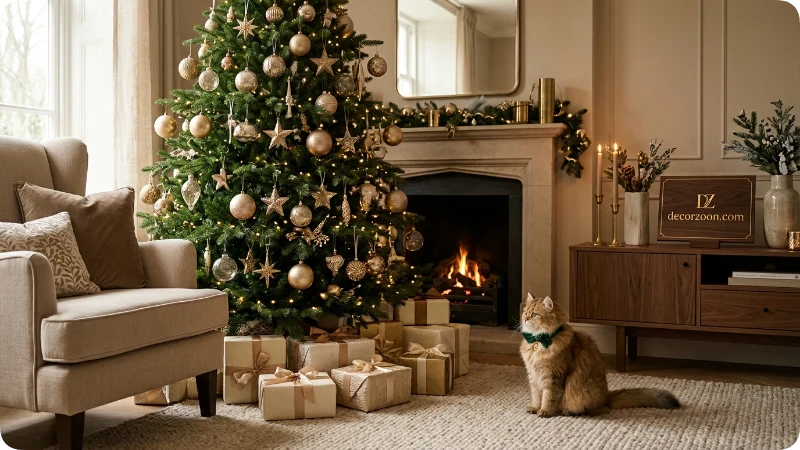
Gold and champagne decorations add warmth and reflected light without requiring an excessive number of ornaments. They work especially well with green trees, beige interiors, cream upholstery, and wooden furniture.
Combine brushed gold baubles with champagne glass ornaments and a few polished metallic pieces. Warm white lights help the reflective surfaces stand out without creating too much visual glare.
For a balanced arrangement, distribute the gold ornaments across the tree instead of clustering them in one area. Use larger pieces as focal points and smaller decorations to fill the spaces between them.
You can also introduce clear glass ornaments to soften the metallic appearance and allow the greenery to remain visible.
Best styling tip: If your room already has brass lamps, gold picture frames, or warm metal fixtures, repeat those finishes on the tree. This creates a connection between your Christmas decorations and your everyday interior.
Use Natural Wood and Neutral Decorations
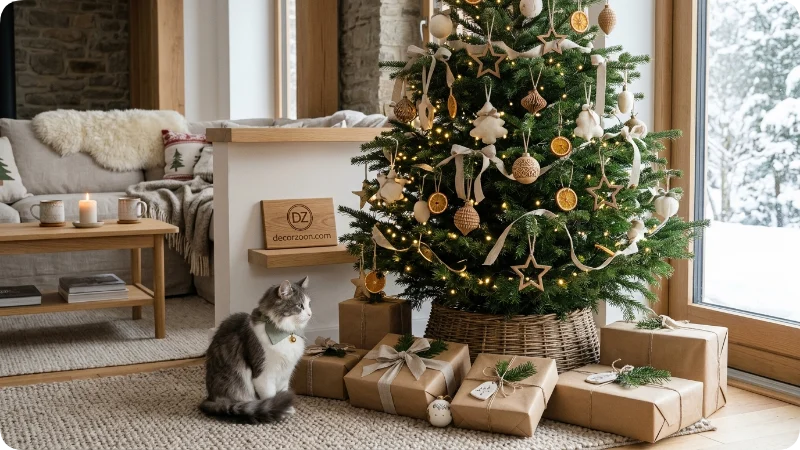
Natural materials offer a modern alternative to highly reflective ornaments. Wooden stars, paper decorations, linen ribbons, and simple ceramic pieces add texture without making the tree feel busy.
A Scandinavian inspired tree works particularly well with a green base, wooden ornaments, cream felt decorations, and warm white lights.
Choose a few ornament shapes and repeat them at different heights. This creates a consistent pattern without making every branch look identical.
You can also add muted sage or soft beige decorations to introduce subtle color. Keep garlands minimal and choose a linen tree skirt or woven collar to complete the arrangement.
This style is practical for anyone who wants decorations that can be reused for several years. Natural ornaments also pair easily with traditional decorations, so you can update an existing tree gradually.
Try a Black and Gold Christmas Tree
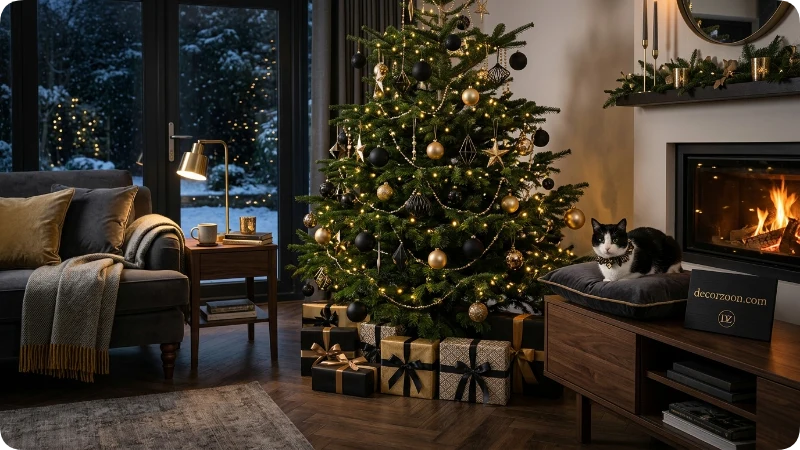
Black and gold ornaments create a striking contemporary look, especially when placed against deep green branches.
Start with matte black baubles and add gold stars, geometric ornaments, and a few clear glass pieces. The contrast between dark and reflective surfaces gives the tree definition.
This color combination works particularly well in rooms with black picture frames, dark furniture, or modern metal accents.
If your room is small or has limited natural light, use black ornaments selectively. Too many dark decorations can disappear into the greenery. Gold accents and warm white lights help maintain contrast.
A simple gold star or geometric topper completes the look without introducing another competing color.
Add Velvet Ribbon for Texture
Velvet ribbon can soften a modern Christmas tree and introduce movement between the branches. It is particularly effective when you want a tree to feel elegant without relying entirely on shiny ornaments.
Choose a ribbon color that supports your existing palette. Burgundy velvet pairs well with forest green and antique gold, while ivory ribbon suits neutral interiors. Black ribbon can reinforce a contemporary black and gold design.
Instead of wrapping ribbon tightly around the tree, try flowing vertical trails or a few oversized bows. Tuck the ribbon securely into the branches and distribute it evenly.
Wide ribbon creates a stronger visual statement, while narrow ribbon works well on slim trees or smaller displays.
If you use elaborate ribbon, keep the other decorations relatively simple. This allows the fabric to become a feature without overwhelming the tree.
Choose a Slim Tree for Small Spaces
A modern Christmas tree can look attractive without taking up much floor space. Slim and pencil shaped trees are useful for apartments, narrow living rooms, and corners where a wide tree would obstruct movement.
Measure the available space before choosing a tree. Remember to account for the stand, topper, and branches that extend beyond the central trunk.
For a small tree, use a limited color palette and ornaments that suit the size of the branches. Oversized decorations can overwhelm a compact display, while too many tiny ornaments may make it look cluttered.
Consider these combinations:
- A slim green tree with champagne ornaments and warm white lights.
- A narrow flocked tree with white and clear glass decorations.
- A small natural tree with wooden stars and neutral paper ornaments.
Position the tree where it remains visible without blocking a doorway or frequently used walkway. If floor space is extremely limited, a tabletop Christmas tree can provide a festive focal point on a stable side table or console.
Use Lighting to Create Depth
Lighting is an essential part of modern Christmas tree decor. It highlights the ornaments, adds dimension to the branches, and helps establish the atmosphere of the room.
Warm white lights suit gold, cream, wood, and deep green decorations. Cool white lights work well with silver, white, and icy blue palettes.
For a more balanced result, distribute the lights from the inner branches toward the outer tips rather than placing every bulb along the surface.
Follow these steps:
- Add the lights before hanging ornaments.
- Work from the top of the tree downward.
- Distribute the strands evenly around the visible sides.
- Place reflective ornaments where they can catch the light.
- Check the finished arrangement from different viewpoints.
Choose lights that are appropriate for your tree and follow the manufacturer’s safety instructions. Inspect the wiring before use and keep decorations away from heat sources.
Finish With a Simple Tree Topper and Base
The topper and tree base help make the overall display feel complete. Choose them to complement the ornaments rather than compete with them.
A metal star works well with metallic decorations, while a wooden topper suits natural materials. A restrained bow is a good option when ribbon already plays an important role in the design.
For the base, consider a neutral fabric skirt, a woven collar, or a simple metallic finish. The right choice depends on your tree’s size and the materials already used in the room.
A large collar may overwhelm a small tree, while an undersized skirt can look disproportionate beneath a wide display.
Make sure the stand remains stable and accessible, especially if you have a real tree that requires watering. Keep fabric, paper, and other decorations clear of electrical components.
Combine Modern Decorations With Personal Ornaments
A modern Christmas tree does not need to look perfectly matched. Family keepsakes, handmade ornaments, and decorations collected during trips can add personality while allowing the rest of the display to remain coordinated.
Start with a few meaningful ornaments and identify the colors they contain. Then choose supporting decorations that complement those colors.
If your personal ornaments are colorful, use neutral baubles or metallic accents to create visual balance. If they feature traditional red and green, repeat those colors in a few additional pieces rather than introducing several unrelated shades.
Spread meaningful decorations throughout the branches instead of grouping them all in one place. This makes them part of the overall design.
The result is a contemporary Christmas tree that feels personal without sacrificing a cohesive appearance.
How to Choose the Best Modern Christmas Tree Style
Your preferred style should work with your room, available space, and existing decorations.
| Style | Recommended Colors | Best For |
| Monochromatic | White, ivory, silver | Minimalist interiors |
| Metallic | Champagne, gold, green | Warm, elegant living rooms |
| Scandinavian | Wood, cream, sage | Natural, simple interiors |
| Black and gold | Black, gold, deep green | Contemporary spaces |
| Velvet ribbon | Burgundy, ivory, forest green | Soft, decorative styling |
| Small space modern | One or two coordinated colors | Apartments and compact rooms |
| Personal contemporary | Existing family colors with neutral accents | Homes with sentimental ornaments |
You can combine two styles when their colors and materials complement one another. For example, wooden ornaments and champagne baubles can work together on a green tree, while white decorations and natural ribbon can create a softer minimalist display.
The important thing is to choose one main direction and let the other details support it.
Common Modern Christmas Tree Decorating Mistakes to Avoid
Small adjustments can make a noticeable difference to the finished display.
- Using too many colors: Reduce the palette to a few complementary shades.
- Choosing ornaments that are all the same size: Mix large, medium, and small pieces for better visual balance.
- Covering every branch: Leave some greenery visible so the tree retains its natural shape.
- Ignoring the room’s existing colors: Coordinate the decorations with your furniture, textiles, and lighting.
- Adding too many statement pieces: Choose one main feature, such as oversized ribbon or metallic ornaments.
- Forgetting the tree base: Use a skirt or collar that suits the size and style of the tree.
- Buying decorations before planning: Decide on your palette and overall look before purchasing additional pieces.
You do not need to replace your entire collection to refresh your Christmas tree. Rearranging ornaments, changing the ribbon, or improving the lighting can create a more contemporary result with minimal expense.
Frequently Asked Questions
What colors are best for modern Christmas tree decor?
White, ivory, champagne, gold, silver, black, forest green, and burgundy all work well. Choose a dominant shade, a supporting color, and a small accent color that complements your interior.
How can I make my Christmas tree look modern without buying new decorations?
Group your existing ornaments by color, remove pieces that do not fit the chosen palette, and distribute the remaining decorations more evenly. Changing the ribbon or tree skirt can also refresh the appearance.
Are flocked Christmas trees suitable for modern decor?
Yes. Flocked trees pair well with white, silver, clear glass, and natural wood ornaments. Champagne and cream decorations are good alternatives if you prefer a warmer color scheme.
How do I decorate a small Christmas tree in a modern style?
Choose a slim or tabletop tree, limit the number of colors, and select appropriately sized ornaments. Warm white lights and a simple topper can make a small display feel complete without taking up too much space.
Should modern Christmas tree ornaments match exactly?
No. They should coordinate rather than match perfectly. Combining matte and glossy finishes, different shapes, and a few personal decorations creates variety while maintaining a unified appearance.
Conclusion
Modern Christmas tree decor is about balancing color, texture, lighting, and ornament placement. If you prefer monochromatic white decorations, warm metallic accents, natural wood details, or bold black and gold ornaments, choosing a clear design direction makes decorating easier.
Start with the colors already present in your home, select ornaments that complement one another, and leave enough space for statement pieces to stand out.
You can create a contemporary look with a new tree or simply rearrange decorations you already own. By focusing on proportion, consistent lighting, and thoughtful finishing details, you can create a Christmas tree that feels personal, polished, and suited to your living space.

Sophia Bennett is a passionate Home Decor Enthusiast and Content Writer at DecorZoon.com. She shares well-researched content on home decor, interior design, decorating trends, DIY ideas, and space-styling inspiration, helping readers create beautiful, functional, and stylish living spaces. Through practical tips and creative insights, Sophia makes it easier for homeowners and decor lovers to transform their homes with confidence and style.