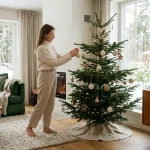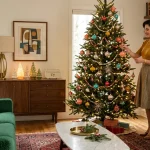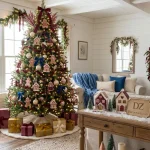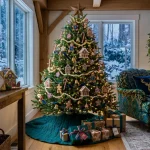
Minimalist Christmas tree decor is about making a tree feel festive without covering every branch in ornaments, ribbons, and glitter. With a restrained color palette, thoughtful lighting, and a few well chosen decorations, you can create a Christmas tree that feels intentional and fits naturally into your home.
The key is to choose a clear decorating direction before you begin. You might prefer warm white lights and natural wood, a modern black and white palette, soft cream ornaments, or a simple tree with almost no decorations. Each approach can work beautifully when the colors, materials, and proportions feel connected.
These minimalist Christmas tree decorating ideas focus on practical ways to achieve the look, whether you’re decorating a full size evergreen, a small apartment tree, or a tabletop display.
Let Warm White Lights Take Center Stage
If you want the simplest possible Christmas tree, start with lighting. Warm white lights highlight the natural shape of the branches and provide enough seasonal detail that you may not need many ornaments.
Choose a consistent light color rather than mixing warm white, cool white, and multicolored strands. Warm white generally pairs well with wood furniture, cream textiles, beige walls, and traditional evergreen branches. Cool white can work better in a room with crisp white finishes, silver accents, or a distinctly contemporary palette.
How to style it:
- Begin near the trunk and work outward so the light reaches different depths of the tree.
- Distribute the strands evenly from the lower branches to the top.
- Step back and check for dark patches before adding ornaments.
- Leave some branches uncovered so the tree’s natural silhouette remains visible.
This approach works particularly well when your living room already has artwork, patterned upholstery, or other visual details competing for attention.
Use lights designed for Christmas trees, inspect cords before decorating, and switch them off when leaving home or going to sleep.
Create a Neutral Christmas Tree With Cream and Beige Ornaments
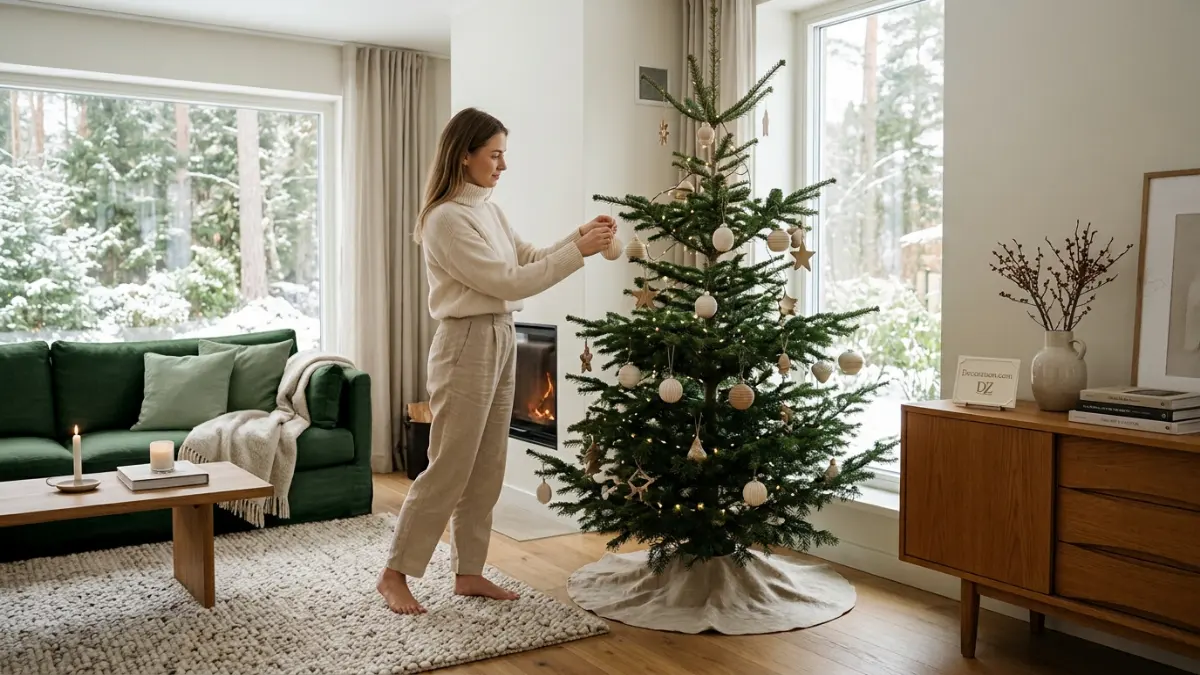
A neutral Christmas tree offers a softer alternative to traditional red and green decorations. Cream, ivory, beige, and natural wood create a restrained palette while allowing the greenery to remain the main feature.
The secret is to vary the finishes rather than adding more colors. Combine matte cream baubles with a few wooden ornaments and a linen tree skirt. If every decoration has the same smooth finish, the tree may look flat, so use subtle differences in texture and shape.
For a balanced arrangement:
- Use cream as the dominant ornament color.
- Add beige or light wood for warmth.
- Repeat a few shapes throughout the tree instead of mixing unrelated designs.
- Keep the tree topper and base within the same color family.
A neutral palette works well with Scandinavian inspired interiors, light wood furniture, natural rugs, and rooms that already use earthy colors.
Avoid adding several metallic finishes just to create contrast. One small brass accent can be enough if the room needs a little shine.
Choose Natural Wood Ornaments for an Organic Look
Wooden ornaments bring texture to a minimalist Christmas tree without introducing a busy color scheme. Small stars, simple geometric shapes, wooden beads, and unfinished wood decorations all complement green branches.
This style is especially useful if you want a tree that feels natural rather than polished or glamorous. It also works with woven baskets, oak furniture, jute rugs, and other materials commonly found in relaxed interiors.
How to make the look cohesive:
Choose one main wood tone, or combine light and medium wood in a controlled way. Hang the larger ornaments closer to the center of the tree and use smaller pieces toward the outer branches. This adds depth without making the silhouette feel crowded.
A short wooden bead garland can connect the decorations visually, but it isn’t essential. If the ornaments already repeat a similar shape and material, leave the garland out.
For homes with pets or young children, check that the ornaments are securely attached and avoid small, detachable pieces within easy reach.
Decorate With Matte White Ornaments
White ornaments create a clear contrast against green branches while keeping the overall design simple. Matte finishes are particularly useful when you want a quieter appearance than a tree covered in reflective glass or shiny plastic.
Start with one or two ornament sizes. Larger white baubles establish the main pattern, while smaller pieces help fill isolated gaps. Leave enough space between decorations for the branches to remain visible.
This idea suits modern interiors, neutral living rooms, and spaces with white walls or pale upholstery.
To prevent the tree from looking too stark, introduce one warm element, such as a natural linen skirt, wooden ornaments, or warm white lights. If your room already uses cool grays and silver, keep the white crisp and the accents restrained.
White ornaments can disappear against a heavily flocked tree. For that combination, use transparent glass, natural wood, or a darker accent to create enough separation between the decorations and the branches.
Use a Single Metallic Accent
Metallic ornaments can add definition to a minimalist tree without making it feel overly decorative. The key is to choose one metal and repeat it deliberately.
Brushed brass and muted gold add warmth, while silver and chrome suit cooler, more contemporary interiors. Matte black can also work as a strong accent against green branches, particularly in a room with black frames, dark furniture, or graphic artwork.
Rather than mixing several competing finishes, use one dominant metal for the ornaments and topper.
For example, a green tree with warm white lights, carefully spaced brass accents, and a plain cream tree skirt can look complete without garland or oversized decorations.
The exact number of ornaments depends on the tree’s size and shape. Judge the result from across the room, not just when standing beside the branches.
Keep the Tree Bare for a Sculptural Look
A completely undecorated Christmas tree can be an intentional design choice. Its branching pattern, natural variation, and evergreen color become the main attraction.
This works best with a tree that has a pleasing silhouette. An open, naturally shaped tree may look more interesting without ornaments than a densely packed tree with little visible variation between branches.
To make the display feel finished, pay attention to placement and the base. Set the tree beside a window, against a relatively quiet wall, or near simple furniture that won’t compete with its outline. Cover the stand with a plain fabric skirt or use an appropriately sized decorative collar.
There is no need to add decorations simply because the tree looks different from a traditional Christmas tree. If the room feels balanced and the tree reads as a deliberate focal point, the design is doing its job.
However, a bare tree can appear unfinished against a visually busy background. Before adding ornaments, try changing its position or clearing the surrounding area.
Add One Simple Ribbon or Oversized Bow
Ribbon provides movement and softness without requiring a large collection of ornaments. For a minimalist tree, choose one ribbon material and use it selectively.
Linen and cotton ribbon suit natural, understated interiors. Velvet adds a richer texture, while narrow satin ribbon offers a cleaner, more polished finish.
You can use the ribbon in two ways:
- Individual bows: Place a few matching bows at visually balanced points on the tree. This creates distinct accents without adding a continuous pattern.
- One loose ribbon strand: Weave a single strand through selected branches, leaving generous gaps rather than wrapping it tightly around every layer.
Keep the ribbon color connected to the rest of the room. Cream, muted green, warm brown, or a subdued metallic tone can work well depending on the furniture and lighting.
Avoid using several ribbon widths, patterns, and colors at once. That approach can make a simple tree look busier than intended.
Use Clear Glass Ornaments to Preserve the Open Space
Clear glass ornaments are useful when you want decorations that catch the light without introducing much additional color. Their transparency helps maintain the visible space between branches, making them a natural choice for a sparse or lightly decorated tree.
Choose simple spherical ornaments for a consistent look. A few elongated glass shapes can add variety, but use them sparingly so the tree doesn’t become a collection of unrelated forms.
Position some ornaments closer to the trunk and others near the outer branches. This creates depth and allows the lights to reflect from different points.
Clear ornaments work particularly well with green trees, warm white lighting, silver accents, and restrained neutral palettes.
If you have children or pets, consider shatter resistant transparent ornaments instead of fragile glass. The visual effect can be similar, with less concern about breakage.
Choose a Slim Christmas Tree for a Small Room
Minimalist Christmas tree decor is particularly practical in apartments, small living rooms, and spaces where a full width tree would obstruct furniture or walkways.
A slim tree reduces the footprint without sacrificing much height. Choose a simple decoration scheme that emphasizes its vertical shape rather than adding bulky garlands that extend beyond the branches.
For a small space, try this combination:
- A slim green tree with warm white lights.
- A handful of cream or wooden ornaments.
- A compact topper, or no topper at all.
- A narrow fabric skirt or fitted tree collar.
Before buying a tree, measure the available floor space, including room for the stand and branches. Check the height against the ceiling and leave enough clearance for any topper.
Place the tree where it remains visible from the main seating area without blocking a doorway, heating vent, or frequently used route through the room.
A tabletop tree can be an even better option if floor space is limited. Choose a stable surface and keep the decorations proportionate to the smaller branches.
Try a Scandinavian Inspired Christmas Tree
A Scandinavian inspired tree combines simple forms, natural materials, and a restrained palette. Rather than relying on elaborate decorations, it uses the contrast between evergreen branches, pale ornaments, wood, and warm light.
A practical combination includes white paper stars, small wooden decorations, warm white lights, and a plain woven basket or neutral fabric skirt. You can also leave some branches undecorated to preserve the tree’s natural outline.
The materials should work together without all looking identical. Paper creates a lightweight, matte finish; wood introduces visible grain; and greenery provides the strongest natural color.
This style suits rooms with light wood floors, simple furniture, neutral textiles, and uncluttered surfaces. It can also work in a more traditional home if you repeat the same materials in a few nearby accessories.
Avoid adding every natural looking material you own. One or two repeated materials will usually create a stronger visual connection than a mixture of wood, burlap, dried fruit, berries, and several garlands.
Make a Minimalist Flocked Christmas Tree
A flocked Christmas tree already has a distinctive appearance because its pale branches provide built in texture and contrast. For that reason, it often needs fewer additional decorations than a plain green tree.
Clear glass, natural wood, matte white, and a small number of metallic ornaments can all complement the snowy finish. Choose the combination according to the rest of your room rather than treating every flocked tree as a silver and white display.
For a warmer look, use wood and cream accents. For a cooler modern look, choose clear ornaments and restrained silver details.
Keep the lights consistent so the flocking doesn’t compete with multiple light colors. Also check the manufacturer’s care instructions, especially if you’re using an artificial flocked tree.
The main mistake is covering the tree with dense garlands and oversized decorations. These hide the branch texture that makes the flocked finish distinctive in the first place.
Create a Natural Tree With Pinecones and Paper Decorations
Pinecones and paper ornaments create a simple, nature inspired Christmas tree without relying on shiny baubles or elaborate decorations.
The combination works because the materials provide different textures. Pinecones add an earthy brown tone, while paper stars or folded paper ornaments introduce a lighter visual element.
Keep the arrangement controlled. Repeat a few paper shapes throughout the branches and use pinecones as secondary accents. If you want to add a third material, unfinished wood is a natural fit.
This style is useful if you already have craft supplies or want to reuse decorations from previous Christmases. You can also make lightweight paper ornaments in a consistent size and shape for a coordinated appearance.
Use clean, completely dry pinecones and secure every decoration properly. Keep paper and other combustible materials away from hot bulbs, candles, fireplaces, and other heat sources. For a real tree that has become dry, avoid adding extra flammable decorations.
Choose a Minimalist Christmas Tree Topper
A tree topper can provide a clear finishing point without adding another layer of decoration. In a minimalist design, one well chosen star, a small bow, or a simple geometric shape is usually enough.
Match the topper to the tree’s existing materials. A wooden star suits a natural tree, a plain white star complements a neutral palette, and a restrained metal topper works with metallic ornaments.
Proportion matters more than ornament count. A heavy or oversized topper can bend the top branch and make a small tree appear unbalanced. Choose a lightweight piece that can be attached securely.
You can also leave the tree without a topper. This works particularly well with naturally irregular trees, low ceilings, and displays where the tree’s shape is the main attraction.
Before adding one, step back and look at the upper third of the tree. If the branches already form a strong silhouette, an extra focal point may not improve the design.
Finish With a Simple Tree Skirt or Collar
The base of the tree affects how the entire display looks. Even a sparsely decorated tree can feel unfinished if the stand, water reservoir, or loose cords remain visible.
A plain linen skirt creates a soft edge around the base. A woven basket style cover adds natural texture, while a simple metal collar gives the tree a more structured appearance.
Choose the base according to the rest of the design:
- Linen or cotton: Best for soft, neutral interiors.
- Woven material: Best for natural wood, earthy colors, and organic textures.
- Metal collar: Best for contemporary spaces with clean lines.
- Plain reusable fabric: Best for a low cost approach using materials you already own.
Check that any collar or basket fits around the stand without interfering with watering a real tree. Never place fabric or a decorative cover where it could obstruct a water reservoir or conceal a spill.
Avoid piling wrapped gifts, oversized ornaments, and extra decorations around the base simply to fill empty space. A clear area around the tree can be part of the minimalist look.
How to Choose the Right Minimalist Christmas Tree Style
Different minimalist looks suit different homes. Before buying decorations, decide whether you want the tree to feel warm and natural, crisp and modern, or almost undecorated.
| Style | Best color palette | Key decorations | Best suited to |
| Warm and natural | Green, wood, cream | Wooden ornaments, pinecones, warm lights | Earthy interiors and traditional homes |
| Soft neutral | Ivory, beige, green | Matte baubles, linen skirt | Light, neutral living rooms |
| Modern metallic | Green, brass or silver | Simple metallic ornaments, warm lights | Contemporary furniture and clean lines |
| Scandinavian inspired | Green, white, pale wood | Paper stars, wood shapes, woven base | Simple interiors with natural materials |
| Bare and sculptural | Natural green | Few or no ornaments | Rooms with space to feature the tree’s shape |
| Minimalist flocked | White, cream, clear | Glass look ornaments, restrained metallic accents | Pale, modern interiors |
These are starting points rather than strict rules. If your living room already has dark furniture, for example, a pale tree with clear ornaments may offer useful contrast. If the room is mostly white, a natural green tree with wood accents can provide a stronger focal point.
How to Decorate a Minimalist Christmas Tree Without Overdoing It
The easiest way to keep a minimalist tree cohesive is to decorate in stages rather than hanging everything at once.
Step 1: Choose your color palette. Start with the tree’s natural green or flocked finish, then select one or two supporting colors. Use the room’s existing furnishings as a guide.
Step 2: Position the tree. Check its shape from the doorway and main seating area. Move it away from a visually busy background if the branches are difficult to see.
Step 3: Add the lights. Use one consistent light color and distribute it evenly through the branches. Test the lights before adding ornaments.
Step 4: Decorate the base. Fit the skirt or collar before the tree becomes difficult to reach. Make sure it doesn’t interfere with stability, cords, or watering.
Step 5: Place the main ornaments. Start with the largest decorations, spacing them across the tree rather than clustering them in one area. Use the same shape or material more than once to create visual rhythm.
Step 6: Add one finishing detail. A ribbon, topper, bead strand, or a few natural ornaments can complete the design. You don’t need all four.
Step 7: Edit the result. Step back, view the tree with the lights on, and remove any decoration that introduces an unnecessary color or competes with the main focal point.
The stopping point is important. If the tree already has a clear palette, balanced lighting, and a recognizable shape, additional ornaments may make the composition less effective rather than more complete.
Common Minimalist Christmas Tree Decorating Mistakes
Minimalist decorating is simple in appearance, but a few small decisions can affect the result.
- Using too many colors: A collection of unrelated colors can make the tree look busy. Choose a limited palette and repeat it consistently.
- Choosing ornaments that are too small: Tiny decorations may disappear against a large tree. Use a few appropriately sized pieces instead of filling every gap.
- Leaving lights unevenly distributed: Dark areas can make a sparse tree look accidental. Check the light placement before adding ornaments.
- Removing too much without considering the background: A nearly bare tree can look unfinished if the surrounding area is cluttered. Adjust the placement or simplify the nearby decor.
- Mixing competing finishes: Several metallic colors, glittery pieces, patterned ribbons, and natural materials can create visual noise. Choose one main finish and add other materials only when they contribute something distinct.
- Ignoring the tree’s proportions: A large topper or bulky garland can overwhelm a small tree. Scale decorations to the height and width of the branches.
- Buying new decorations before editing old ones: You may already own enough pieces to create a cohesive design. Sort existing ornaments by color, material, and shape before shopping.
The goal isn’t to make the tree as empty as possible. It’s to make each decoration contribute to a clear, balanced appearance.
Frequently Asked Questions
What is minimalist Christmas tree decor?
Minimalist Christmas tree decor uses a limited color palette, carefully selected ornaments, simple lighting, and open space between decorations. The aim is to create a festive tree that looks balanced without relying on excessive ornamentation.
How do you make a minimalist Christmas tree look full without adding too many ornaments?
Start with a tree that has a balanced branch structure, arrange lights at different depths, and distribute ornaments evenly. If the tree still looks unfinished, consider improving the lighting or adding a few larger ornaments rather than filling every gap.
What colors work best for minimalist Christmas tree decor?
Green and cream, white and natural wood, beige and brown, and green with one metallic accent are useful combinations. Choose colors that complement your room, and repeat them consistently throughout the tree.
Can you decorate a minimalist Christmas tree on a budget?
Yes. Begin with decorations you already own, then select pieces that share a color or material. A simple strand of lights, a few matching ornaments, and a reusable fabric tree skirt can be enough to create the look without buying a new set of decorations.
Does a minimalist Christmas tree need a topper?
No. A simple star, a small bow, or a lightweight geometric ornament can provide a finishing point, but leaving the top bare is also a valid design choice. Let the tree’s natural shape and overall proportions guide the decision.
How do you decorate a small Christmas tree in an apartment?
Choose a slim floor tree or a tabletop tree that fits the available space. Use warm white lights, a few proportionate ornaments, and a compact base treatment. Keep walkways clear and make sure the tree is stable.
Conclusion
Minimalist Christmas tree decor shows that a beautiful holiday display doesn’t require layers of garland, dozens of ornaments, or an elaborate color scheme. Start with a clear direction, If that’s natural wood and greenery, soft neutral ornaments, understated metallic accents, or warm white lights on their own.Pay attention to the tree’s shape, the proportions of each decoration, and how the finished display fits into your room.
Before buying anything new, sort through your existing decorations and keep only the pieces that support your chosen look. A carefully edited tree can feel festive, personal, and complete while leaving plenty of space for the natural branches to stand out.

Sophia Bennett is a passionate Home Decor Enthusiast and Content Writer at DecorZoon.com. She shares well-researched content on home decor, interior design, decorating trends, DIY ideas, and space-styling inspiration, helping readers create beautiful, functional, and stylish living spaces. Through practical tips and creative insights, Sophia makes it easier for homeowners and decor lovers to transform their homes with confidence and style.