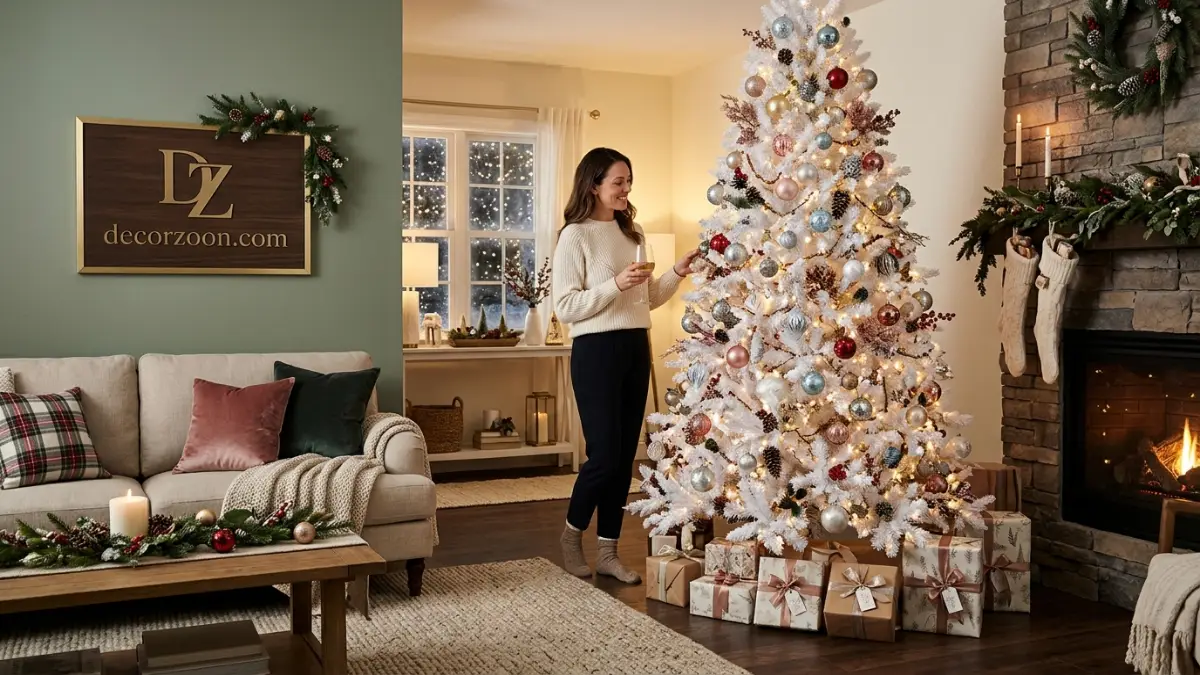
Quick Answer :
White Christmas tree decor is a beautiful way to create an elegant and festive holiday display. Decorate your white tree with silver and gold ornaments, classic red baubles, blush pink ribbons, icy blue accents, or natural wooden decorations. You can also try an all-white theme, rustic textures, or colorful jewel tones. Choose a balanced color palette, mix different ornament finishes, and use suitable lighting to make your Christmas tree stand out.
A white Christmas tree can turn any room into a beautiful and festive holiday space. Its bright branches create the perfect background for elegant silver ornaments, warm gold decorations, classic red baubles, and soft blush pink accents. You can also try icy blue details, natural wooden ornaments, or colorful jewel tones to create a style that matches your home.
If you love a modern minimalist look, a cozy rustic theme, or a glamorous winter wonderland, there are plenty of ways to decorate a white Christmas tree. The secret is choosing complementary colors, mixing different textures, and placing ornaments carefully so every detail stands out. These white Christmas tree decor ideas will help you create a coordinated and beautiful holiday display.
Create an Elegant White and Silver Christmas Tree
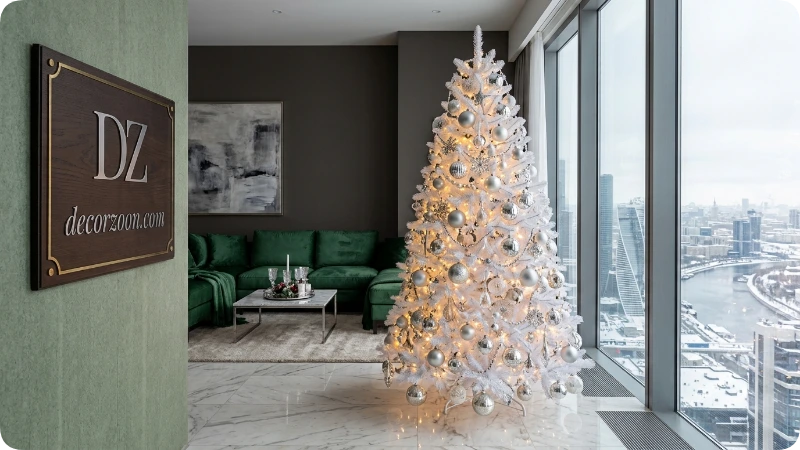
A white and silver Christmas tree creates a refined winter look without relying on lots of bright colors. Silver reflects the tree lights, while clear glass ornaments add sparkle without making the branches look crowded.
Start with silver baubles in a mixture of matte, polished, and glitter finishes. Add clear glass drops, delicate snowflakes, and a few pearl ornaments to introduce different shapes and textures. Warm white lights can soften the cool metallic tones, while cool white lights create a sharper, icy effect.
For a balanced arrangement:
- Place larger silver ornaments closer to the trunk to create depth.
- Hang clear glass drops near lights where they can catch reflections.
- Use a silver or white star topper to finish the design.
- Choose a simple white tree skirt or brushed silver collar to keep the base consistent.
This style works particularly well in modern living rooms with gray, white, or pale wood furnishings. If your room already feels cool or lacks natural warmth, use warm white lights and a few champagne accents instead of making every detail silver.
Pair White Branches With Gold and Champagne Ornaments
Gold and champagne decorations introduce warmth to a white Christmas tree without overpowering its clean appearance. This combination suits traditional interiors, formal living rooms, and spaces with brass hardware, warm wood, or beige upholstery.
Use champagne as the softer supporting shade and gold for the ornaments you want to stand out. Mix brushed metal baubles with a few glossy gold spheres, pearl details, and wide ivory or champagne ribbon.
A simple way to organize the palette is to use white as the background, champagne for the main decorative layer, and brighter gold for small highlights. Repeating these shades throughout the tree makes the arrangement look intentional.
Avoid mixing too many competing metallic colors. If gold is your main accent, silver and rose gold can make the tree feel less coordinated unless they appear in small, deliberate amounts.
Finish with a gold star, a champagne bow, or a sculptural metallic topper. A cream knitted tree skirt or natural woven collar can connect the metallic decorations with the rest of the room.
Decorate a White Christmas Tree With Classic Red Accents
Red ornaments create strong contrast against white branches, making this one of the easiest ways to achieve a recognizable Christmas look. The bright color stands out clearly, so you can create a festive tree without covering every branch in decorations.
Choose two or three types of red accents, such as glossy baubles, velvet bows, and candy cane ornaments. Add a little greenery through small evergreen picks if you want to connect the tree with traditional wreaths and garlands elsewhere in the room.
For a more classic finish, incorporate red plaid ribbon and a few gold ornaments. For a cleaner, contemporary look, skip the plaid and repeat solid red decorations in different sizes.
Keep the red distributed from top to bottom rather than grouping it all in one area. A red tree skirt can reinforce the color scheme, while a white or natural fiber skirt keeps the focus on the branches.
This palette is especially useful if you want a white tree to feel festive rather than purely wintry.
Style a White Christmas Tree With Blush Pink and Rose Gold
Blush pink and rose gold create a softer alternative to the usual red and green Christmas palette. The look can feel playful, polished, or romantic depending on the ornament finishes and how much color you introduce.
Begin with blush pink baubles in a range of sizes. Add rose gold ornaments for shine and a few deeper dusty rose decorations to keep the pink visible against the white branches. Satin ribbon or velvet bows provide texture without introducing too many additional colors.
Pale pink can disappear against a white tree, particularly in bright daylight. Use glossy ornaments, darker pink accents, or rose gold details to create separation. Mixing matte and reflective finishes also helps the decorations remain visible when the lights are off.
A white or pale pink tree skirt keeps the palette light. If the surrounding room already has pink cushions or artwork, repeat just one of those shades in the tree decorations for a coordinated appearance.
This combination is a good choice for contemporary interiors, soft neutral rooms, and anyone who wants a colorful tree without the intensity of bright primary colors.
Choose an All White Christmas Tree With Layered Textures
An all white Christmas tree relies on texture, shape, and light instead of contrasting colors. The result can look minimal and architectural or full and decorative, depending on the number of ornaments and the finishes you select.
To keep the design from looking flat, combine several types of white decorations:
- Matte white baubles for a quiet, understated finish.
- Glossy ornaments to reflect the tree lights.
- Pearl and iridescent decorations for subtle variation.
- White felt stars or knitted ornaments for a softer texture.
- Sheer white ribbon to create movement between branches.
Layering shades of white, ivory, and cream can add depth, but avoid allowing the warmer shades to make the overall tree look unintentionally yellow. Check the colors together under your actual room lighting before decorating the entire tree.
A large white bow or a simple star makes an effective topper. For the base, a white fabric skirt or woven ivory collar provides a finished look without introducing a distracting accent color.
This approach suits minimalist homes, monochromatic interiors, and rooms where the tree itself should be the main visual feature.
Bring in Icy Blue and Silver for a Winter Wonderland
Icy blue and silver decorations give a white Christmas tree a crisp, snow inspired appearance. Pale blue adds color without overwhelming the white branches, while silver ornaments reflect light and reinforce the winter theme.
Use light blue baubles, silver snowflakes, clear icicles, and a few deeper blue ornaments to create variation. If every decoration is equally pale, some details may disappear against the branches, so use navy or medium blue sparingly to provide contrast.
Lighting makes a noticeable difference to this palette. Cool white lights emphasize the icy effect, while warm white lights make the same decorations feel softer and more inviting. Choose based on the atmosphere of your room rather than assuming that every winter themed tree needs cool lighting.
A silver star topper and a white tree skirt complete the look. To extend the theme into the living room, repeat blue in a cushion, a throw, or a small arrangement on the mantel instead of adding blue decorations everywhere.
Add Natural Materials for a Rustic White Christmas Tree
Natural materials bring warmth and contrast to a white Christmas tree, especially in farmhouse, Scandinavian, and rustic interiors. Wood, linen, pinecones, and understated greenery create a more relaxed look than an arrangement dominated by metallic ornaments.
Start with wooden stars, small carved ornaments, or wood bead garlands. Add a few pinecones and muted green sprigs, then use linen or burlap ribbon to connect the different materials. Dried orange slices can introduce a warm seasonal accent, although they should be used selectively if you want the tree to remain predominantly white.
The most important balance is between natural texture and the tree’s pale branches. Too many beige decorations can make the arrangement look muddy, while too much white can cause the natural pieces to lose their impact. Alternate light and medium wood tones with white ornaments to keep each material visible.
Finish with a woven tree collar, a simple cream skirt, or a basket style base designed for your tree. Keep the topper understated, such as a wooden star or a fabric bow.
This design works particularly well when the rest of your holiday decor includes greenery, natural garlands, wooden furniture, or neutral textiles.
Make a White Christmas Tree Stand Out With Jewel Tones
Jewel tone ornaments give a white Christmas tree a more dramatic, colorful appearance. Emerald green, sapphire blue, ruby red, and amethyst purple stand out against white branches, making them useful when you want a statement tree rather than a subtle winter display.
You do not need to use every jewel tone at once. Choose one dominant color and one supporting shade, then use white or metallic ornaments to connect the arrangement.
For example, emerald and gold create a rich traditional look, while sapphire and silver feel cooler and more formal. Ruby and burgundy introduce warmth, especially when paired with velvet ribbon and warm white lights.
Use glossy jewel tone baubles near the outer branches where their colors are easy to see. Place a few larger ornaments farther inside the tree to create depth, and fill the remaining spaces with smaller decorations in your supporting shade.
Because these colors have a strong visual presence, keep the tree skirt and nearby furniture relatively simple. A plain white, charcoal, or matching velvet skirt can finish the display without competing with the ornaments.
Keep a Modern White Christmas Tree Simple and Minimal
A minimalist white Christmas tree focuses on shape, spacing, and a limited number of decorations. It is a practical choice for small living rooms, contemporary interiors, or homes where elaborate holiday styling would compete with existing furnishings.
Choose a compact palette, such as white and black, white and silver, or white and natural wood. Repeat a few ornament shapes rather than filling the tree with many unrelated designs.
Leave some branches visible, but distribute the decorations evenly so the open spaces look intentional. Use a restrained amount of ribbon or skip it entirely. A simple geometric star, sculptural topper, or clean lined tree collar helps maintain the overall look.
Minimalist does not have to mean undecorated. A handful of carefully placed ornaments can make a stronger impression than a large collection that hides the tree’s silhouette.
For a small room, choose a slim tree that leaves a comfortable walking space. A tabletop white tree can provide the same visual effect on a console or side table without taking up the floor area needed for a full size tree.
Decorate a Small White Christmas Tree Without Overcrowding It
A small white Christmas tree can make a festive statement in an apartment, bedroom, entryway, or home office. The main challenge is scale: oversized decorations can overwhelm short branches, while too many tiny ornaments can make the tree look cluttered.
Begin by measuring the surface or floor area where the tree will sit. Leave room for the base, nearby furniture, and any doorways or walking paths. For a console or side table, make sure the tree is stable and that the tabletop can support its weight.
Choose lightweight ornaments that suit the tree’s proportions. Small metallic baubles, miniature bows, tiny stars, and a short strand of warm white lights work well. One or two larger decorations can provide a focal point, but avoid heavy ornaments that pull down narrow branches.
A compact white and gold or white and red palette is easy to coordinate with existing room decor. You can also use a few natural wood ornaments for a less formal finish.
For the base, choose a fabric wrap or small collar that hides the stand without extending too far across the furniture. Keep nearby accessories low and simple so the tree remains the main feature.
How to Decorate a White Christmas Tree So the Colors Look Balanced
Choosing a theme is the first step. The order in which you decorate helps the final arrangement look balanced and prevents you from adding unnecessary ornaments.
1. Shape the branches first
Spread and separate the branches so the tree looks full from different viewing angles. White branches make gaps more noticeable, so take time to arrange the silhouette before adding decorations.
2. Add lights before ornaments
If the tree is not pre lit, choose suitable lights with wire that blends into the branches. Work from the inside outward so the glow reaches deeper into the tree rather than appearing only at the tips.
3. Place the largest ornaments first
Distribute large baubles and statement decorations around the tree, including a few deeper inside the branches. Follow with medium and small ornaments to fill gaps without crowding the tips.
4. Add ribbon and finishing details
Tuck ribbon into the branches in loose curves or vertical sections. Add small picks and a topper only if they support the chosen style. Step back regularly to check if the colors are evenly distributed.
Common Mistakes to Avoid With White Christmas Tree Decor
- Using only pale ornaments: White, cream, and clear decorations can disappear against white branches. Add contrasting finishes, shapes, or one deeper accent color.
- Mixing too many color palettes: Red, pink, blue, gold, and silver can compete when they all receive equal attention. Choose a main palette and limit additional colors.
- Choosing lights without checking their tone: Cool lights can make warm metallics look different, while warm lights can soften icy colors. Test the lights with a few ornaments before decorating the entire tree.
- Overloading the branches: Too many large ornaments or heavy garlands can distort the tree’s shape. Use a mixture of sizes and check the branch weight as you work.
- Forgetting the base: A visible stand can interrupt an otherwise coordinated display. Finish the lower section with a suitable tree skirt or collar.
- Ignoring the room around the tree: A highly decorated tree may feel disconnected if its colors do not appear anywhere else. Repeat one or two accents in nearby pillows, artwork, garlands, or tabletop decor.
Conclusion
White Christmas tree decor gives you plenty of ways to personalize your holiday home, from understated white and silver ornaments to bold red accents, warm gold details, natural wood, and colorful jewel tones. The best design depends on your room, preferred style, and the atmosphere you want to create. Start with a simple color palette, mix ornament finishes for depth, and choose lighting that complements your decorations. Pay attention to the tree’s proportions and leave enough space for each detail to stand out. With a coordinated palette and thoughtful placement, a white Christmas tree can become a beautiful focal point that feels connected to the rest of your holiday decor.

Sophia Bennett is a passionate Home Decor Enthusiast and Content Writer at DecorZoon.com. She shares well-researched content on home decor, interior design, decorating trends, DIY ideas, and space-styling inspiration, helping readers create beautiful, functional, and stylish living spaces. Through practical tips and creative insights, Sophia makes it easier for homeowners and decor lovers to transform their homes with confidence and style.