Want to make your home the most eye catching house on the street this Halloween? A house on fire Halloween decoration can create a dramatic, spooky effect that looks surprisingly realistic without using real flames.
With the right combination of orange and red LED lights, glowing windows, flame colored fabric, controlled fog, shadows, and creepy Halloween props, you can transform an ordinary home into a frightening haunted house scene. The best part is that you can create the illusion while keeping the display controlled and fire safe.
In this guide, you’ll discover creative house on fire Halloween decoration ideas, how to make fake flames look realistic, where to place lighting and fog, and how to avoid common mistakes.
If you’re decorating a large suburban home, a porch, or a small rental, these ideas can help you create a memorable Halloween display that grabs attention without creating a real fire hazard.
Create the Flame Effect With Fabric and Light
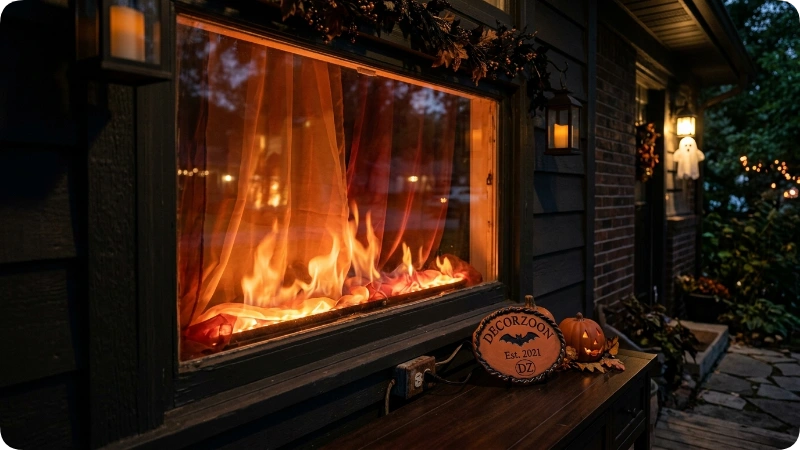
One of the simplest ways to suggest fire is to combine lightweight fabric with colored LED lighting.
Use pieces of flame colored translucent fabric or other suitable flame effect material and position them behind windows or inside a controlled display area. Orange, red, and amber LED lights can illuminate the material so it appears to flicker.
A fan can create movement in the fabric, making the effect look less static. The combination of moving material and changing light gives the impression of flames without introducing an actual fire source.
Keep fabric, lighting equipment, and electrical connections positioned according to the manufacturer’s safety instructions. Do not allow decorative materials to contact hot bulbs, heaters, outlets, or other heat producing equipment.
Make the Windows Look Like They Are Glowing
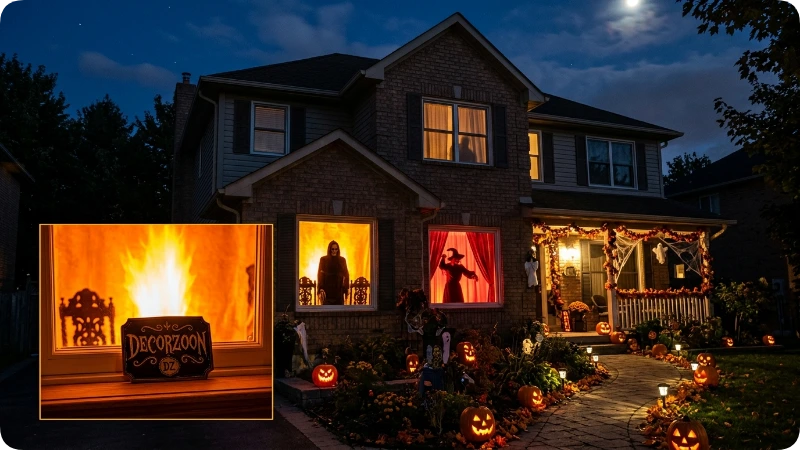
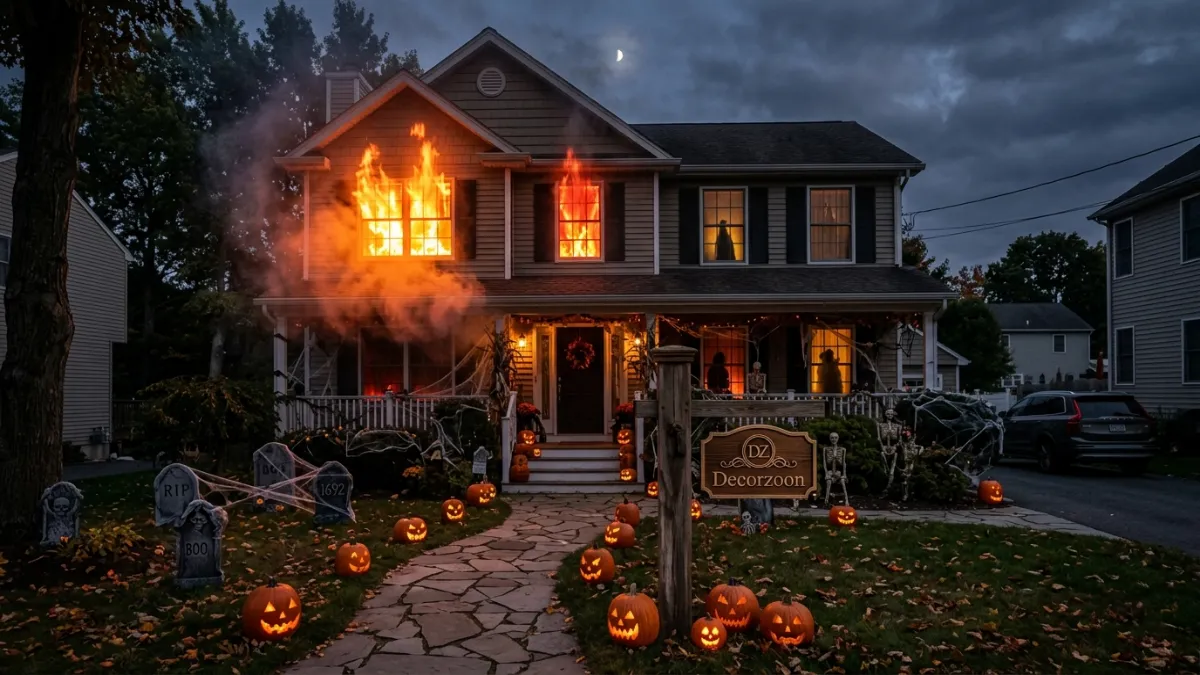
Windows are one of the strongest visual elements in a fake house fire display because they allow the illusion to appear as though the fire is coming from inside the home.
Start by darkening the room behind the window. Then place orange or red LED lighting where it can illuminate the window area without creating excessive glare.
You can vary the brightness between different windows. One window might appear intensely orange, another slightly red, and another mostly dark with a small flicker.
This uneven lighting looks more natural than making every window identical.
For a stronger Halloween appearance, add silhouettes of furniture, broken looking shadows, or spooky figures behind some windows. Keep these elements away from electrical equipment and maintain clear access to the actual windows and exits.
Add Flickering Orange and Red Lighting
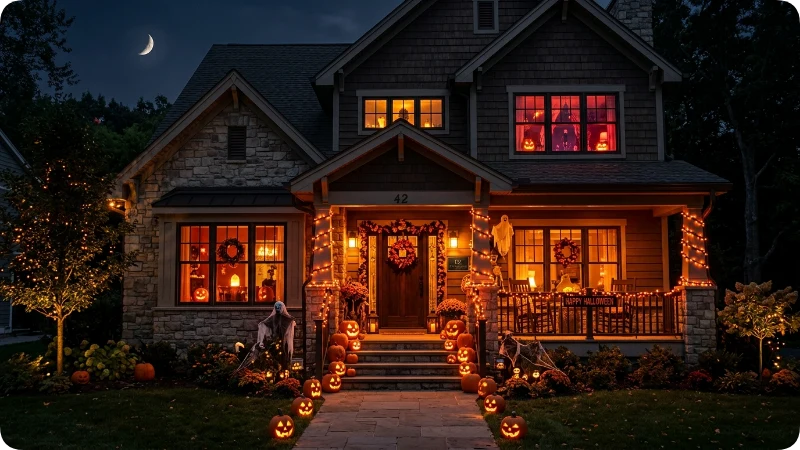
Static orange lights can make a display look like ordinary Halloween lighting. Flickering light creates more movement and makes the fake fire effect easier to recognize visually.
Use several LED light sources at different heights rather than one powerful light. Place warmer orange light near the apparent base of the flames and deeper red light farther behind the display.
If your lighting system has a flicker setting, use a controlled irregular effect rather than an extremely rapid flash.
Avoid aiming bright lights directly toward passing drivers or neighboring homes. The display should be dramatic from the intended viewing area without creating a visibility problem.
Use Fog Carefully to Suggest Smoke
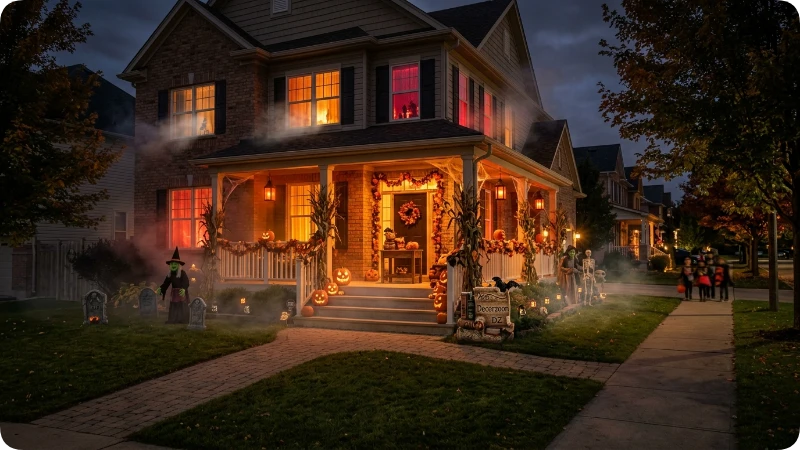
Fog can make the display more atmospheric by creating the impression that smoke is escaping from windows, doors, or the porch.
A Halloween fog machine can be positioned in an appropriate outdoor location where its manufacturer permits use. Direct the fog so it remains around the intended display instead of filling sidewalks, roads, or areas where people need clear visibility.
The amount matters. A small amount of drifting fog can suggest smoke, while excessive fog can hide the rest of the decoration and create a visibility concern.
Do not use smoke producing materials or homemade burning effects to imitate a fire. A fake fire display should create the appearance of smoke without producing a real combustion hazard.
Build the Effect Around the Porch
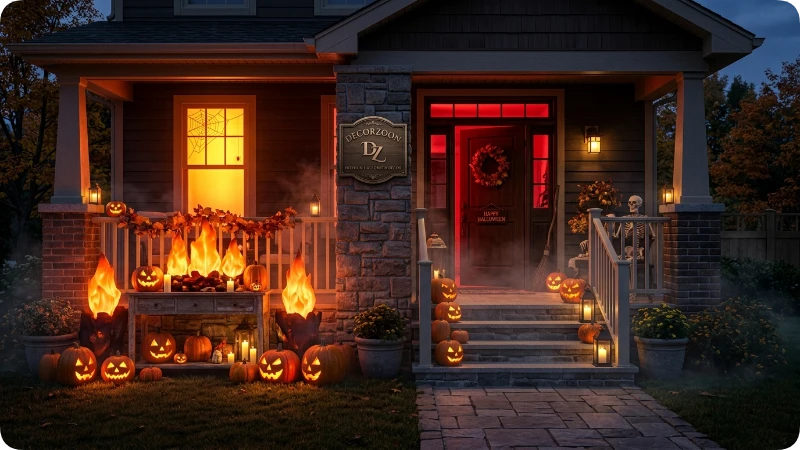
The porch is a useful focal point because it naturally connects the windows, front door, steps, and yard.
Create the illusion that the strongest part of the fake fire is emerging from one section of the porch rather than covering the entire house equally. Use orange lighting behind a window, darker smoke effects around the porch, and a few flame colored visual elements near the selected focal area.
Keep walkways, stairs, railings, doors, and emergency access completely unobstructed.
This is especially important for homes where children, guests, delivery workers, or neighbors may approach the property after dark.
Combine the Fake Fire With Haunted House Details
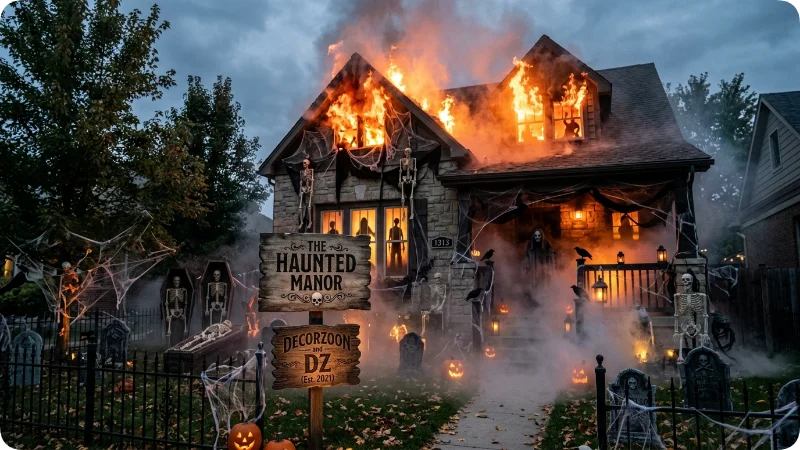
A house on fire display becomes more visually interesting when the fire effect is part of a larger Halloween scene.
You could add:
- Skeletons near the porch
- Black crows or ravens
- Broken looking signs
- Tombstones along the walkway
- Spider webs around railings
- Dark silhouettes in windows
- Jack o’ lanterns around the yard
- A weathered wooden sign
- Creepy figures partially hidden in the fog
The key is to let the fake fire remain the main focal point. If every part of the yard has a different large prop, the viewer may not immediately understand the intended visual story.
Create a Smaller House on Fire Effect for a Rental
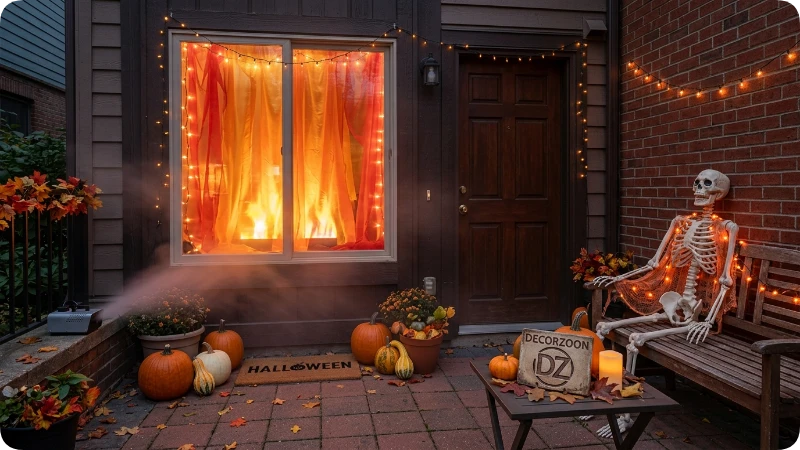
Renters do not need to decorate the entire building.
A smaller installation can create the same theme around a balcony, patio, front window, or removable outdoor display area, depending on the property’s rules.
Use temporary decorations that do not damage walls or windows. LED lighting, removable fabric elements, portable fog equipment where permitted, and freestanding props can create a concentrated scene.
Keep everything removable and avoid drilling, permanent adhesives, or modifications that violate a lease or property management rules.
For an apartment, a single glowing window combined with a few exterior Halloween props may communicate the theme better than an oversized installation.
Use Shadows to Make the Fire Illusion More Convincing
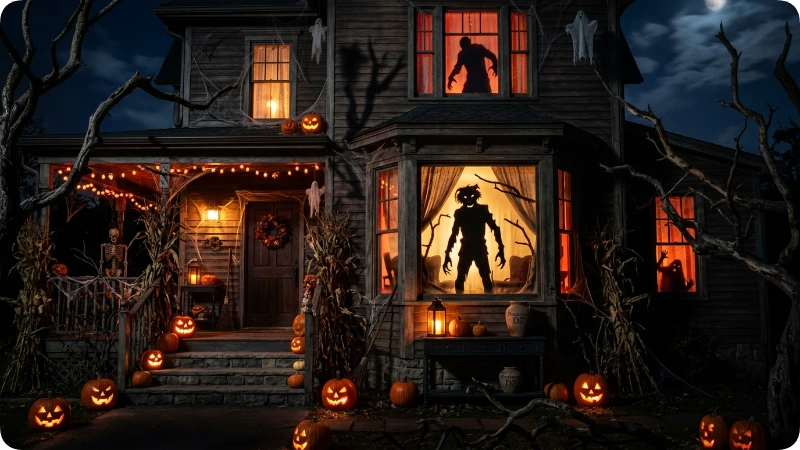
Lighting alone does not have to carry the entire effect.
Dark silhouettes can make a glowing window appear deeper. For example, a cutout of a crooked tree branch, broken furniture shape, or Halloween figure can be positioned between the viewer and the light source.
As the orange light changes intensity, the silhouette appears to move against the glowing background.
Keep the design simple. A few large recognizable shadows are usually easier to see than dozens of tiny shapes.
This technique is particularly useful when you want a dramatic effect without adding a large number of physical decorations.
Add a Clear Halloween Context Around the Display
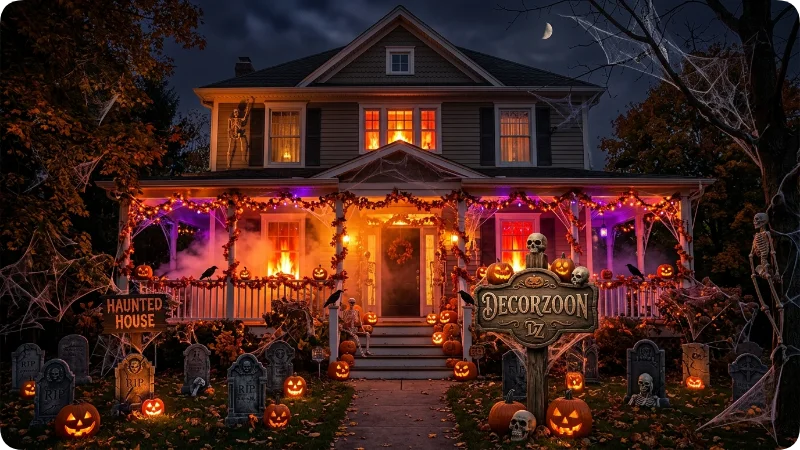
Because the fake fire effect can look surprisingly realistic, surrounding it with unmistakable Halloween decorations can help communicate that it is a seasonal display.
Use pumpkins, skeletons, spider webs, tombstones, Halloween signs, or other clearly decorative elements around the property.
However, do not assume that Halloween decorations alone will prevent confusion. Real life displays have been mistaken for actual house fires, with firefighters responding to calls even when the homeowners knew the effect was fake.
If your display is unusually realistic, consider informing neighbors and coordinating appropriately with local authorities before operating it, where local rules or practices make that appropriate.
Never discourage someone from contacting emergency services if they genuinely believe there is a real fire.
Keep the Display Clearly Fake and Fire Safe
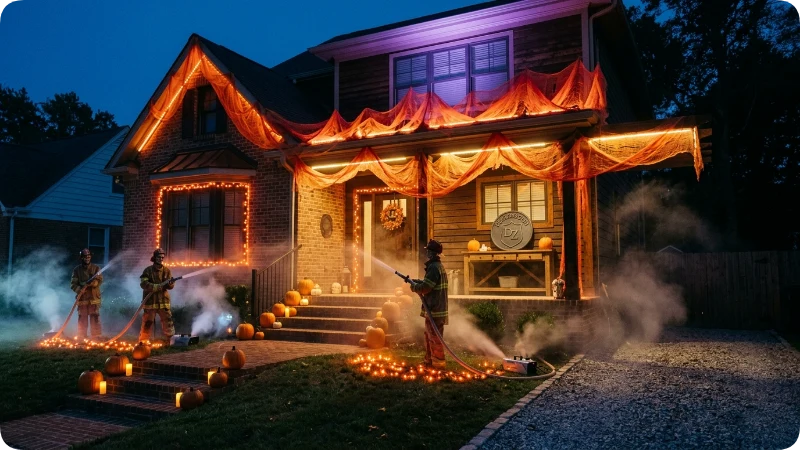
The most important part of a house on fire Halloween decoration is that the effect should come from light, movement, fabric, and approved decorative equipment not actual flames.
Fire safety guidance associated with a widely reported house on fire Halloween display emphasized testing smoke alarms, keeping exits and pathways clear, using flameless candles or LED lighting, and maintaining a home fire escape plan.
Before switching on the display, check:
- Electrical cords are suitable for their intended use and protected from damage.
- Decorations do not block doors, stairs, windows, or escape routes.
- Fabric and other materials are kept away from heat sources.
- Fog does not reduce visibility around walkways or roads.
- Outdoor equipment is suitable for outdoor conditions.
- Children and pets cannot easily reach electrical equipment.
- The display does not create a trip hazard.
- Smoke alarms remain unobstructed and operational.
If an actual fire occurs, treat it as an emergency regardless of the Halloween display.
How to Make a House on Fire Halloween Decoration Look Realistic
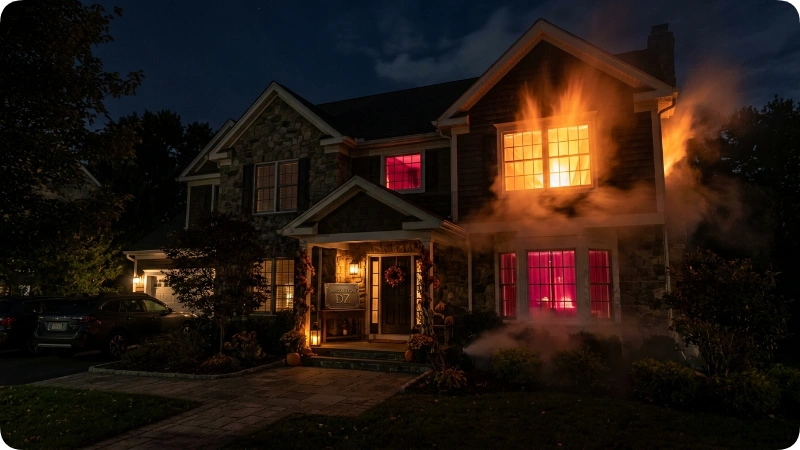
Realism comes from layering several subtle effects instead of making one element extremely intense.
Start with darkness. Add a warm orange glow behind selected windows. Introduce red light deeper inside the display, then add controlled movement using fabric or an appropriate effect. Finally, use a modest amount of fog to suggest smoke.
The strongest visual point should usually be one part of the house. From there, let the effect become less intense as it moves across the facade.
This creates depth and keeps the decoration from looking like the entire exterior has been covered with identical orange lights.
What Colors Work Best for a Fake House Fire?
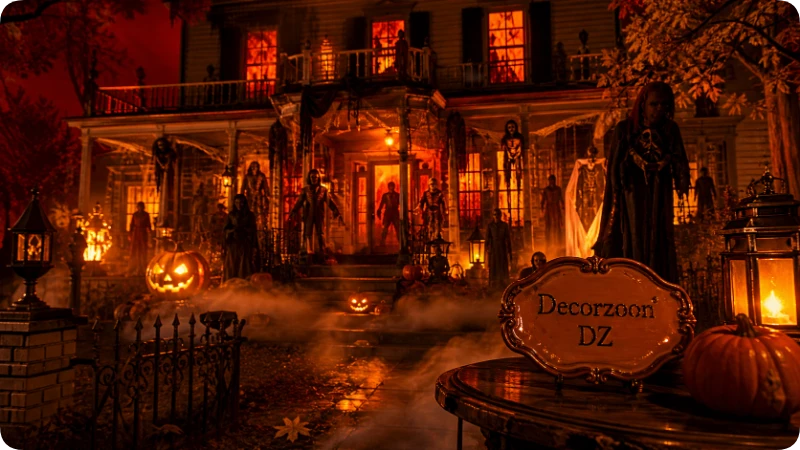
A limited warm palette usually works better than many colors.
Orange: Main flame color and strongest visual glow.
Amber or warm yellow: Adds brightness near the apparent center of the flame.
Red: Creates deeper shadows and a more dramatic background.
Black or dark gray: Helps define smoke, silhouettes, and the surrounding haunted house atmosphere.
Avoid excessive blue, green, or purple lighting around the actual fire effect because these colors can weaken the visual connection to flames. They can still be used elsewhere in the Halloween yard if they do not compete with the main focal point.
Where Should the Fake Fire Effect Be Placed?
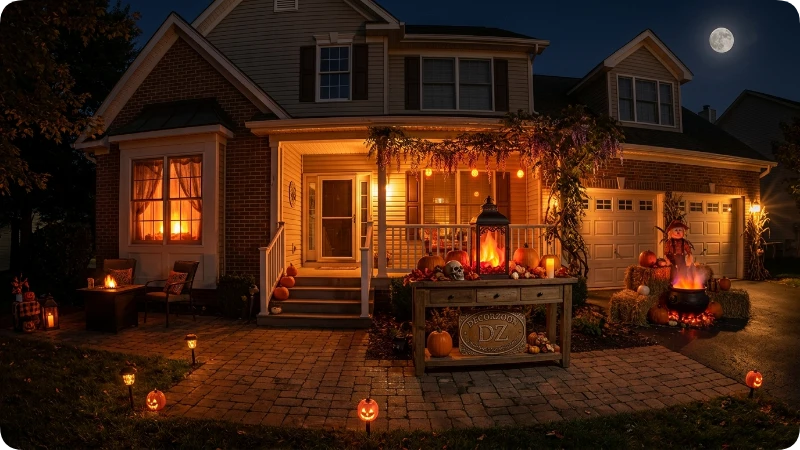
The best location depends on the architecture of the home.
Windows: Best for creating an interior fire illusion.
Porch: Useful for combining lighting, fog, and props.
Garage: Can create a dramatic scene, but the display must never interfere with garage doors, vehicles, ventilation, or safe access.
Front facade: Works for large scale displays where the entire composition can be viewed from across the street.
Small patio or entry: Better for apartments, rentals, and compact properties.
Choose the viewing angle before installing the decorations. A display that looks convincing from the street may look completely different when viewed from the side.
Common Mistakes to Avoid
Using Real Flames
Real fire should not be part of a decorative fake fire illusion. LED lighting and approved effects can create the visual impression without adding an open flame.
Blocking Emergency Access
Do not place props, cords, fog equipment, or decorations where they interfere with doors, stairs, windows, driveways, or emergency access.
Making Every Window Identical
Different brightness levels create depth. Identical orange lights in every window can make the display look artificial.
Using Too Much Fog
Excessive fog can hide the decoration and reduce visibility. Use enough to support the illusion without creating an obstruction.
Ignoring Your Neighbors
An extremely realistic display may look like a genuine emergency from a distance. Consider how it will appear to someone seeing it for the first time.
Creating a Trip Hazard
Secure cables and keep pathways clear. A visually impressive decoration is not worth creating a fall risk.
Frequently Asked Questions
What can I use to make a fake fire for Halloween?
A fake fire effect can be created with orange, red, or amber LED lighting combined with suitable lightweight flame effect materials and controlled movement. Some displays also use approved fog machines to suggest smoke. Avoid actual flames and improvised combustion effects.
How do you make a house look like it is on fire for Halloween?
Use darkened windows, warm colored flickering LED lights, flame colored visual materials, controlled movement, and limited fog. Concentrating the brightest effect in selected windows or one part of the porch can make the illusion more convincing.
Can a fake house fire decoration cause emergency calls?
Yes. Highly realistic displays have caused people to believe that a home was actually burning. In South Carolina, a 2025 Halloween display led concerned residents to contact emergency services because the home appeared to be on fire.
Is it safe to use a fog machine for Halloween decorations?
A fog machine should only be used according to its manufacturer’s instructions and in a location where its use is appropriate. Keep fog away from areas where it could reduce visibility or interfere with safe movement.
Should I tell my neighbors about a realistic house on fire decoration?
If the display could reasonably be mistaken for an actual emergency, informing nearby residents can reduce confusion. Where appropriate, homeowners may also want to check local requirements or coordinate with the relevant local authorities. Never assume that a warning means people should ignore what appears to be a real fire.
Conclusion
A house on fire Halloween decoration can create a memorable haunted house effect without using real fire. The strongest approach combines orange and red LED lighting, controlled movement, dark windows, carefully placed props, and a limited amount of fog to suggest flames and smoke.
Start with one clear focal point, then build outward with skeletons, pumpkins, shadows, or other Halloween details that support the scene. Safety should remain part of the design from the beginning.
Keep exits and pathways clear, use appropriate lighting and equipment, protect electrical connections, and avoid open flames. Because realistic fake fire displays can sometimes be mistaken for real emergencies, think about how the setup will look to someone seeing it for the first time.

Sophia Bennett is a passionate Home Decor Enthusiast and Content Writer at DecorZoon.com. She shares well-researched content on home decor, interior design, decorating trends, DIY ideas, and space-styling inspiration, helping readers create beautiful, functional, and stylish living spaces. Through practical tips and creative insights, Sophia makes it easier for homeowners and decor lovers to transform their homes with confidence and style.