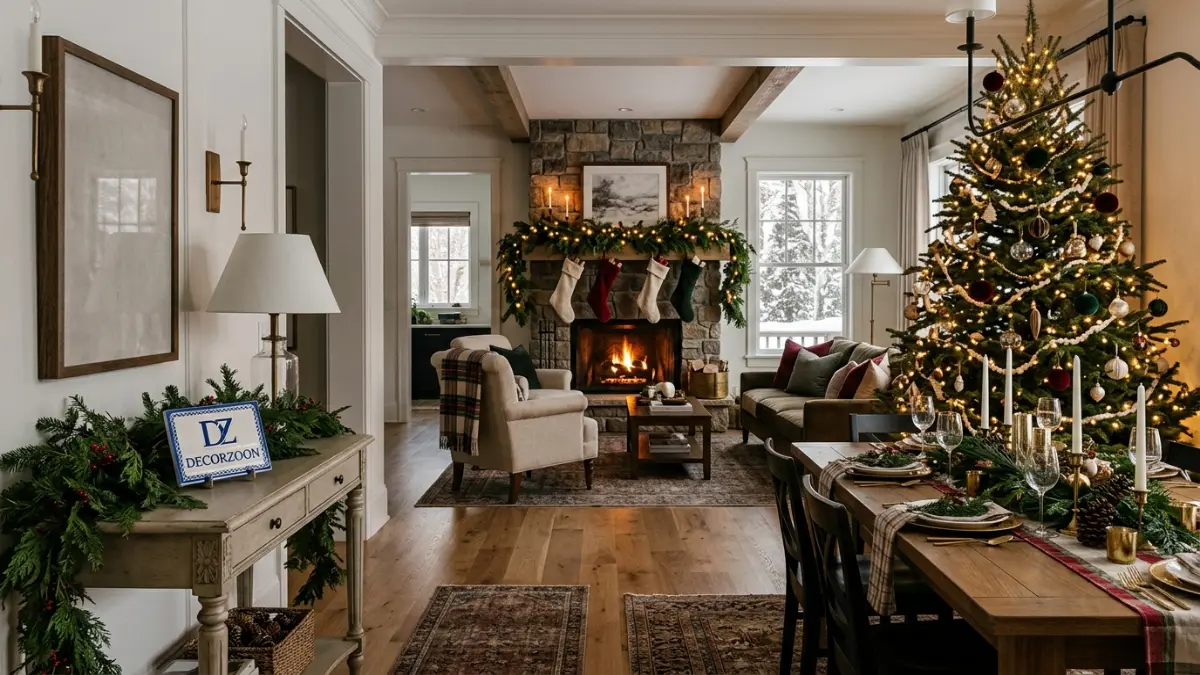
Christmas is a wonderful time to make your home feel warm, welcoming, and festive. However, creating a beautiful holiday atmosphere does not mean decorating every surface or filling every room with seasonal items.
The best Christmas home decor ideas work with your existing style, colors, furniture, and available space. From a welcoming entryway and beautifully decorated Christmas tree to cozy living room greenery, an elegant mantel, festive kitchen details, and a simple dining table centerpiece, small changes can make a noticeable difference.
You can also add seasonal touches to bedrooms, staircases, and overlooked corners using greenery, textiles, warm lighting, and carefully chosen decorations.
If you prefer traditional red and green or a softer combination of cream, deep green, brass, and natural wood, the key is to create a cohesive look while keeping your home practical and comfortable throughout the holiday season.
Start With a Christmas Color Palette That Fits Your Home
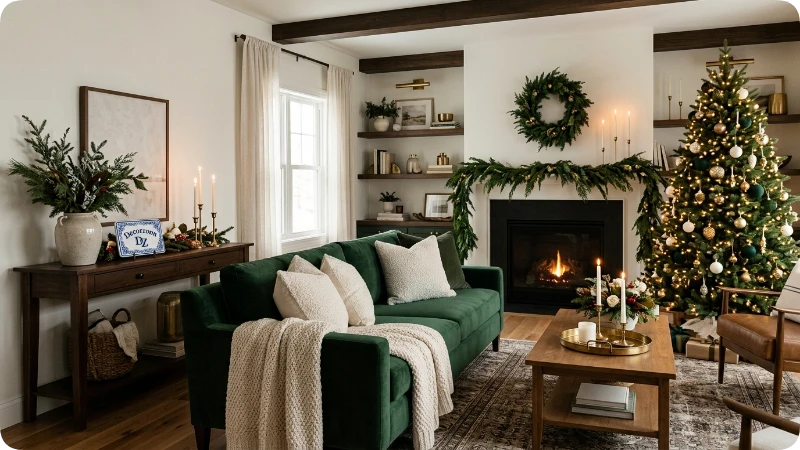
A cohesive color palette is one of the easiest ways to make Christmas decorations look intentional. Classic red and green work naturally with traditional interiors, while cream, warm white, brass, and natural wood can create a quieter scheme. For contemporary rooms, consider deep green with black, soft white with silver, or burgundy with warm metallic accents.
Start with the colors already present in the room rather than replacing them completely. If your sofa, curtains, or rug are neutral, almost any Christmas palette can work. If the room already contains strong colors, select one or two holiday colors that complement them.
Use the palette in different ways rather than repeating identical decorations. For example, deep green might appear through garland, a few tree ornaments, and a wreath, while warm white appears in lights and textiles.
Best for: Homes where the existing decor is already established.
Avoid: Introducing too many unrelated accent colors. Three main colors are usually enough for a controlled scheme.
Make the Christmas Tree the Main Focal Point
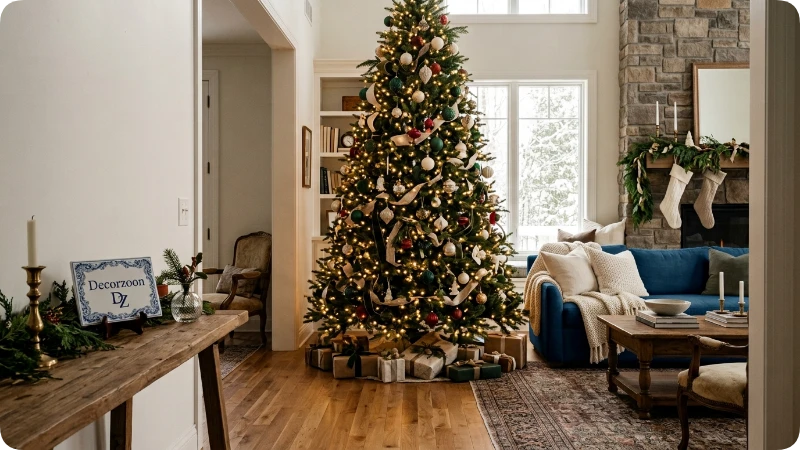
A Christmas tree can anchor the entire decorating scheme, particularly when it is positioned where it can be seen from more than one part of the home. If the room allows it, placing the tree near an entry sightline can make the holiday display noticeable as soon as someone walks inside.
Build the tree from large visual elements to smaller details. Begin with lights, then add larger ornaments, followed by medium and small pieces. Ribbon can add movement and help connect the tree to the rest of the room. Choose ribbon in a color or texture already used elsewhere.
Don’t feel obligated to fill every branch. Leaving some greenery visible can make a tree feel lighter, especially in a small room.
For a traditional look, combine evergreen tones, red ornaments, warm lights, and brass or gold accents. For a more restrained arrangement, use one dominant ornament color with natural wood, cream, or glass accents.
Best for: Living rooms, open plan spaces, and entry areas with enough floor space.
Avoid: Making the tree so heavily decorated that individual elements disappear.
Create a Welcoming Christmas Entryway
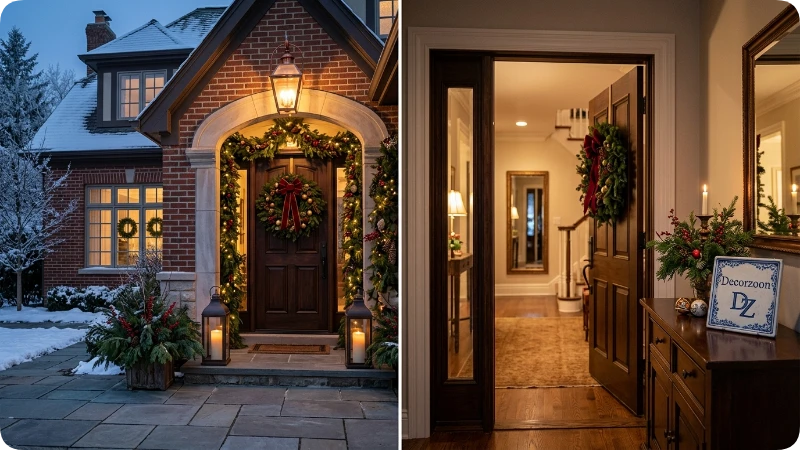
The entryway sets the tone before guests reach the main living areas. You do not need a large collection of decorations; one strong focal point can be enough.
A wreath on the front door is an obvious starting point, but the surrounding entry can carry the same color story. Add a simple garland around a doorway, a pair of lanterns near the entrance, or a small evergreen arrangement on a console table. A ribbon on the wreath can introduce the same accent color used inside.
For a narrow hallway, use vertical decoration instead of placing several objects on the floor. A slim wreath, hanging greenery, or a small wall arrangement uses less walking space.
If your entrance is covered, natural looking greenery and weather appropriate decorations can create a layered outdoor display. For exposed areas, choose decorations specifically suited to outdoor conditions.
Best for: Creating an immediate seasonal impression without decorating the entire house.
Avoid: Blocking the doorway, stairs, or normal walking path with oversized decorations.
Layer the Living Room With Greenery, Textiles, and Light
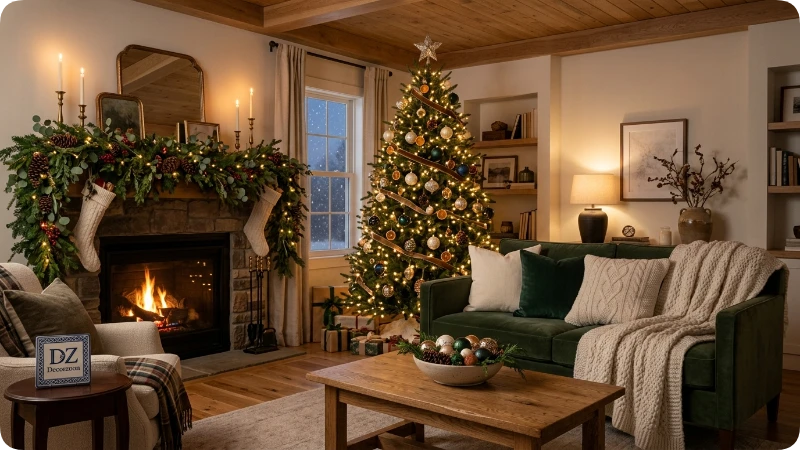
The living room usually deserves the most attention because it is where people spend time together during the holidays. Rather than decorating every surface equally, choose a few areas that naturally attract attention: the tree, fireplace, coffee table, media console, or main seating area.
Greenery can connect these zones. A garland on the mantel can echo the tree, while a smaller arrangement on a coffee table repeats the same foliage without copying the larger display.
Textiles are useful for adding seasonal color without permanently changing the room. Replace one or two everyday pillow covers with Christmas colors, then add a textured throw to a sofa or chair. Warm white lighting can soften the room after dark.
You can also fill a clear bowl or vase with ornaments, pinecones, or lightweight seasonal pieces for a quick coffee table arrangement.
Best for: Homes where the living room is the main gathering space.
Avoid: Covering every shelf and tabletop simply because space is available. Leave some visual breathing room.
Decorate the Mantel With One Strong Composition
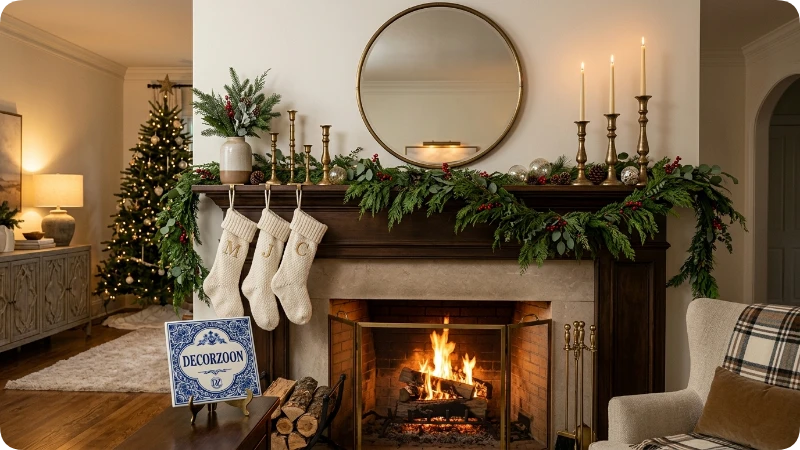
A fireplace mantel naturally becomes a Christmas focal point, so the goal is to create a composition rather than simply line up decorations.
Start with one long element such as greenery or a garland. Allow it to extend slightly beyond the edges if the mantel and fireplace design permit. Then establish a focal object such as a mirror, artwork, large candleholders, or a substantial seasonal arrangement.
Add smaller pieces around the focal point to create variation in height. For example, a tall candlestick can sit beside a lower bowl of ornaments, while a few branches fill the visual gap between them.
Stockings can become part of the composition rather than an afterthought. Hang them at consistent intervals and coordinate their colors with the room.
If your mantel is narrow, reduce the number of objects rather than forcing a large arrangement into the space.
Best for: Fireplaces, built in mantels, and console style shelves.
Avoid: Using several objects of exactly the same height. The arrangement can look flat and crowded.
Give the Kitchen Small Christmas Details
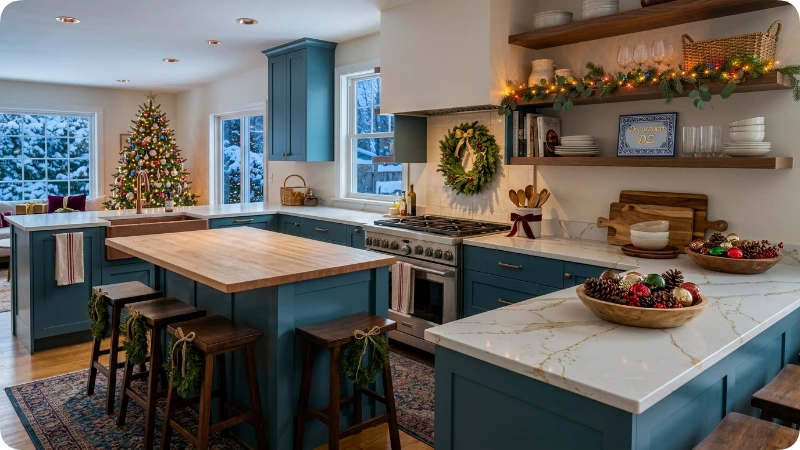
The kitchen does not need a full holiday makeover. A few carefully chosen details can make it feel connected to the rest of the house while keeping counters practical.
Tie a simple ribbon around a utensil crock, add a small wreath to the back of an island chair, or place a bowl of pinecones or ornaments on a safe section of the counter. These small gestures are also useful when counter space is limited. Kitchen cabinets can be decorated with restrained bows if they do not interfere with handles or daily use. Similar small kitchen touches are commonly recommended in room by room Christmas decorating guides.
For open shelving, repeat the main Christmas colors through mugs, serving pieces, greenery, or a few seasonal objects. If you already display wooden cutting boards, ceramic dishes, or woven baskets, use those materials as part of the holiday composition.
Keep decorations away from stovetops, hot surfaces, sharp edges, and areas where they could fall into food preparation spaces.
Best for: Kitchens where you want seasonal character without sacrificing function.
Avoid: Filling working counters with fragile decorations that need to be moved every day.
Turn the Dining Table Into a Simple Christmas Centerpiece
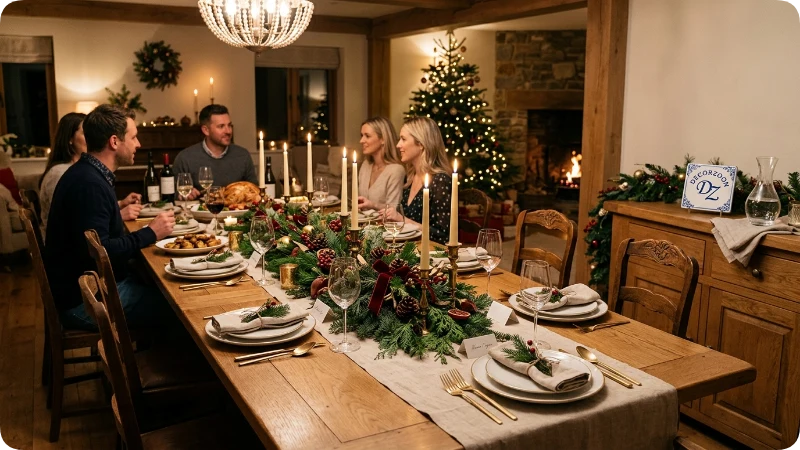
A Christmas dining table benefits from a centerpiece that looks attractive from multiple seats. Instead of creating one tall arrangement that blocks conversation, use a low composition that runs along the center of the table.
Start with a runner, natural greenery, or a few branches. Add candles in holders of different heights, then introduce a small number of ornaments, pinecones, berries, or metallic accents. Keep the strongest color elements close to the center so the arrangement feels deliberate.
For a formal table, combine white or cream linens with greenery and brass or gold details. For a relaxed setting, natural wood, linen, ceramic pieces, and evergreen branches create a more casual Christmas look.
Leave enough space for serving dishes and place settings. If the table will be used for a large meal, removable centerpiece pieces can be grouped on a tray so the entire arrangement can be moved easily.
Best for: Holiday dinners, family gatherings, and dining rooms that need one clear seasonal focal point.
Avoid: Tall decorations that obstruct eye contact across the table
Add Christmas Decor to the Bedroom Without Overdoing It
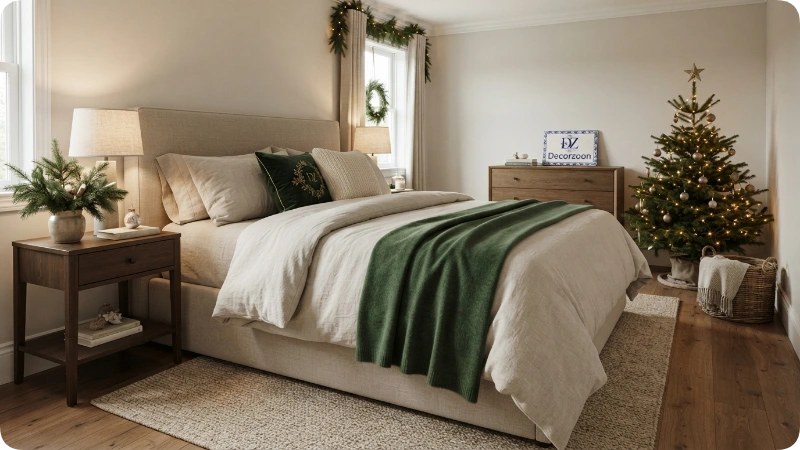
Bedrooms need a softer approach because excessive decoration can make the space feel visually busy. Concentrate on bedding, the nightstand, and one wall or window rather than decorating every surface.
A simple Christmas throw at the foot of the bed can introduce seasonal color without replacing the entire bedding set. Add one or two coordinated pillows if the existing bedding is neutral.
On the nightstand, use a small evergreen arrangement, miniature tree, ceramic house, or warm battery powered light. For a guest bedroom, a small wreath or seasonal artwork can provide a festive detail without taking up valuable space.
If the bedroom already has a strong color palette, choose Christmas accents that echo those colors instead of introducing bright red and green automatically.
Best for: Guest rooms, primary bedrooms, and children’s rooms where a subtle seasonal touch is preferred.
Avoid: Placing candles or electrical decorations where they can be knocked over while sleeping or moving around the room.
Use Staircases and Vertical Spaces for Christmas Greenery
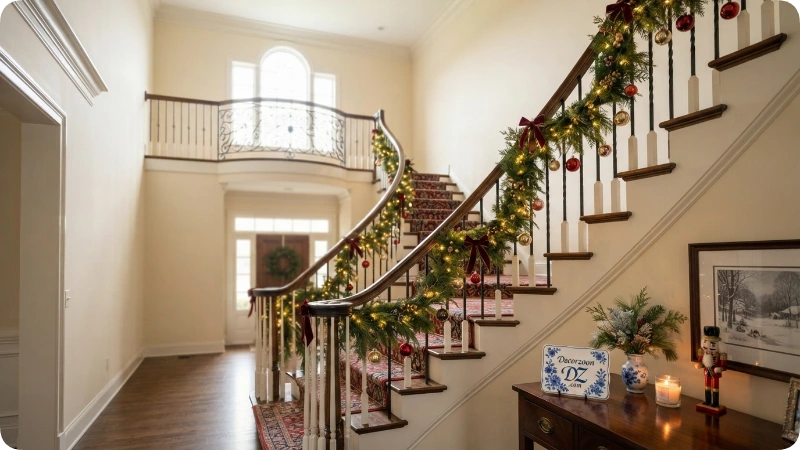
Staircases provide a useful decorating opportunity because they add height without consuming much floor space. A garland can follow the handrail, while small bows or ornaments provide controlled points of color.
For a traditional arrangement, combine evergreen greenery with red ribbon and a few ornaments. For a natural look, use greenery with pinecones, wood accents, and neutral ribbon. A modern staircase can work with a simple garland and warm white lights without additional ornamentation.
The key is to keep the installation secure. Never let decorative material interfere with the handrail, steps, or normal movement. Avoid loose cords across walking paths.
You can use the same principle on other vertical areas, such as a tall console, doorway, window frame, or empty wall. This is particularly useful in small homes where floor space is limited.
Best for: Homes with staircases, tall ceilings, narrow rooms, or limited floor space.
Avoid: Heavy decorations attached to areas that people regularly touch or pass closely.
Finish With Small Christmas Vignettes Around the Home
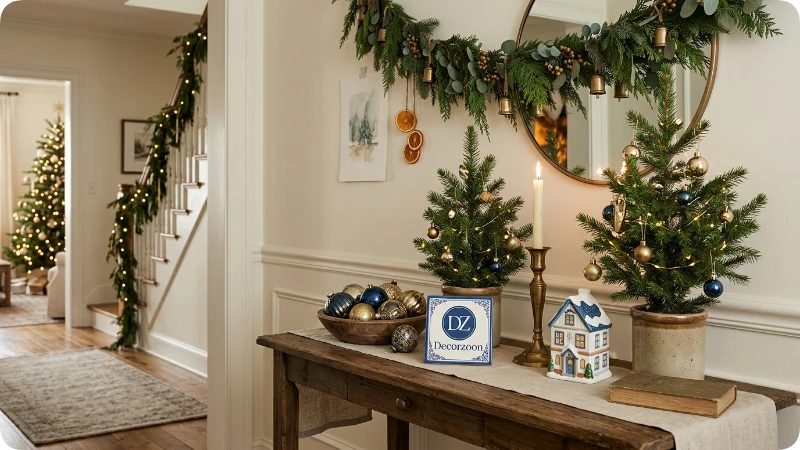
Once the major focal points are finished, use small vignettes to connect the rooms. These should support the main decorating scheme rather than introduce a completely new theme.
A console table might hold a small tree, a candleholder, and a bowl of ornaments. A bookshelf could receive miniature wreaths, a few seasonal books, or a small ceramic village. A windowsill can hold a simple row of trees or a few warm lights.
Plants can also become Christmas accents when decorated lightly. Small ornaments or lightweight garlands can be added to sturdy branches, provided they do not bend or damage the plant.
For a cohesive home, repeat materials rather than identical objects. If the living room uses brass, natural wood, and greenery, carry those materials into a hallway vignette or dining display.
This approach gives the house a connected feel without making every room look exactly the same.
Best for: Filling overlooked spaces and creating continuity between larger decorating areas.
Avoid: Creating too many tiny displays. A few deliberate vignettes usually have more visual impact than decorations scattered everywhere.
How to Make Christmas Home Decor Feel Cohesive
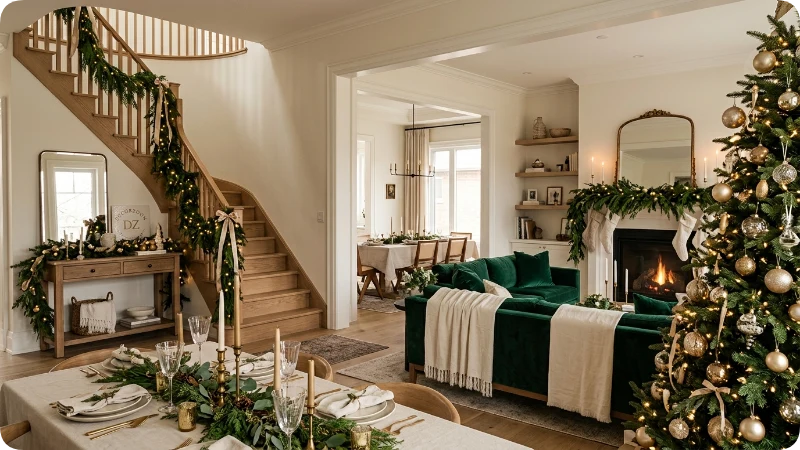
A cohesive Christmas home does not require every room to match. Instead, repeat a small number of visual elements throughout the house.
Choose one dominant color, one secondary color, and one or two supporting materials. For example, deep green can be the dominant color, cream the secondary color, and natural wood and brass the supporting materials.
Then vary how those elements appear. Greenery might dominate the living room, while cream textiles appear in the bedroom and brass accents show up on the dining table.
Scale matters as well. A large room can handle larger garlands, trees, and arrangements, while a small apartment may look better with a tabletop tree, narrow wreath, and a few vertical decorations.
Current Christmas decorating coverage also emphasizes adapting holiday decoration to the home’s existing style rather than treating seasonal decor as completely separate from the interior.
Christmas Decorating Mistakes to Avoid
The most common problem with holiday decorating is not having too few decorations it is using too many unrelated ones.
Avoid changing the color palette from room to room unless you deliberately want each space to have its own character. Also avoid filling every available surface. A decorated home still needs empty space for everyday objects, movement, and visual balance.
Pay attention to scale. A tiny wreath can disappear on a large wall, while an oversized arrangement can overwhelm a narrow console. Consider the furniture or architectural feature behind the decoration before choosing its size.
Safety should also influence placement. Keep candles away from greenery and fabrics, secure decorations near stairs, keep cords out of walking areas, and use lightweight decorations on plants or delicate surfaces.
Finally, decorate for the way your household actually uses the room. A beautiful arrangement that constantly needs to be moved is not a practical solution.
Frequently Asked Questions About Christmas Home Decor
What are the best Christmas home decor ideas for a cohesive look?
Start with a simple Christmas color palette and repeat the same colors, greenery, textures, and materials throughout the home. Focus on major areas such as the Christmas tree, entryway, living room, mantel, and dining table rather than decorating every surface.
How can I decorate my home for Christmas without making it look cluttered?
Choose a few strong focal points and leave some visual breathing room around them. Avoid placing decorations on every available shelf or tabletop. A well-styled tree, mantel, entryway, and a few smaller vignettes can create a festive look without overwhelming the room.
What colors work best for Christmas home decor?
Traditional red and green are timeless choices, while cream, warm white, brass, natural wood, deep green, burgundy, and silver can create more modern or understated looks. Choose colors that complement your home’s existing furniture, walls, rugs, and textiles.
How can I decorate a small home for Christmas?
Use vertical spaces and smaller-scale decorations to save floor space. A tabletop Christmas tree, narrow wreath, hanging greenery, staircase garland, or small console vignette can add seasonal character without making a small room feel crowded.
How can I decorate my living room for Christmas?
Start with the Christmas tree as the main focal point, then add greenery to the mantel or another prominent area. Seasonal pillow covers, a textured throw, warm lighting, and a simple coffee table arrangement can add additional holiday character without covering every surface.
What should I put on a Christmas dining table?
A low centerpiece works well because it allows people to see across the table. Try evergreen branches, pinecones, candles in varied-height holders, a runner, and a few coordinated ornaments or metallic accents. Keep enough space for place settings and serving dishes.
How can I decorate my kitchen for Christmas?
Use small details such as a wreath on an island chair, a simple ribbon around a utensil crock, greenery on open shelving, or a bowl of pinecones and ornaments. Keep countertops functional and keep decorations away from stovetops, hot surfaces, and food preparation areas.
How can I make Christmas decorations match my existing home decor?
Use your existing interior colors as the starting point instead of introducing a completely different palette. Repeat one dominant color, one secondary color, and a few supporting materials such as greenery, natural wood, brass, or warm white lighting throughout different rooms.
How do I decorate a Christmas mantel?
Begin with a long element such as greenery or garland, then establish one strong focal point such as a mirror, artwork, or seasonal arrangement. Add smaller decorations at different heights and coordinate stockings with the room’s overall color palette.
What Christmas decorations are safest around stairs and walkways?
Use decorations that are securely attached and do not interfere with handrails, steps, doors, or walking paths. Keep electrical cords away from areas where people walk, and avoid heavy or loose decorations in places where they could fall or be touched accidentally.
Final Thoughts
The most effective Christmas home decor ideas are the ones that make your existing home feel festive without making everyday life difficult. Begin with a clear color palette, establish focal points in the rooms you use most, and then connect those spaces with repeated greenery, textures, lighting, and small seasonal accents.
You do not need to decorate every room equally. A tree in the living room, a welcoming entryway, a simple dining centerpiece, and a few carefully placed details in the kitchen or bedroom can be enough to create a complete holiday atmosphere.
Choose decorations according to your home’s scale, your available space, and how much maintenance you want during the season. That approach keeps Christmas decorating attractive, practical, and personal.

Sophia Bennett is a passionate Home Decor Enthusiast and Content Writer at DecorZoon.com. She shares well-researched content on home decor, interior design, decorating trends, DIY ideas, and space-styling inspiration, helping readers create beautiful, functional, and stylish living spaces. Through practical tips and creative insights, Sophia makes it easier for homeowners and decor lovers to transform their homes with confidence and style.