The best Christmas table decor ideas make a holiday meal feel special without taking away the space needed for plates, serving dishes, and conversation.
A successful Christmas table scape usually combines a clear color palette, a practical centerpiece, coordinated place settings, and a few seasonal details rather than covering every inch of the table.
Current Christmas table setting guides consistently focus on centerpieces, linens, place settings, greenery, candles, and personal details as the main building blocks of a festive table.
Before decorating, decide how the table will actually be used. A formal sit down dinner can handle layered place settings and a carefully arranged centerpiece, while a family style meal needs more open space for serving bowls and platters. The ideas below focus on creating attractive tables that still work when guests sit down to eat.
Start With a Simple Christmas Table Foundation
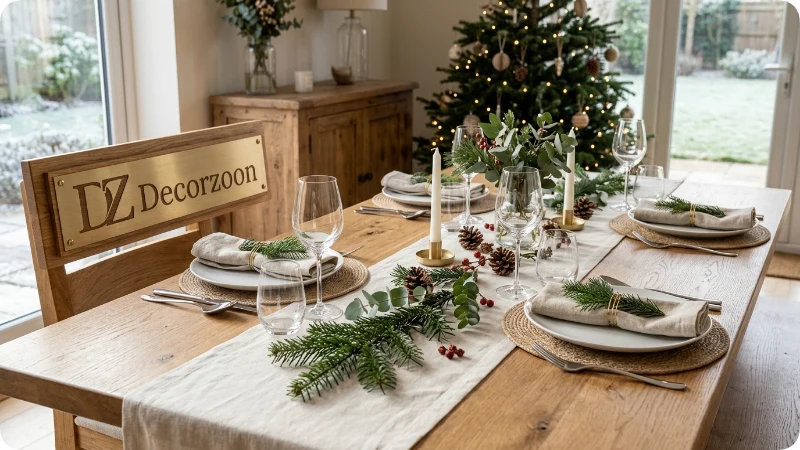
Begin with the table surface rather than the decorations. A neutral tablecloth, linen runner, woven placemats, or even a bare wood table can provide the visual foundation for the rest of the Christmas decor.
For a traditional look, use white or cream linens with red and green accents. For something quieter, combine natural wood with ivory, evergreen, and muted metallics. A modern table can start with charcoal, white, taupe, or deep green.
A runner works particularly well on rectangular tables because it creates a visual path for greenery, candles, or ornaments without covering the entire surface. If your table already has attractive wood grain, skip the tablecloth and let the tabletop become part of the design.
Avoid combining a heavily patterned tablecloth with equally busy plates, napkins, and centerpieces. Choose one dominant pattern and let the remaining elements support it.
Create a Low Greenery Centerpiece
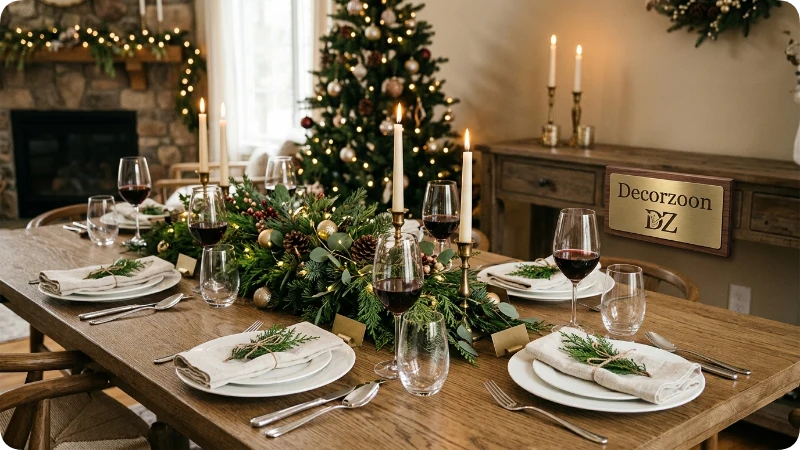
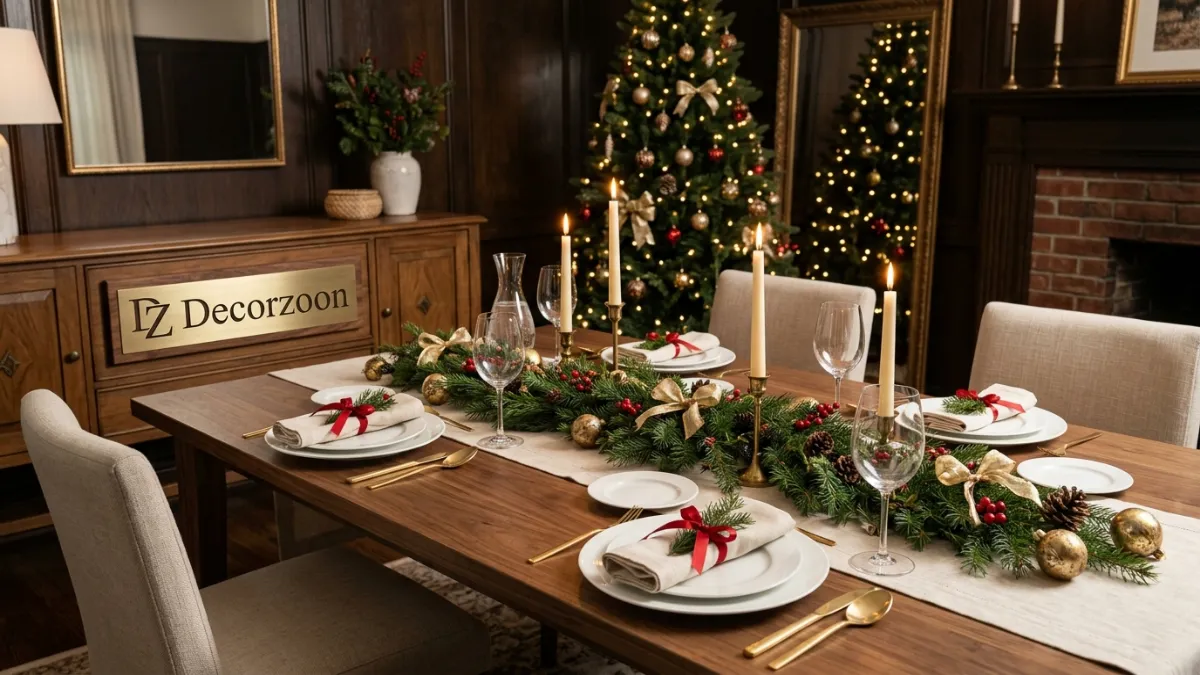
Greenery is one of the easiest ways to give a Christmas table an unmistakably seasonal appearance. Fir, cedar, pine, eucalyptus, or faux evergreen stems can be arranged in a loose line through the middle of a rectangular table or gathered into a compact arrangement on a round table.
Keep the centerpiece low enough that guests can see across the table. This is especially important for a sit down dinner, where an oversized arrangement can interfere with conversation. Practical Christmas table setting guidance also emphasizes low centerpieces and clear sightlines.
Add a few pinecones, small ornaments, berries, or battery operated lights rather than filling every gap. For a more polished arrangement, repeat the same accent color several times instead of scattering unrelated decorations.
For a long table, extend the greenery through the center but leave clear space around each place setting. For a round table, concentrate the greenery around a single central point.
Use Candles to Add Warm Christmas Lighting
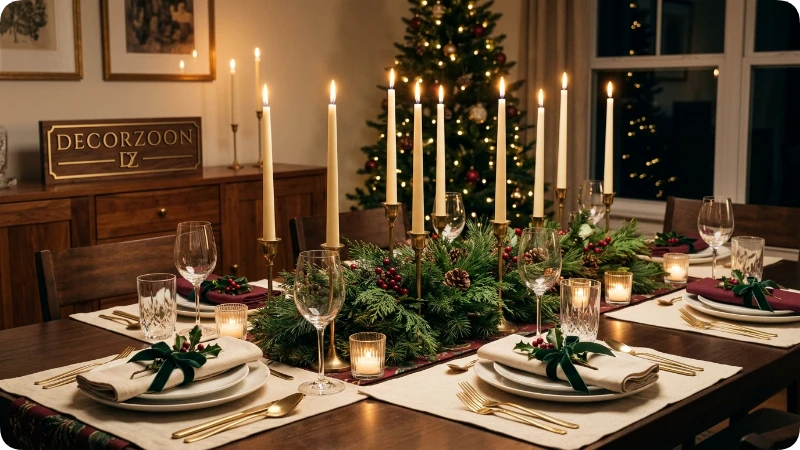
Candles can provide the warmest visual layer on a Christmas table, especially during an evening dinner. Instead of using one large candle arrangement, create a rhythm with several smaller candleholders placed along the center of the table.
Taper candles work well for a classic or formal table. Short votives create a softer, more casual appearance, while a mixture of candle heights can give a modern table scape more dimension.
Pair brass or gold candleholders with deep green, burgundy, cream, or white accents for a traditional setting. Black or simple metal holders can give greenery and white dinnerware a more contemporary appearance.
Keep flames away from loose greenery, napkins, ribbon, and other combustible decorations. Battery operated candles are a practical alternative when children, pets, or heavy table traffic make open flames inconvenient.
The goal is illumination rather than filling the table with candleholders. Leave enough negative space that the lighting complements the dinnerware instead of competing with it.
Build a Classic Red and Green Christmas Table
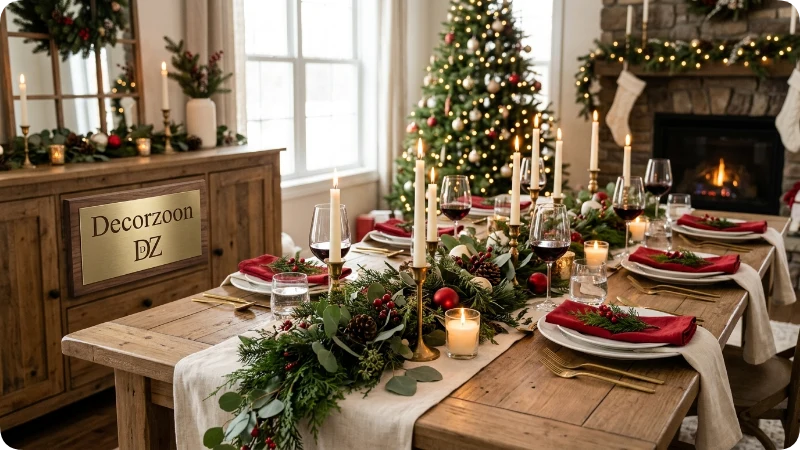
Red and green remain an easy combination for a traditional Christmas table because the two colors immediately establish a holiday palette. The key is controlling how much of each color appears.
Use greenery as the dominant foundation, then introduce red through napkins, berries, ornaments, ribbons, or dinnerware. White or cream plates help keep the combination from becoming visually heavy.
For example, place white dinnerware over a green runner, add red cloth napkins, and finish the center with evergreen branches and a few red berries. Brass or gold flatware can provide a warm metallic accent without requiring additional colors.
If the table already has red dishes or a patterned tablecloth, reduce the number of other red accessories. Repeating the same color in two or three locations usually looks more intentional than adding red to every layer.
This approach works particularly well for traditional, farmhouse, and nostalgic Christmas dining rooms.
Try an Elegant White, Green, and Gold Table scape
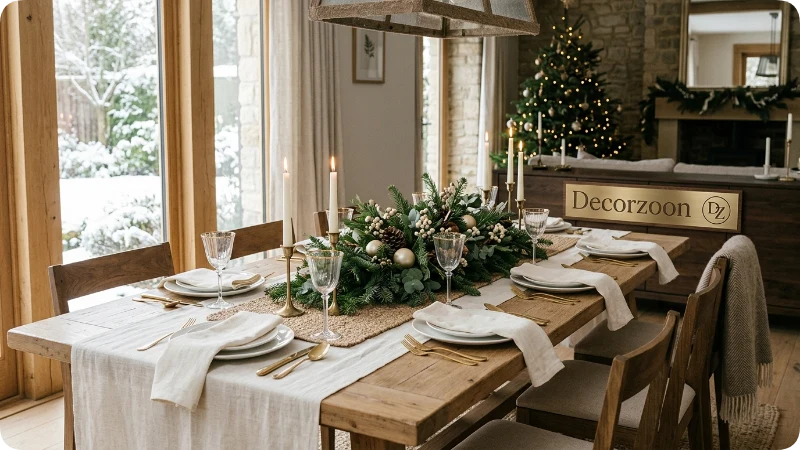
For a softer Christmas table, build the design around white, evergreen, and restrained gold accents. This palette gives you a festive appearance without relying on bright red.
Start with white or ivory plates and linens. Add fresh or faux greenery through the center and introduce gold through flatware, candleholders, napkin rings, or small ornaments.
The important part is keeping gold as an accent rather than making every object metallic. Too many reflective surfaces can make a small dining table look crowded.
You can also add texture with linen napkins, natural wood, woven placemats, or subtle glassware. These materials keep an otherwise simple palette from appearing flat.
This combination works especially well for formal Christmas dinners, contemporary dining rooms, and homes where the existing decor is neutral. It also makes it easier to reuse the same table foundation for other winter gatherings.
Add Rustic Texture With Wood, Pinecones, and Natural Materials
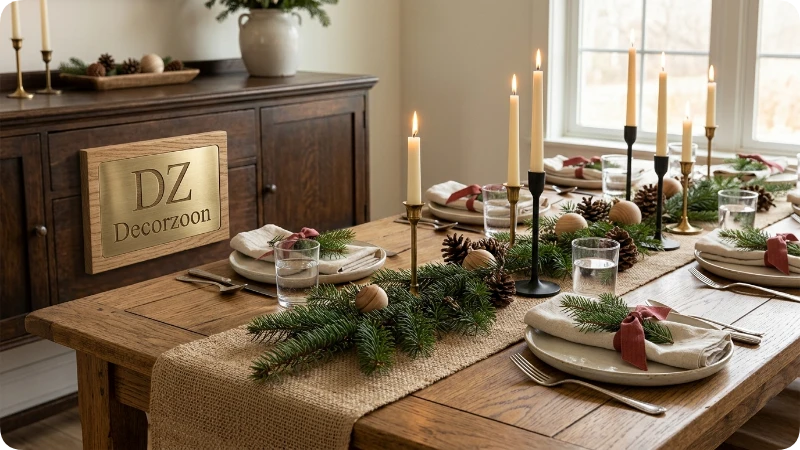
A rustic Christmas table does not require novelty decorations. Natural materials can create the look more effectively while keeping the table practical.
Use a wood table or woven runner as the base, then add evergreen branches, pinecones, linen napkins, ceramic dishes, and simple candleholders. Small wooden trees or understated ornaments can reinforce the Christmas theme without making the table feel overly decorated.
For color, stay with evergreen, cream, brown, muted red, and natural wood. If you want a farmhouse inspired table, add a restrained plaid napkin or runner rather than using plaid on every surface.
Natural textures also help balance shiny ornaments and metallic accents. A few polished details can look more intentional when surrounded by matte materials.
Keep rustic styling edited. A table covered with pinecones, burlap, plaid, wood ornaments, and multiple signs can quickly become cluttered. Choose two or three natural materials and repeat them consistently.
Make Place Settings Part of the Christmas Decor
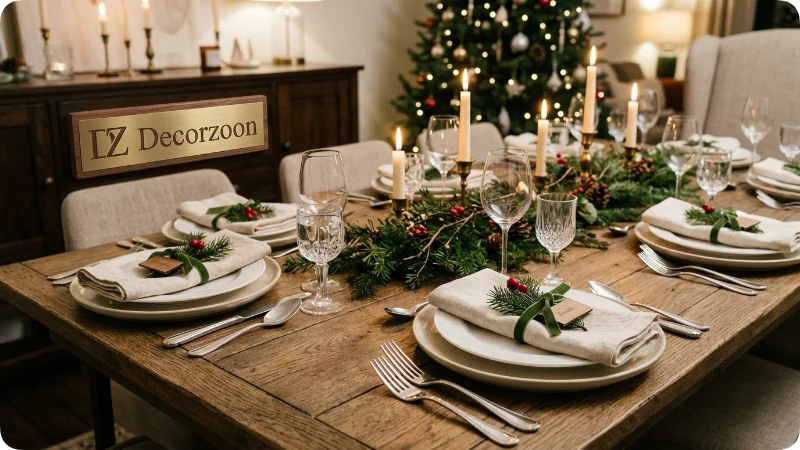
Place settings can function as individual decorative moments without taking up much additional space. Start with the basic dinner plate, cutlery, glassware, and napkin, then add one small seasonal detail.
A sprig of rosemary or evergreen tucked beside the napkin can provide a natural accent. A small ornament, simple place card, ribbon, or miniature wreath can also work as a guest specific detail. Christmas table setting guides frequently use personalized napkins, place cards, ornaments, and decorative serving pieces to add character.
For a formal dinner, layer a charger beneath the dinner plate and coordinate the napkin with the centerpiece. For a casual gathering, skip unnecessary layers and focus on attractive plates and textiles.
Keep decorative pieces small enough that guests can comfortably move their napkins, glasses, and utensils. If a place setting accessory interferes with eating, it is doing more harm than good.
Decorate a Small Christmas Table Without Crowding It
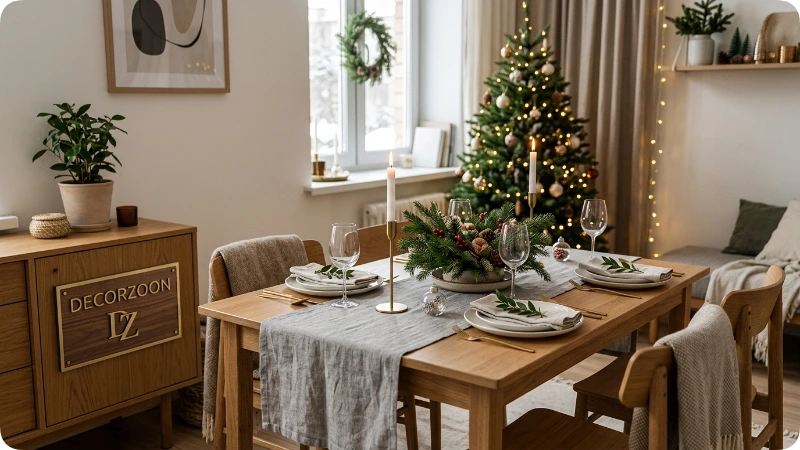
Small dining tables need a different strategy. Instead of trying to recreate a large table scape, reduce the number of layers and make each element useful.
Use a narrow runner or placemats, a compact greenery arrangement, and a few slim candles. Choose decorations that can be moved easily if you need additional room for serving dishes.
A small centerpiece in a shallow bowl can work better than a large floral arrangement. You can also place greenery around the edge of a serving tray so the decoration occupies one controlled footprint.
For a two to four person table, concentrate on one focal point rather than creating multiple decorative zones. A small cluster of evergreen, pinecones, and candles may be enough.
Avoid oversized lanterns, wide floral arrangements, large decorative trees, or multiple serving accessories placed in the center. The smaller the table, the more valuable clear surface space becomes.
Design a Long Christmas Table With Repeating Elements
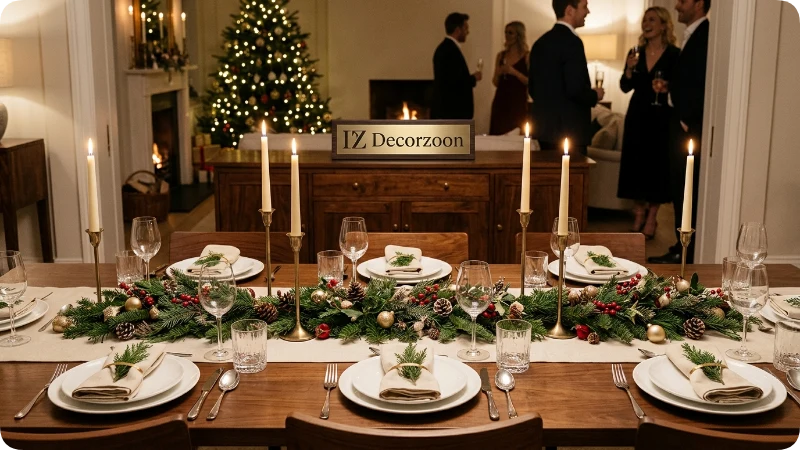
Long rectangular tables benefit from repetition. Rather than creating one oversized centerpiece at the center, distribute several smaller decorative moments across the length of the table.
A simple formula is greenery + candles + one repeating accent. For example, run evergreen branches down the middle and place candleholders at intervals, then repeat small red ornaments or pinecones between them.
Another option is to create three compact arrangements rather than one continuous centerpiece. This makes the table easier to adjust when serving food and can work particularly well for larger gatherings.
Keep the visual height relatively consistent so the table feels cohesive. If you want taller elements, use narrow candleholders or other pieces that preserve sightlines.
Leave enough open space at the ends and around serving areas. A long table can accommodate more decor, but that does not mean every available inch should be filled.
Personalize the Table With One Memorable Christmas Detail
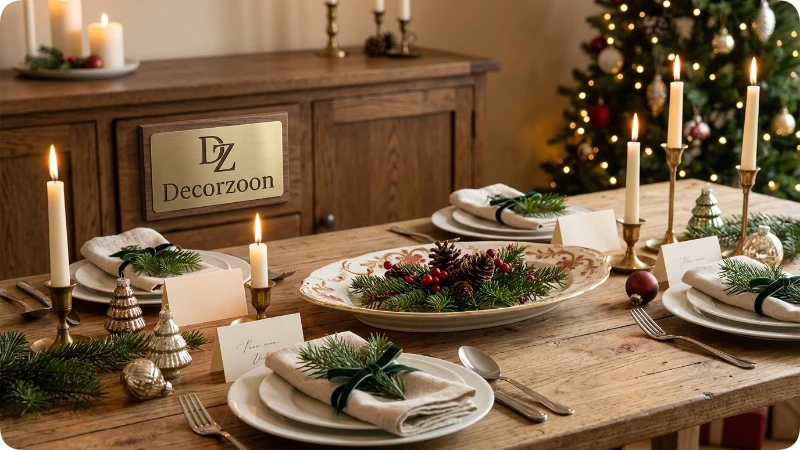
The most memorable tables do not necessarily contain the most decorations. A single personal detail can give a Christmas table scape more character than a collection of generic seasonal objects.
Use handwritten place cards, family ornaments, a small framed menu, heirloom napkins, or a meaningful serving dish. You could also place a small take home ornament at each setting.
If children are participating, let them create simple name cards or paper decorations. For a more sophisticated table, use handwritten cards with cream cardstock and understated ribbon.
Personal pieces work best when they fit the established palette. A sentimental object does not need to match perfectly, but it should have enough visual space around it to remain noticeable.
This approach also makes the table easier to reuse from year to year. Instead of replacing the entire table scape, you can keep the basic linens and dinnerware while changing a few personal or seasonal accents.
How to Choose the Right Christmas Table Decor for Your Table
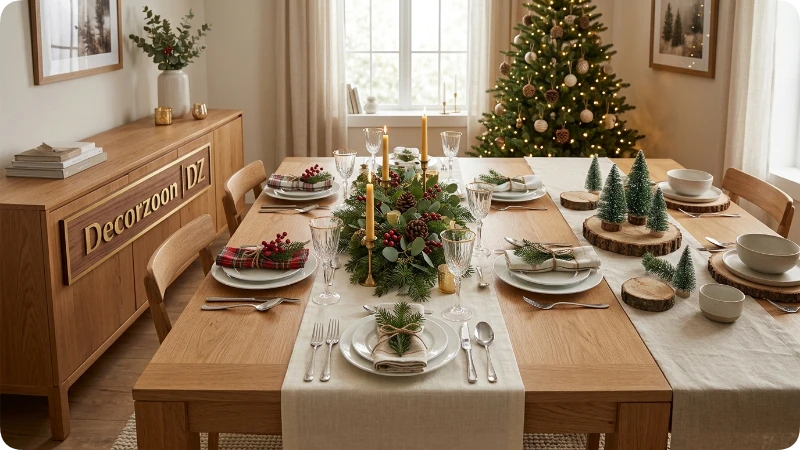
The best Christmas table decor depends on how you use the table, not simply on the style you prefer.
For a formal dinner: Use layered place settings, coordinated linens, candles, and a carefully controlled centerpiece.
For family style meals: Prioritize clear serving space and keep the centerpiece narrow or easily removable.
For a small table: Use fewer decorative layers and choose compact centerpieces.
For a long table: Repeat greenery, candles, or small decorative clusters rather than relying on one central arrangement.
For a traditional room: Red, green, gold, plaid, evergreen, and classic dinnerware work naturally together.
For a modern room: Limit the palette and emphasize clean shapes, greenery, neutral linens, and one metallic accent.
For a rustic room: Combine wood, linen, greenery, pinecones, ceramic pieces, and restrained seasonal color.
The goal is a table that looks coordinated before dinner and remains functional once guests sit down.
Christmas Table Decor Mistakes to Avoid
A few common choices can make a festive table harder to use.
Blocking sightlines: A centerpiece that sits directly at eye level can interfere with conversation. Choose low arrangements or narrow vertical elements.
Using too many colors: Pick a dominant palette and one or two supporting accents rather than mixing every Christmas color.
Crowding every place setting: Guests need room for plates, glasses, cutlery, and napkins. Decorative accessories should stay secondary.
Overdecorating the centerpiece: Greenery, candles, ornaments, flowers, and figurines do not all need to appear together. Remove anything that does not add a distinct function or visual contribution.
Ignoring the meal: A formal plated dinner and a buffet style Christmas meal require different amounts of open table space.
Forgetting safety: Keep candles away from greenery, fabric, ribbons, and areas where sleeves or hands can easily reach them.
A well decorated Christmas table should look intentional before dinner and still work once the meal begins.
FAQs About Christmas Table Decor Ideas
What should I put in the middle of a Christmas table?
A low greenery arrangement, candles, a compact floral display, or a combination of greenery and small ornaments can work well. Choose the centerpiece based on your table shape and leave enough room for guests to see across the table.
How do I decorate a Christmas table without making it look cluttered?
Start with a simple foundation, then add one centerpiece, one lighting layer, and a few coordinated place setting details. Avoid adding multiple decorative objects that serve the same visual purpose.
What colors work well for Christmas table decor?
Classic red and green work for traditional tables, while white, green, and gold create a softer elegant palette. Natural wood, cream, evergreen, and muted red suit rustic settings, while neutral colors with restrained metallic accents can work well in modern spaces.
How do I decorate a small table for Christmas?
Use a narrow runner or placemats, a compact centerpiece, and slim candleholders. Keep decorations close to the center and avoid wide arrangements that reduce usable dining space.
What can I use instead of a traditional Christmas centerpiece?
Try a loose greenery garland, a collection of small candles, a shallow bowl of ornaments, potted rosemary plants, or several small arrangements distributed along the table. Rosemary has also been used as a compact Christmas centerpiece because its shape can resemble miniature evergreen trees.
Conclusion
The most useful Christmas table decor ideas balance seasonal character with the practical needs of a real meal. Start with the table’s size and shape, establish a simple color palette, then build outward with greenery, lighting, linens, dinnerware, and one or two personal details.
Low centerpieces work particularly well for conversation, while repeated elements such as candles or greenery can give long tables a cohesive appearance. You do not need to fill the table with Christmas decorations to make it feel festive.
A restrained combination of texture, color, greenery, and thoughtful place settings can create a welcoming table scape while leaving plenty of room for food and guests. The strongest design is the one that still feels comfortable and functional after everyone sits down.

Sophia Bennett is a passionate Home Decor Enthusiast and Content Writer at DecorZoon.com. She shares well-researched content on home decor, interior design, decorating trends, DIY ideas, and space-styling inspiration, helping readers create beautiful, functional, and stylish living spaces. Through practical tips and creative insights, Sophia makes it easier for homeowners and decor lovers to transform their homes with confidence and style.