Christmas and holiday decor can make a home feel inviting without requiring a complete seasonal makeover. From a welcoming front entrance and a beautifully decorated living room to a thoughtfully arranged dining table, a few coordinated details can create a festive atmosphere throughout your home.
The challenge is choosing decorations that work together rather than making every surface compete for attention. A clear color palette, a few intentional focal points, and a balance of greenery, lighting, ornaments, and comfortable textiles can help you achieve a cohesive look.
If you prefer traditional red and green, understated neutral decorations, rustic natural materials, or colorful vintage inspired accents, the best Christmas and holiday decor reflects your personal style and the way you use your space.
These ideas explain what to use, where to place it, how to combine different elements, and which practical details to consider before decorating.
Choose a Christmas Color Palette That Works With Your Home
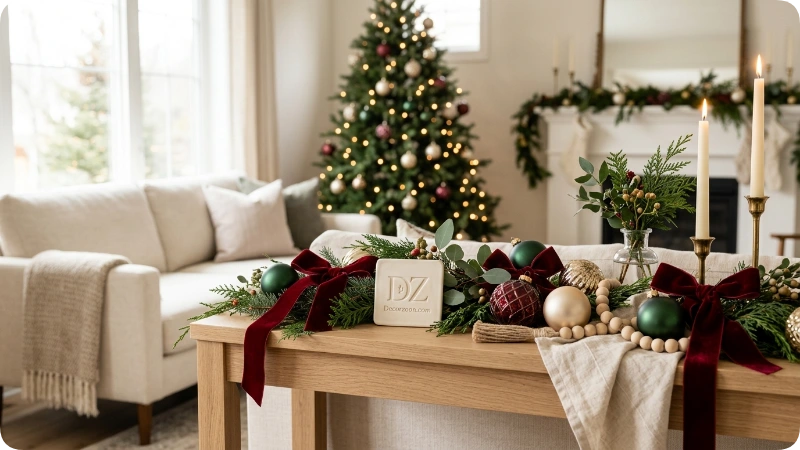
A coordinated color palette is one of the easiest ways to make Christmas and holiday decor look intentional. Instead of purchasing decorations in every color, start with the furniture, wall colors, flooring, and textiles you already have. Then select two or three complementary colors that can be repeated throughout the main living spaces.
Classic red, green, and gold: Combine deep green foliage with red ornaments and restrained gold accents. This traditional combination works particularly well with warm wood furniture, cream walls, and neutral upholstery.
White, cream, and champagne: Choose soft white ornaments, warm metallic details, ivory textiles, and natural greenery for a quieter, elegant look. Avoid using too many shiny finishes together, as they can make the arrangement feel busy.
Forest green, brown, and natural wood: Pair evergreen branches with wooden ornaments, pinecones, linen ribbons, and earthy ceramic pieces. This palette suits rustic, farmhouse, and nature inspired interiors.
Blue, silver, and white: Use navy or deep blue as the dominant accent, with silver ornaments and white textiles. This combination creates a crisp winter inspired appearance without relying on traditional red decorations.
Carry the selected colors across the tree, mantel, entryway, and dining table. Repeating a shade in several places makes separate arrangements feel connected. You do not need identical decorations in every room; consistent colors and materials are enough.
Create a Welcoming Entryway With Wreaths and Greenery
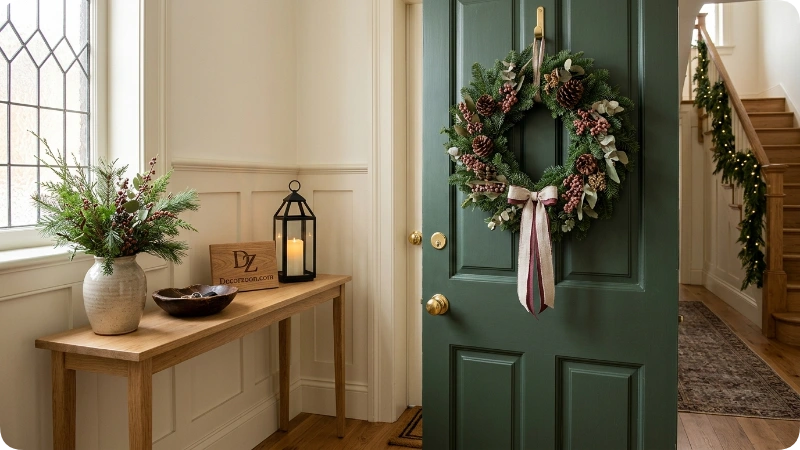
The entryway introduces your holiday decorating style before guests reach the main living area. A wreath, a little greenery, and carefully placed lighting can create a finished appearance without filling the entrance with oversized decorations.
Begin with a wreath sized appropriately for your front door. Evergreen branches, pinecones, berries, and a simple ribbon suit traditional homes, while eucalyptus style foliage, wooden accents, or an unadorned green wreath work well with contemporary interiors.
If you have a console table, place a small arrangement of greenery in a sturdy vase and add a decorative bowl or a compact seasonal object. Leave enough clear space for keys, bags, and everyday items. In a narrow hallway, wall mounted decorations and slim accessories are generally more practical than large floor displays.
For a covered porch, consider planters filled with evergreen branches, weather appropriate ornaments, and lantern style fixtures. Check that outdoor lights and extension cords are rated for their intended use and protected from moisture.
Renters can create a similar effect with removable hooks, freestanding planters, and tabletop decorations. Before hanging anything, check the surface and the product’s weight limits.
The goal is to create one clear focal point rather than crowding the entrance with multiple competing displays.
Style a Christmas Living Room With Layered Textures
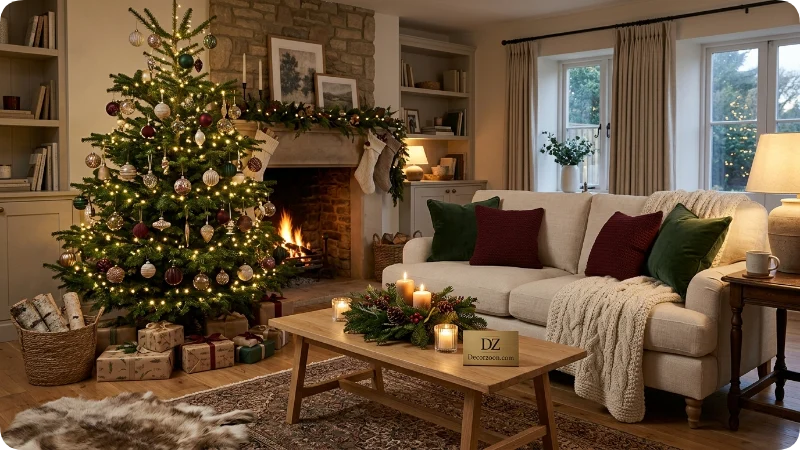
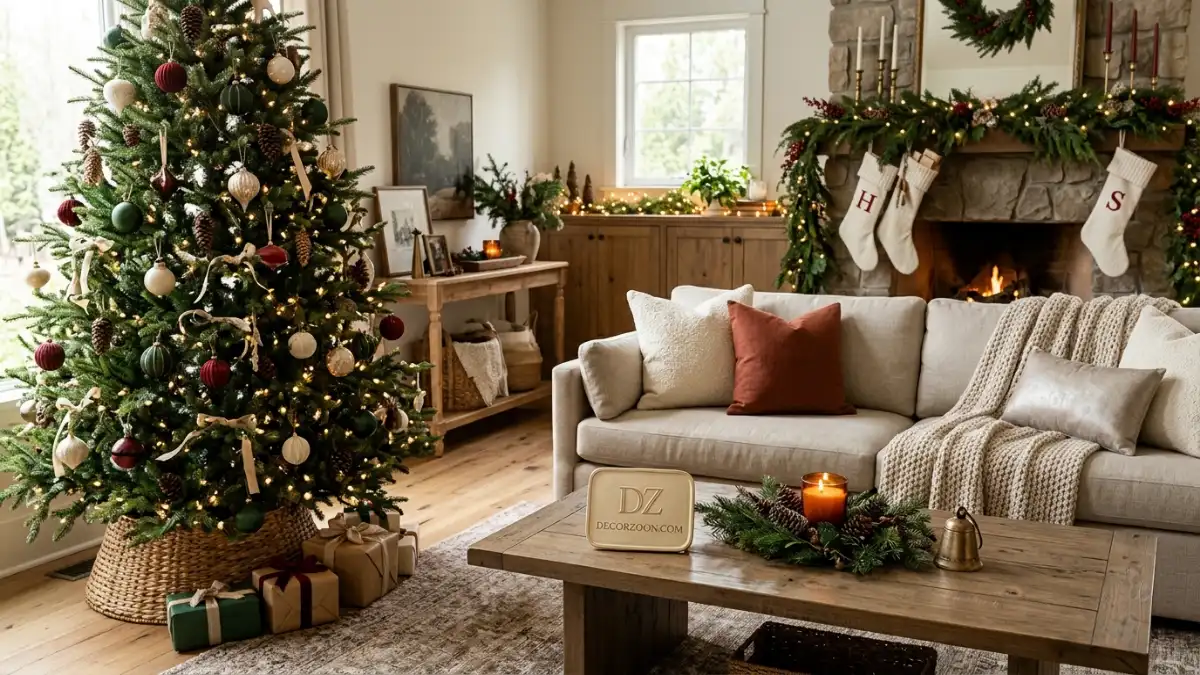
The living room often becomes the main gathering space during the holidays, making it a natural place to concentrate your decorating efforts. A Christmas tree, coordinated textiles, and a few well placed accessories can make the room feel festive while preserving comfortable seating and usable surfaces.
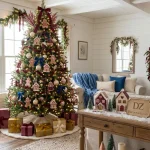
Start with the tree if you plan to have one. Position it where it can be enjoyed from the main seating area without blocking windows, doorways, or walkways. Select ornaments that complement the room’s existing colors rather than introducing several unrelated themes.
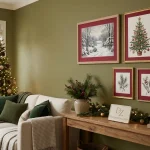
Next, update the soft furnishings. A forest green throw, two burgundy pillow covers, or a pair of cream cushions with subtle seasonal patterns can provide enough holiday color for a neutral sofa. Velvet, knitted fabric, linen, and faux fur introduce different textures, but use them selectively to avoid visual clutter.
Coffee tables benefit from low arrangements that leave room for drinks and everyday activities. Try a shallow tray with a small evergreen arrangement, a bowl of ornaments, or a few decorative objects in complementary finishes.
If your living room has limited space, decorate vertically with a wreath, a garland, or a small wall display instead of adding numerous tabletop pieces.
A successful holiday living room balances festive details with the comfort and function that make the space enjoyable throughout the season.
Decorate the Fireplace Mantel With Greenery and Balanced Layers
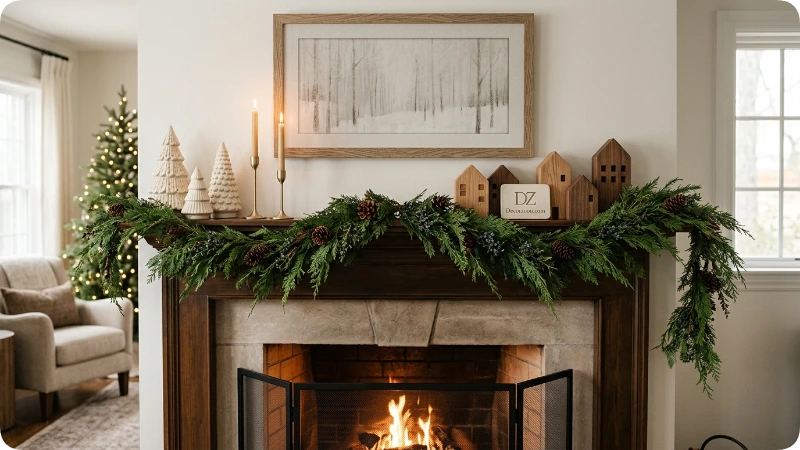
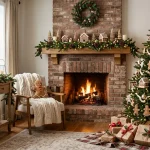
A fireplace mantel offers a natural focal point, especially when the living room has a Christmas tree nearby. The most effective arrangements combine greenery, varied heights, and a limited selection of decorative accents.
Begin with a garland that fits the mantel’s length. Evergreen foliage creates a traditional appearance, while a simpler arrangement of eucalyptus style leaves or sparse branches suits a restrained interior. Let a little greenery extend over the edges if the space allows, but keep it clear of the fireplace opening and any areas exposed to heat.
Add height with a mirror, framed artwork, or a central decorative piece. Then arrange smaller objects on either side, such as candlesticks, ceramic trees, wooden houses, or compact ornaments. The arrangement can be symmetrical for a formal appearance or intentionally uneven for a relaxed look.
For a classic palette, combine green foliage with red ribbon and a few gold accents. For a neutral mantel, use cream ceramics, natural wood, soft white lights, and understated metallic details.
Safety matters around fireplaces. Never allow greenery, fabric, ribbon, paper, or electrical cords to touch hot surfaces or open flames. Follow the fireplace manufacturer’s clearance requirements, and keep candles away from flammable materials.
If you do not have a fireplace, apply the same styling principles to a console table, floating shelf, or low bookcase. A defined horizontal surface can create a similar focal point.
Design a Festive Dining Table With a Simple Centerpiece
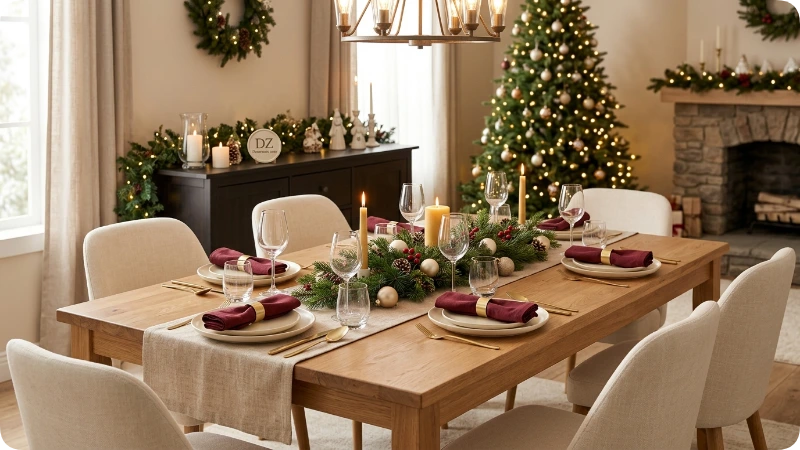
Holiday dining tables need to look inviting while remaining practical enough for meals, serving dishes, and conversation. The easiest way to achieve both goals is to keep the centerpiece low, use a consistent color scheme, and leave enough space for place settings.
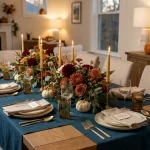
Start with a table runner or tablecloth that complements your dining room. Neutral linen provides a flexible base, while a plaid runner adds a traditional seasonal detail. Introduce greenery along the center of the table, then add a few small decorative elements such as pinecones, ornaments, or low ceramic trees.
For a classic arrangement, pair evergreen branches with red napkins and simple gold colored details. A modern table might use cream linens, clear glass, and restrained greenery instead.
Candles can contribute to the atmosphere, but their placement requires care. Keep open flames away from foliage, napkins, sleeves, and other combustible materials. Battery operated candles offer an alternative where space is limited or children and pets may brush against the arrangement.
Avoid tall centerpieces that obstruct eye contact across the table. If you want height, place the larger arrangement on a nearby buffet or sideboard instead.
For smaller dining areas, use a narrow runner, compact bud vases, and coordinated napkins rather than a sprawling garland. A thoughtful arrangement of a few elements often looks better than a table filled from end to end.
Add Christmas Decor to Kitchens and Everyday Spaces
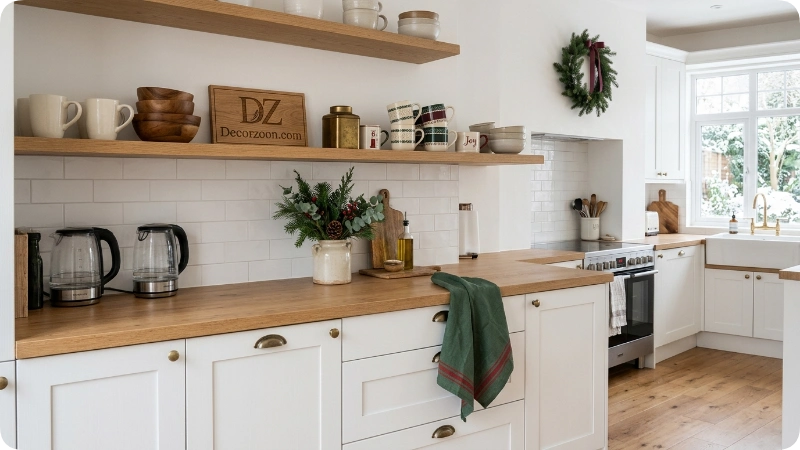
Kitchens, breakfast nooks, hallways, and bedrooms can benefit from small seasonal details, but they do not need the same amount of decoration as the main living room. The aim is to carry the holiday style into the rest of the home without interfering with daily routines.
In the kitchen, introduce a seasonal hand towel, a small wreath on an appropriate cabinet or wall, or a bowl of decorative ornaments on an unused counter corner. Keep cooking surfaces, food preparation areas, sinks, and appliance vents clear.
Open shelves can accommodate a few holiday mugs, small ceramic trees, or coordinated serving pieces. Arrange them with the everyday items already on display instead of replacing everything with seasonal accessories.
In a bedroom, try a textured throw at the foot of the bed, a subtle patterned pillow, or a miniature tabletop tree. Choose colors that work with your existing bedding so the room retains its restful atmosphere.
Bathrooms can be decorated with a seasonal hand towel, a small wreath, or a simple arrangement placed away from water and heat. Avoid decorations that obstruct ventilation, create slipping hazards, or interfere with electrical fixtures.
In a home office, a small tabletop tree or a strand of appropriately rated decorative lights can introduce a festive touch without taking up valuable workspace.
For every room, choose one or two details that serve a clear purpose. This approach keeps the decorating cohesive and makes cleanup easier when the holidays are over.
Try Rustic and Natural Christmas Decorations
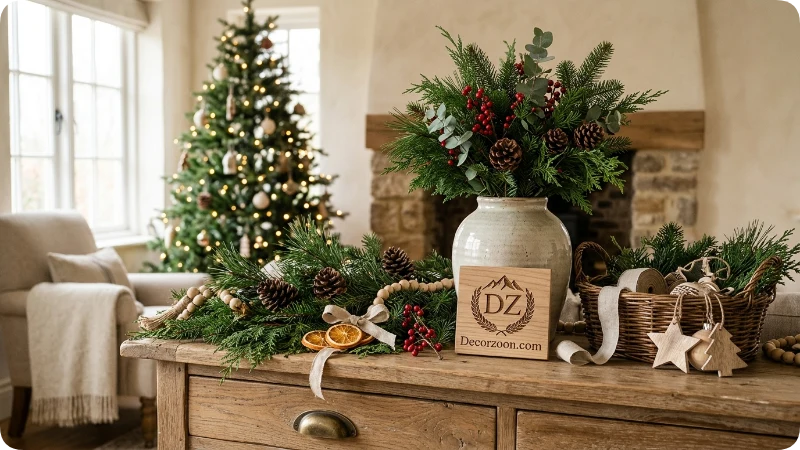
Natural materials are a practical choice when you want holiday decor that feels warm, textured, and connected to the outdoors. Pinecones, evergreen branches, wood, linen, dried citrus, and woven baskets can work together without requiring a large collection of themed ornaments.
Start with greenery as the main visual element. Arrange branches in a sturdy vase, drape a suitable garland across a console, or use a wreath with a simple natural finish. Introduce wooden ornaments, woven textures, or ceramic accessories to create contrast.
Dried orange slices can add color to garlands and wreaths, while pinecones provide texture on trays and tabletops. Make sure natural materials are fully dry before storing them, and keep dried foliage and paper based decorations away from heat sources and open flames.
A neutral rustic palette might include forest green, warm brown, cream, and muted brass. Repeat these tones in two or three places, such as the entryway, living room, and dining area, to create continuity.
For a farmhouse inspired look, combine greenery with a restrained plaid pattern, galvanized style containers, or simple wooden details. For a more contemporary natural scheme, use fewer objects, clean lined vessels, and plenty of open space.
Natural decor can also be economical when you reuse suitable pieces you already own. The important part is thoughtful arrangement: vary the textures, keep the palette limited, and avoid adding so many rustic accents that the room feels crowded.
Create an Elegant Holiday Look With Metallic Accents
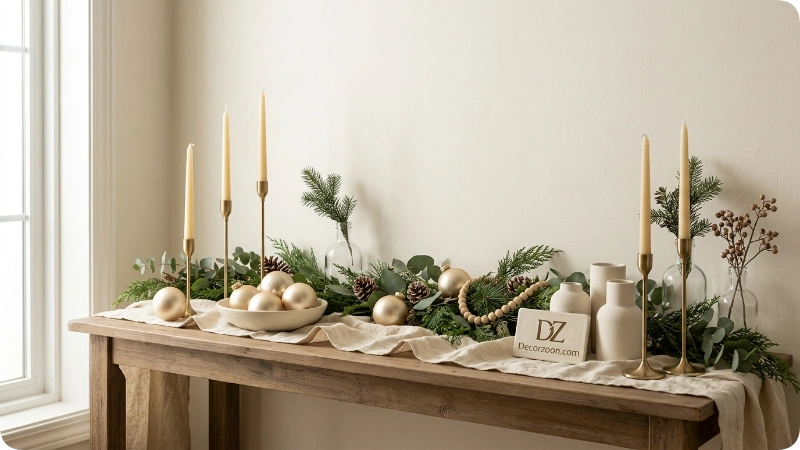
Metallic decorations can add a polished finish to Christmas and holiday decor, particularly when they are paired with matte materials and a restrained color scheme. Gold, champagne, silver, and copper each create a different effect, so choose one dominant metallic finish before introducing others.
Gold and cream work well with warm lighting, ivory textiles, and deep green foliage. Use gold colored candleholders, a few ornaments, or a decorative tray rather than covering every surface in a reflective finish.
Silver and white suit crisp, winter inspired arrangements. Pair silver ornaments with white ceramics, glass accessories, and cool toned textiles. A small amount of dark blue can provide contrast without overpowering the palette.
Copper and forest green create a warmer, earthier combination. Use copper colored baubles or tabletop accessories with evergreen branches and natural wood.
Balance reflective surfaces with materials that absorb light, such as linen, velvet, matte ceramics, and natural greenery. This contrast helps metallic objects stand out without making the arrangement look overly shiny.
Place metallic accents where they can catch existing room light, such as near a lamp or in a well lit display. Avoid putting fragile glass ornaments or unstable decorative objects in busy walkways or on surfaces where they can easily fall.
For a cohesive home, repeat the selected metallic finish in several small details rather than buying matching sets for every room. A consistent finish can connect different arrangements even when their shapes and materials vary.
Decorate on a Budget With Reusable Holiday Accessories
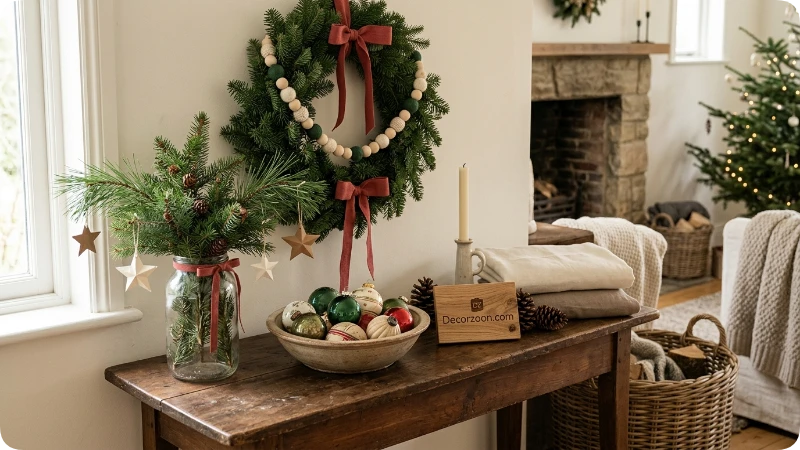
A festive home does not require a new collection of decorations every year. Reusing ornaments, changing their placement, and adding a few inexpensive accents can produce a noticeably different look while reducing unnecessary purchases.
Begin by sorting your existing decorations into three groups: pieces you want to display, items that need repair or replacement, and decorations you no longer plan to use. Check electrical lights and inspect ornaments before putting them out.
Next, choose a fresh arrangement using what you already own. A collection of red ornaments can look different when combined with greenery and wood instead of gold. Existing pillow covers, baskets, trays, and vases can also become part of a seasonal display.
Consider inexpensive projects that fit your available time and skill level:
- Paper decorations: Fold or cut paper stars and snowflakes for windows and walls, using suitable removable hanging methods.
- Ribbon updates: Add coordinating ribbon to an existing wreath, tree branches, or gift wrapping.
- Natural arrangements: Place dry pinecones or suitable branches in a vase or shallow bowl.
- Ornament displays: Arrange spare ornaments in a sturdy bowl or tray, keeping fragile pieces out of reach of children and pets.
- Textile swaps: Change cushion covers, table runners, or throws instead of replacing furniture or purchasing large decorative pieces.
When shopping, prioritize the areas that need the most attention. A wreath for the front door, a few coordinated tree ornaments, or a useful table centerpiece may have more impact than numerous small accessories scattered throughout the house.
Store reusable decorations in labeled containers, protect fragile items, and keep lights organized. Good storage helps preserve the collection and makes future decorating easier.
Make Holiday Decor Safe, Practical, and Easy to Remove
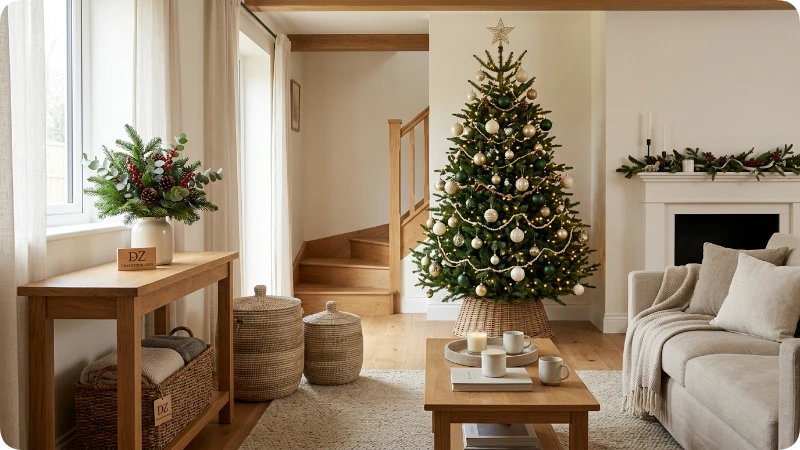
Good Christmas and holiday decor should look attractive throughout the season and remain manageable during everyday life. Before placing decorations, consider traffic flow, heat sources, electrical connections, household needs, and how everything will be taken down.
Keep hallways, stairways, doorways, and frequently used surfaces clear. Secure garlands and lightweight ornaments properly, and avoid placing heavy objects on unstable shelves or above seating areas.
When using decorative lights, follow the manufacturer’s indoor or outdoor rating, inspect wires and plugs, and avoid overloading electrical outlets. Use suitable clips rather than damaging cables with nails or staples. Turn off decorative lighting when it is unattended or when you go to sleep, following the product’s instructions.
Households with young children or pets should favor stable arrangements, nonbreakable ornaments in accessible areas, and securely mounted decorations. Avoid loose cords, small detachable pieces, and plants or materials that may be hazardous if chewed or swallowed.
Renters can favor freestanding displays, removable hooks rated for the intended load, and tabletop arrangements that do not require permanent alterations.
It is also helpful to plan for removal before decorating. Choose a few focal areas rather than covering every available surface, keep packaging for fragile pieces, and group decorations by room when storing them.
If you want to transition from Christmas to winter decor after the holiday, select reusable elements such as greenery inspired accessories, neutral textiles, wood, and simple white lighting. Remove the strongly Christmas specific details while retaining the pieces that suit the colder season.
Christmas & Holiday Decor: Frequently Asked Questions
How do I decorate my home for Christmas without making it look cluttered?
Choose a limited color palette, identify a few focal points, and repeat colors or materials throughout the main rooms. Leave some surfaces empty so the decorations have space to stand out. Prioritize the entryway, living room, and dining area before adding smaller details elsewhere.
What are the best colors for Christmas and holiday decor?
Traditional red and green remain a familiar choice, while white and champagne, forest green and brown, and blue and silver offer different looks. Select colors that complement your existing furniture and finishes instead of choosing a palette solely because it appears in a decorating trend.
How can I decorate for Christmas on a small budget?
Reuse existing ornaments, update a wreath with ribbon, rearrange accessories, and make simple paper decorations. Concentrate spending on a few high visibility areas rather than purchasing new items for every room.
How can I decorate a small home for the holidays?
Use compact tabletop trees, wall mounted wreaths, narrow garlands, and small arrangements that do not obstruct walkways. Repeat a simple palette and avoid bulky floor decorations. A few well placed items can create a festive atmosphere without reducing usable space.
How can I make Christmas decorations match my everyday interior?
Start with your existing room colors and materials. Introduce seasonal accessories in complementary shades, and repeat one or two finishes across different spaces. Neutral textiles, greenery, wood, and restrained metallic details can work with many interior styles.
When should I put up Christmas decorations?
Choose a time that suits your household, schedule, and traditions. Some people decorate in November, while others wait until December. If you want decorations that last beyond Christmas, start with neutral winter elements and add holiday specific ornaments closer to the occasion.
How can I decorate safely for Christmas with children or pets?
Secure trees and hanging decorations, keep fragile ornaments and small detachable pieces out of reach, and avoid loose electrical cords. Keep greenery, candles, and lights away from heat sources, and check if plants and decorative materials are safe for your household.
Final Thoughts
The best Christmas and holiday decor is not about filling every corner with seasonal accessories. It comes from selecting a clear color palette, creating a few memorable focal points, and combining greenery, lighting, textiles, and decorative objects in ways that suit your home.
Start with the areas you use most, such as the entryway, living room, and dining table. Then add smaller details to the kitchen, bedroom, or other spaces only where they improve the overall atmosphere.
Reusing decorations, choosing practical arrangements, and considering safety before installation can make the entire process more enjoyable.

Sophia Bennett is a passionate Home Decor Enthusiast and Content Writer at DecorZoon.com. She shares well-researched content on home decor, interior design, decorating trends, DIY ideas, and space-styling inspiration, helping readers create beautiful, functional, and stylish living spaces. Through practical tips and creative insights, Sophia makes it easier for homeowners and decor lovers to transform their homes with confidence and style.