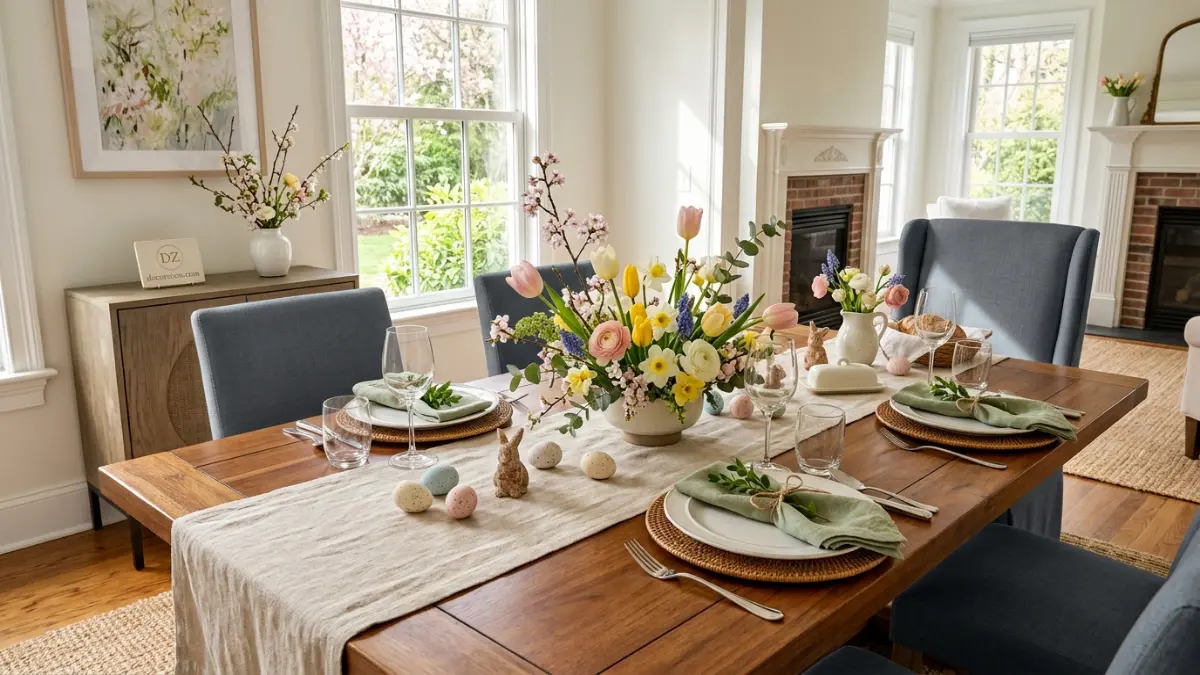
Easter table decor ideas can help you create a fresh, welcoming table scape for spring brunch, lunch, or dinner. If you prefer soft pastel colors, elegant floral centerpieces, rustic textures, or a modern minimalist look, a few thoughtful details can make your Easter gathering feel special.
Start with a coordinated color palette, then layer a table runner, fresh spring flowers, decorative eggs, and simple place settings to bring the design together. Woven baskets, natural greenery, candles, and small bunny accents can add seasonal charm without overcrowding the table.
You also don’t need to buy new decorations for every holiday; combining everyday tableware with a few Easter touches can create a beautiful setting on any budget. Explore these Easter table decor ideas for practical inspiration, creative styling tips, and simple ways to make your table both attractive and comfortable for guests.
Start With a Soft Spring Color Palette
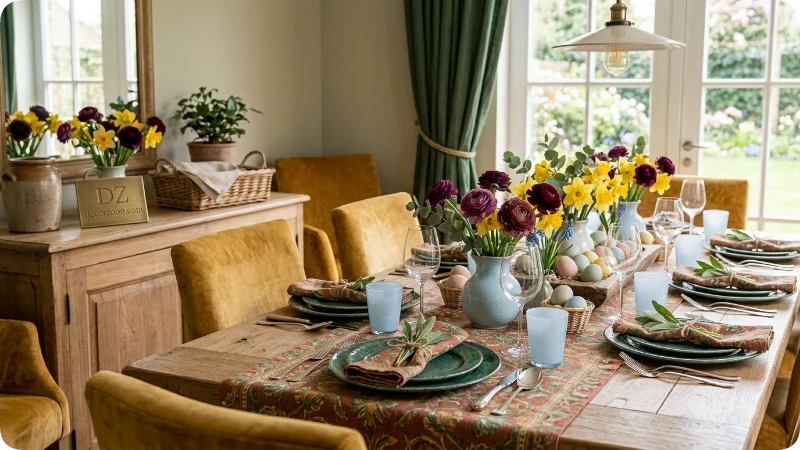
A cohesive color palette gives the entire Easter table direction before you add individual decorations. Pastels are an obvious choice, but you do not need to use every spring color at once. Try white and blush, sage and cream, pale blue and white, lavender and butter yellow, or soft pink with fresh green.
Use one dominant color on the tablecloth, runner, or dinnerware, then introduce a second color through napkins, flowers, or eggs. Keep a neutral shade such as white, ivory, natural wood, or woven rattan in the mix to prevent the table from looking overly busy.
For a more traditional Easter table, combine several gentle pastel shades. For a contemporary setting, use one pastel with warm neutrals and natural materials. This makes the Easter theme recognizable without relying heavily on novelty decorations.
What to avoid: mixing too many saturated colors, patterns, and Easter motifs in the same small area.
Build the Centerpiece Around Low Spring Flowers
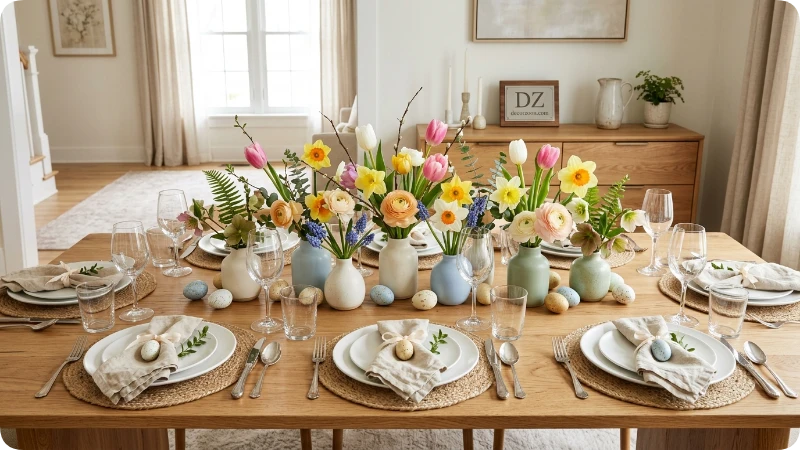
Flowers are one of the easiest ways to make an Easter table feel seasonal while keeping the decoration useful beyond the holiday. Tulips, daffodils, ranunculus, hyacinths, and other spring blooms can create a fresh centerpiece without requiring elaborate styling. Easter tablescape examples from HGTV and other design sources frequently use spring flowers as a central visual element.
Choose a low arrangement when guests will be sitting across from each other. Instead of one tall vase in the middle, consider several small vessels arranged along the table’s centerline. This creates rhythm while leaving sightlines open.
A narrow arrangement also works particularly well on smaller dining tables. Place the flowers on a tray if you want to move the entire centerpiece when food is served.
What to avoid: very tall arrangements that block faces or arrangements so wide that guests have to reach around them.
Use a Runner to Create a Clear Center Line
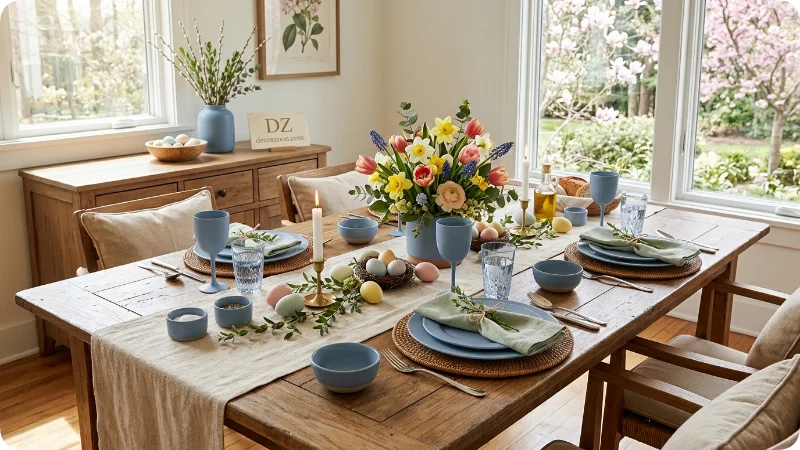
A table runner gives your Easter decor a visual starting point and helps organize the centerpiece, candles, eggs, and greenery. On a wood or natural finish table, a linen runner can soften the setting without hiding the table’s character. On a plain white tablecloth, a colored or patterned runner can provide the contrast the table needs.
For a relaxed spring look, try natural linen, soft gingham, subtle florals, or a muted pastel. If your plates already have a strong pattern, keep the runner quieter.
Place the runner lengthwise down the center, then arrange the main decorative elements along it. You can also use several narrow runners across the table when creating defined place setting zones, an approach seen in contemporary Easter tablescape styling.
What to avoid: combining a busy runner with heavily patterned plates, napkins, and centerpiece containers unless the colors are tightly coordinated.
Create Easter Place Settings With One Seasonal Detail
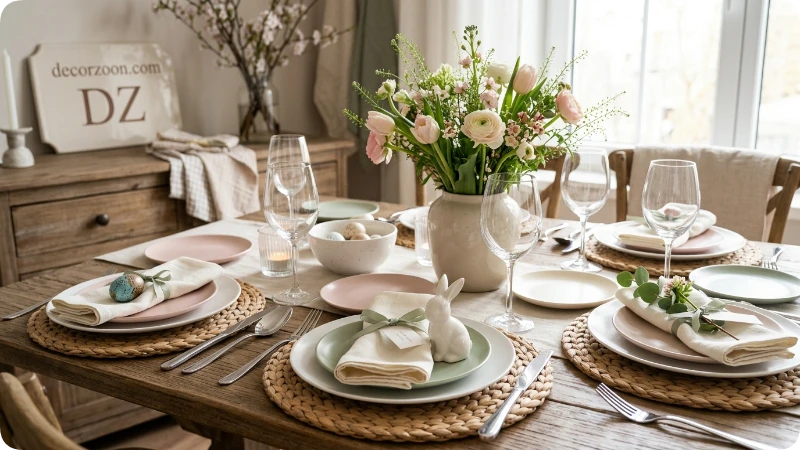
A well styled place setting does not need several Easter decorations. Start with the practical pieces plate, flatware, glassware, and napkin then add one seasonal detail.
A painted or speckled egg can sit on the plate, a small bunny can accompany the napkin, or a sprig of greenery can be tucked into a simple napkin fold. For a more formal table, use a handwritten place card. For a casual family brunch, a small wrapped treat can serve as both decoration and favor.
Using one recognizable Easter cue at each seat keeps the table coordinated rather than cluttered. Place cards and personalized details are also recurring elements in current Easter tablescape inspiration.
What to avoid: placing multiple decorative objects directly beside every plate when the table already has a substantial centerpiece.
Arrange Decorative Eggs Along the Centerpiece
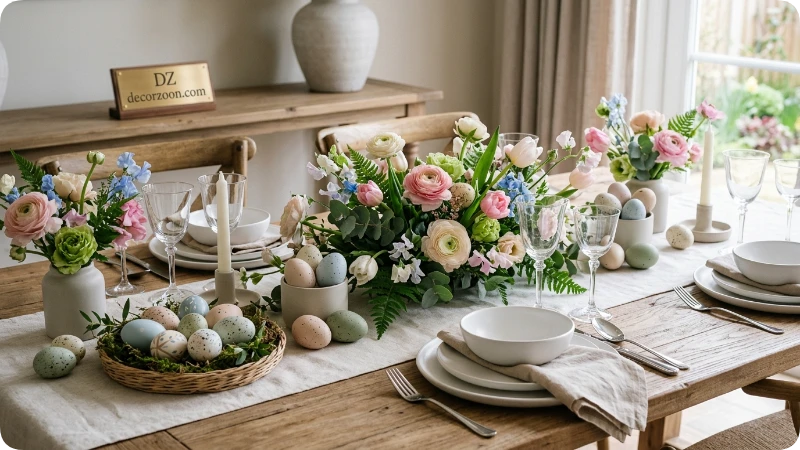
Decorative eggs are an easy way to make the table unmistakably Easter without turning the entire setting into a themed display. Use a small number of ceramic, wooden, painted, or speckled eggs and distribute them naturally around flowers or greenery.
For a refined look, repeat two or three colors already found elsewhere on the table. For example, pale blue eggs can connect blue napkins with white flowers, while sage and cream eggs can reinforce a natural palette.
Eggs can also be displayed in shallow bowls, woven baskets, small nests, or open trays. HGTV’s Easter tablescape ideas specifically combine eggs with nests, spring flowers, and coordinated colors.
What to avoid: scattering eggs randomly across the entire table. Concentrated groupings usually create a stronger focal point and leave more usable space.
Add Woven Baskets and Natural Texture
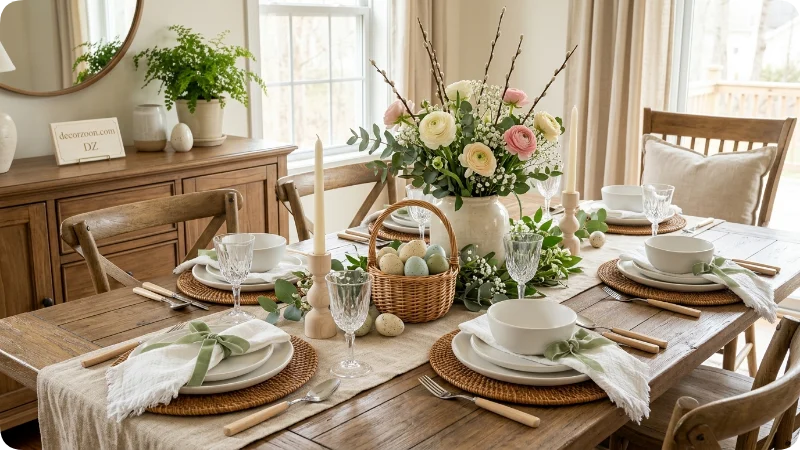
Woven baskets, rattan placemats, wood accents, linen napkins, and natural fiber runners can give an Easter table warmth without adding more color. They are particularly useful when your palette is mostly white or pastel and needs some visual texture.
A shallow basket can hold decorative eggs or a small floral arrangement. Rattan chargers can establish a natural foundation beneath white plates. A woven napkin ring can introduce texture at each place setting without competing with the centerpiece.
This approach also helps Easter decor transition into the broader spring season. Natural textures and understated seasonal details are recurring elements in recent Easter tablescape guidance.
What to avoid: using too many different natural textures at once. Choose two or three materials and repeat them intentionally.
Mix Easter Motifs With Fresh Greenery
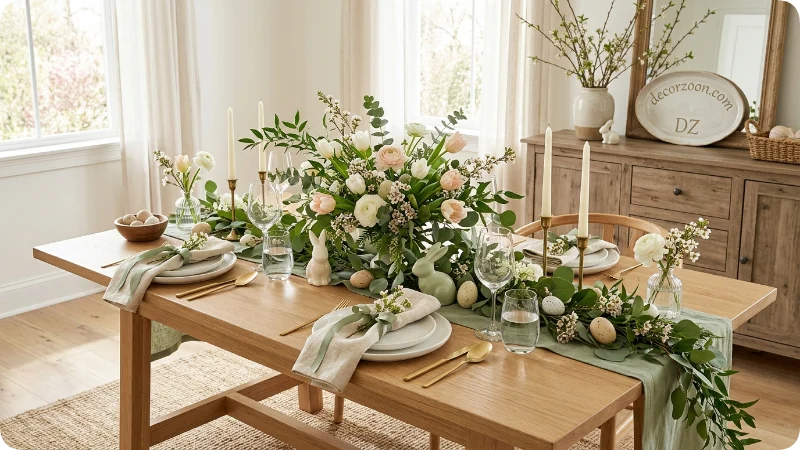
Bunnies, eggs, nests, and chicks can be charming, but they work better when balanced with greenery and flowers. Instead of filling the table with individual Easter figurines, use greenery as the visual connector between seasonal accents.
Tuck small branches, herbs, or leafy stems around ceramic bunnies and eggs. A few green leaves can soften the transition between decorative objects and the table surface.
For a more sophisticated arrangement, choose one main Easter motif such as rabbits or eggs and let the greenery and flowers carry the rest of the seasonal feeling. This keeps the table recognizable as Easter while making it suitable for a family brunch or more formal dinner.
What to avoid: placing a different Easter character at every seat. Repetition works best when the motif is controlled.
Use Candles for an Easter Dinner Table
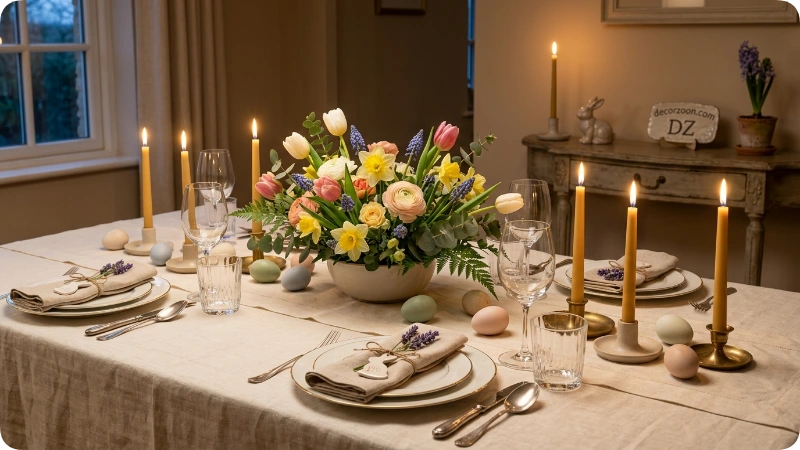
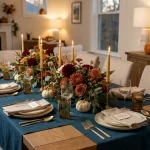
Candles can shift an Easter table from bright daytime brunch styling to a warmer dinner setting. For daytime gatherings, a few small votives can provide subtle detail without competing with flowers. For an evening meal, slender tapers or small candleholders can create vertical rhythm along the center of the table.
Keep candles separated from paper place cards, loose ribbons, dry moss, napkins, and other flammable materials. Stable holders should sit on a level surface where they are unlikely to be knocked over.
If your table is already filled with flowers and decorative eggs, choose simple candleholders. If the centerpiece is minimal, candleholders can provide additional structure.
For households where open flames are inconvenient, battery operated candles can provide a similar visual layer with less maintenance.
What to avoid: placing candles directly beside loose greenery or decorations that can shift into the flame.
Make a Simple Easter Brunch Table Feel Special With Food
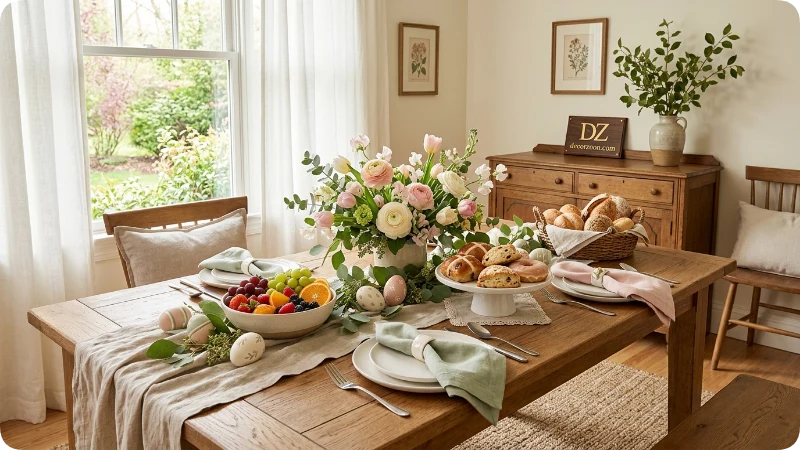
Food can become part of the table styling when you choose attractive serving pieces and arrange them intentionally. A bowl of colorful fruit, a tiered stand of pastries, a cake stand, or a basket of bread can contribute to the visual composition while serving a practical purpose.
Keep decorative items concentrated around the edges or center so the food remains accessible. If the centerpiece occupies the middle of the table, use serving dishes that repeat one or two colors from the decor.
This approach is especially useful for casual Easter brunches because fewer purely decorative objects are needed. Easter table guides commonly combine table decoration with food presentation, particularly for brunch and family gatherings.
What to avoid: using food as decoration if it will make serving awkward or force guests to move the centerpiece repeatedly.
Create a Kid Friendly Easter Table Without Losing Style
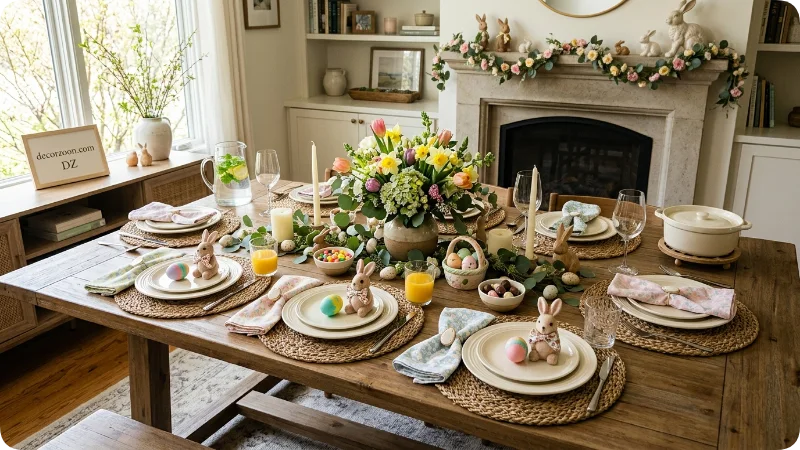
A family Easter table can be playful without covering every surface in bright novelty decorations. Give children a designated detail at each place setting, such as a decorated egg, small bunny favor, simple craft, or treat.
Use washable or durable materials when possible. Fabric napkins can be replaced with easy care options, and sturdy plates are more practical than delicate serving pieces when younger children are attending.
A separate children’s table can use brighter colors and more playful motifs while the main dining table remains restrained. DIY Easter table sources frequently include kid friendly place settings, treats, crafts, and favors as part of the celebration.
What to avoid: small breakable objects near young children or decorations that take up the space needed for plates and food.
Try a Monochromatic Easter Table for a More Modern Look
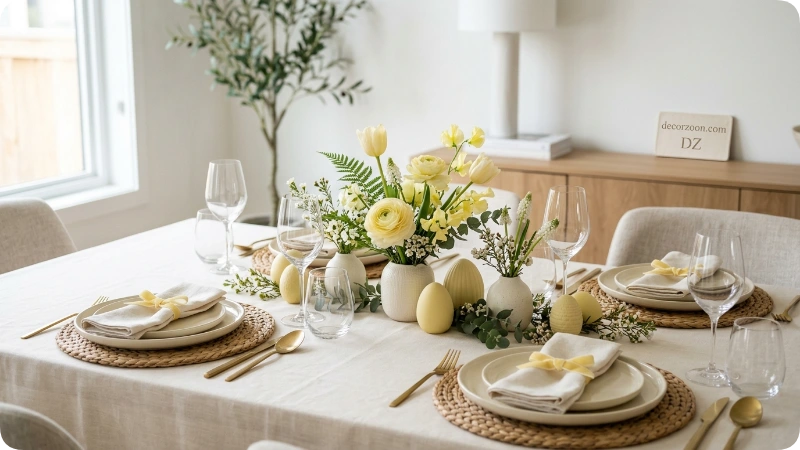
Easter does not have to mean a rainbow of pastels. A restrained palette can create a cleaner contemporary tablescape.
Try white with pale green, cream with butter yellow, or soft blue with ivory. Keep the plates, linens, flowers, and decorative eggs within the same color family while varying the texture.
For example, an ivory tablecloth can support cream ceramic plates, pale yellow flowers, natural woven chargers, and matte yellow eggs. The subtle differences in texture prevent the setting from looking flat even though the colors remain closely related.
This approach is especially useful for dining rooms with existing neutral furniture because the Easter details can feel integrated rather than temporary.
What to avoid: making every surface exactly the same shade. A few tonal variations give a monochromatic table more depth.
Use a Vintage Inspired Mix of China and Spring Flowers
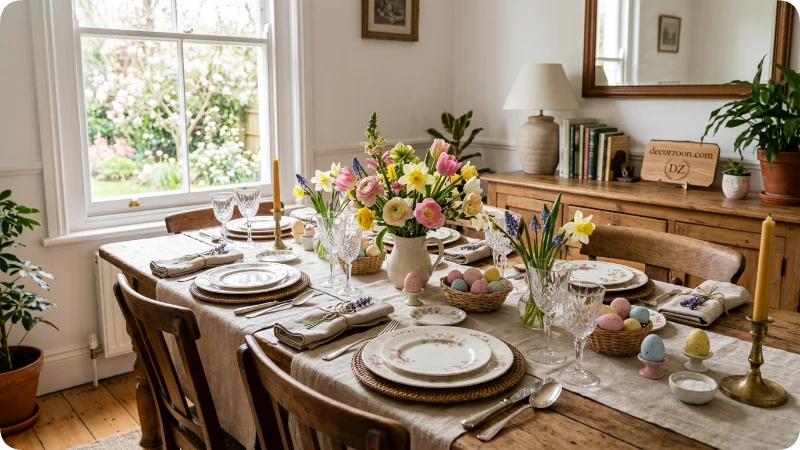
If you have inherited dishes, thrifted plates, or mismatched china, Easter is a good occasion to use them together. A vintage inspired table can combine floral plates, glassware, linen napkins, and garden flowers without requiring a matching dinnerware set.
Keep the look intentional by repeating at least one color across the different pieces. If the plates contain pink and green flowers, echo those shades in the napkins or centerpiece.
HGTV highlights vintage inspired Easter settings that mix heirloom style china with thrifted pieces and garden blooms.
This style works particularly well for a relaxed brunch because slight variations make each place setting feel collected rather than overly formal.
What to avoid: mixing unrelated patterns without a shared color connection
Style a Small Easter Table With Fewer, Larger Statements
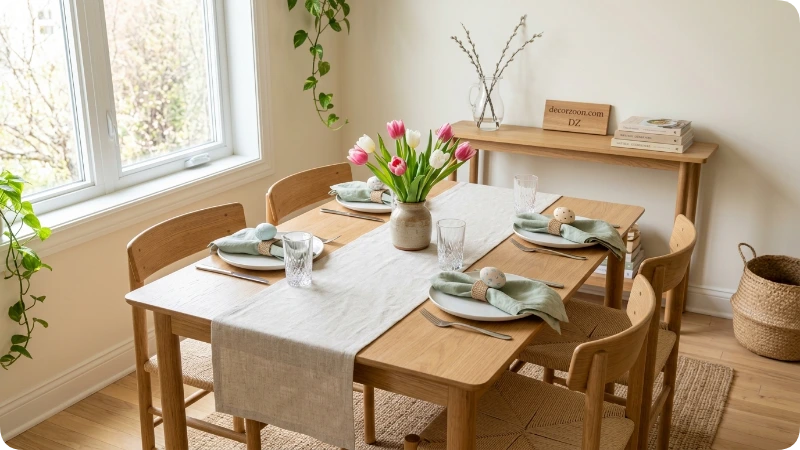
A small dining table does not need miniature decorations everywhere. In fact, reducing the number of objects usually creates a more comfortable setting.
Choose one narrow centerpiece, a simple runner, and one seasonal detail at each place. A small vase of tulips can replace a large floral arrangement, while a single decorative egg can provide the Easter reference.
If the table doubles as a workspace or everyday dining area, use decorations that can be moved quickly. A centerpiece on a tray is particularly practical because the entire arrangement can be lifted away when you need the surface.
For apartments and smaller dining spaces, prioritize vertical restraint, clear place settings, and easy storage after Easter.
What to avoid: wide baskets, oversized floral arrangements, and multiple decorative layers that reduce usable table space.
Make the Table Easy to Transition Into Spring
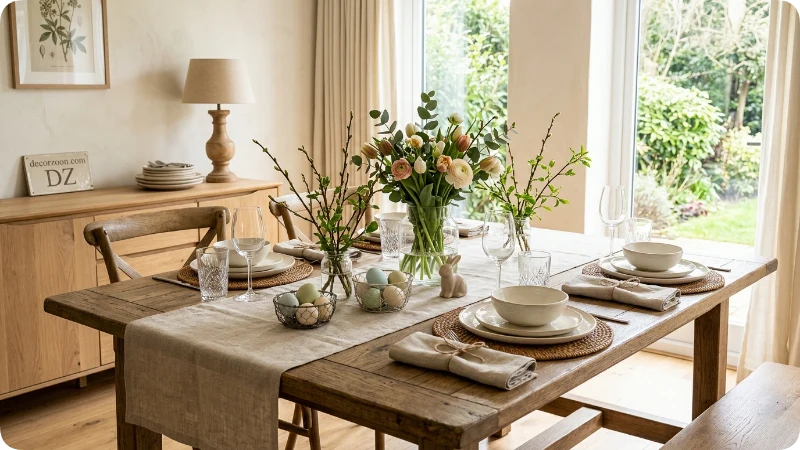
One of the most practical approaches is to build the table so only a few pieces need to be removed after Easter. Keep the foundation runner, neutral dishes, woven placemats, glassware, and greenery focused on spring rather than the holiday itself.
Then use removable Easter details such as eggs, bunny figures, themed place cards, and seasonal napkin rings.
After Easter Sunday, remove those accents and leave the flowers, greenery, linens, and natural textures in place. This creates a spring table without requiring a complete redecorating session.
The idea is especially useful if you host several spring gatherings close together. The Easter specific pieces can disappear while the rest of the tablescape continues into April and beyond.
What to avoid: buying large amounts of highly specific holiday decor that has little use after Easter.
Finish With One Memorable Detail Per Place Setting
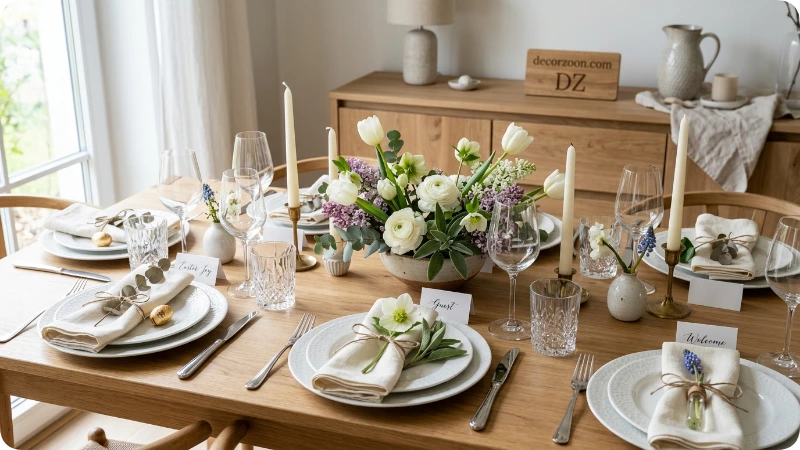
The final layer should make guests feel considered rather than simply surrounded by decorations. A handwritten name card, small chocolate egg, single flower stem, decorated cookie, or miniature favor can provide that personal touch.
Keep the detail proportional to the place setting. A small favor can sit above the plate or beside the napkin, while a flower stem can be tucked through a napkin fold.
If the centerpiece is elaborate, keep individual details quiet. If the center of the table is simple, you can give each place setting a little more personality.
The goal is consistency: repeat the same type of detail at each seat while allowing natural variation in flowers, handwriting, or handmade elements.
What to avoid: turning every place setting into a separate mini centerpiece.
How to Pull the Whole Easter Table Together
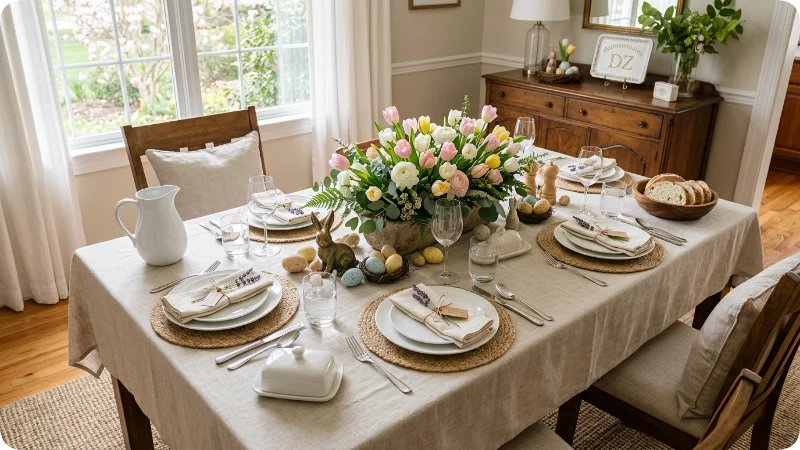
A successful Easter tablescape does not require every Easter decoration you own. Choose the visual direction first, then layer the table in this order:
- Foundation: tablecloth, runner, or exposed tabletop.
- Color: choose one dominant shade plus one or two supporting tones.
- Centerpiece: add low flowers, greenery, or a compact arrangement.
- Place settings: establish plates, flatware, glasses, and napkins.
- Easter accents: add eggs, bunnies, nests, or seasonal place cards selectively.
- Texture: introduce linen, rattan, wood, ceramic, or woven materials.
- Lighting: add candles or battery lights when appropriate.
- Final edit: remove anything that makes the table difficult to use.
The strongest tables tend to balance decoration with function. Guests still need clear sightlines, room for serving dishes, and enough space to eat comfortably. That practical balance is a recurring point in recent Easter tablescape guidance.
Easter Table Decor Mistakes to Avoid
Using too many Easter motifs: Pick one or two recognizable motifs rather than combining eggs, rabbits, chicks, baskets, florals, and themed dinnerware everywhere.
Blocking conversation: Keep the main centerpiece low enough that guests can see across the table.
Ignoring the color palette: Repeat colors between flowers, napkins, plates, and decorative accents so the table feels intentional.
Overfilling a small table: Decoration should leave enough room for plates, serving dishes, and comfortable movement.
Making everything disposable: Reusable linens, baskets, ceramic eggs, and neutral dishes can serve multiple seasons.
Forgetting candle safety: Keep flames stable and away from paper, fabric, dry moss, loose greenery, and other flammable materials.
Frequently Asked Questions
What colors work best for an Easter table?
Pastels such as blush pink, pale blue, lavender, soft yellow, and sage green are traditional choices, but neutral combinations such as white and green or cream and yellow can create a more restrained spring table.
What should I put in the center of an Easter table?
A low floral arrangement, several small vases, a shallow basket with decorative eggs, or a combination of flowers and greenery can work well. Keep the centerpiece low enough to preserve conversation and narrow enough to leave room for serving.
How do I decorate an Easter table without using bunnies?
Focus on spring flowers, pastel or natural linens, decorative eggs, greenery, woven textures, and seasonal place settings. The table can feel distinctly Easter without using an obvious character motif.
How can I make Easter table decor look elegant?
Limit the palette, repeat a few materials, keep the centerpiece controlled, and use seasonal details selectively. Natural flowers, linen, ceramic, glass, and woven textures generally create a more restrained appearance than a large collection of novelty decorations.
How do I decorate a small table for Easter?
Use a narrow runner or no runner, one compact centerpiece, simple place settings, and one small Easter detail at each seat. Avoid wide arrangements that consume the table’s usable surface.
Conclusion
The most useful Easter table decor ideas balance seasonal character with the practical needs of a real gathering. Start with a clear spring palette, add a low floral centerpiece, establish comfortable place settings, and use eggs, greenery, baskets, or bunny accents as supporting details rather than filling every available space.
If your table is formal, rustic, colorful, modern, or family friendly, a few repeated colors and materials will make the setting feel cohesive.
After Easter, remove the holiday specific pieces and keep the flowers, linens, and natural textures for a simple spring tablescape that can continue through the season.

Sophia Bennett is a passionate Home Decor Enthusiast and Content Writer at DecorZoon.com. She shares well-researched content on home decor, interior design, decorating trends, DIY ideas, and space-styling inspiration, helping readers create beautiful, functional, and stylish living spaces. Through practical tips and creative insights, Sophia makes it easier for homeowners and decor lovers to transform their homes with confidence and style.