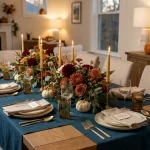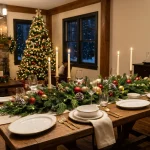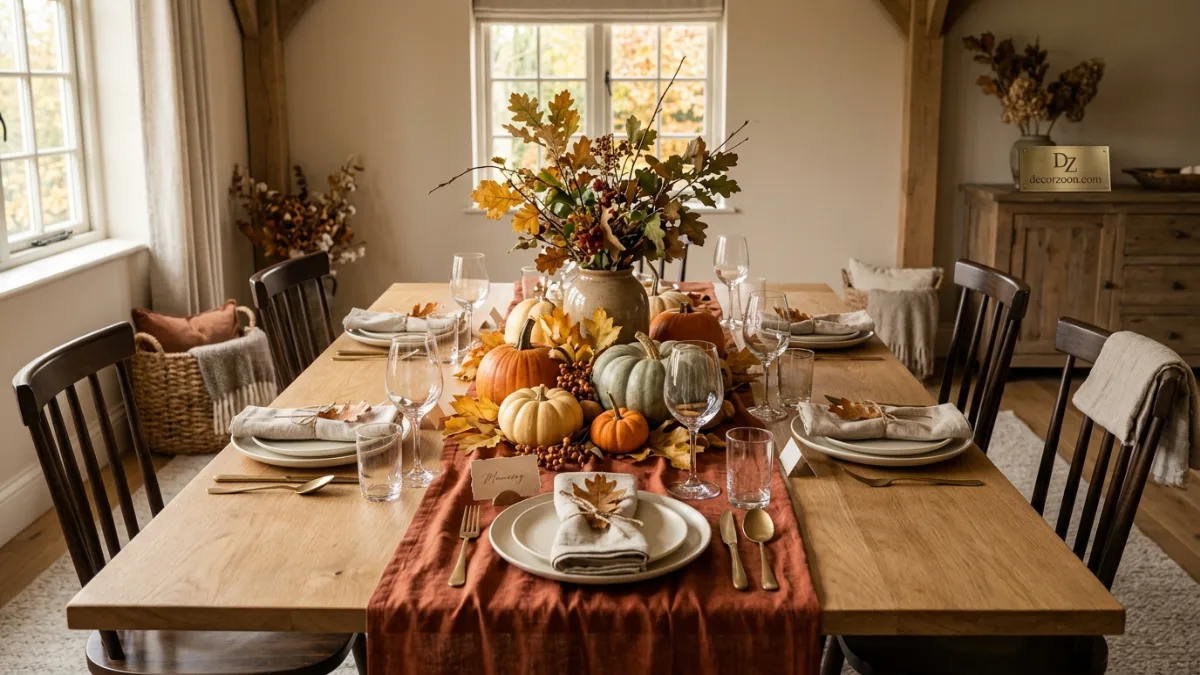
Fall table decor ideas can help you bring autumn colors and natural textures to your dining space without covering every inch of the table. If you’re styling a kitchen table for everyday meals, preparing a dining room for guests, or planning a Thanksgiving gathering, the best arrangement combines a clear focal point, a balanced color palette, and decorations that leave enough room for people to eat comfortably.
You don’t need expensive decorations or a formal tablescape to create an inviting seasonal look. A few small pumpkins, a linen runner, branches of autumn leaves, or a simple candle arrangement can make an ordinary table feel ready for fall.
The ideas below cover several styles, from rustic farmhouse arrangements to modern neutral centerpieces and colorful autumn displays. Each includes practical guidance on what to use, where to place it, and how to keep the table attractive and functional.
Create a Classic Pumpkin Centerpiece
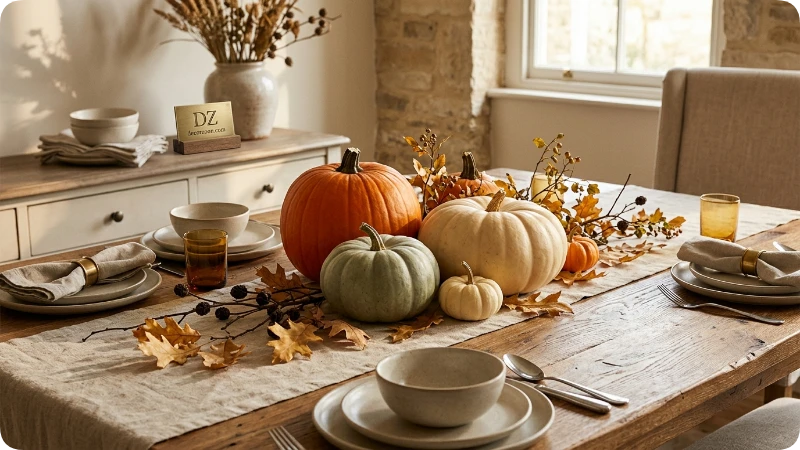
Pumpkins are a natural starting point for fall table decor because they immediately suggest the season. The key is to arrange them in a group rather than scattering individual pumpkins randomly across the table.
Choose three to five pumpkins in different sizes, depending on your table length. Mix small orange pumpkins with cream or muted green varieties for a more layered arrangement. Place the largest pumpkin slightly off center, then position the smaller ones around it to create a loose triangular shape.
A natural linen runner, a few autumn leaves, or short branches can fill the gaps without making the display look crowded.
How to style it:
- Use real pumpkins for a natural look or reusable faux pumpkins for a display that lasts all season.
- Keep the tallest pumpkin toward the center of the arrangement rather than directly in front of diners.
- Pair orange pumpkins with warm wood for a traditional look, or cream pumpkins with beige linens for a softer palette.
- Leave clear space around the centerpiece for serving dishes.
Avoid making the arrangement too symmetrical. Slight differences in height, shape, and color make it look more natural.
Style a Neutral Fall Table With Cream and Natural Wood
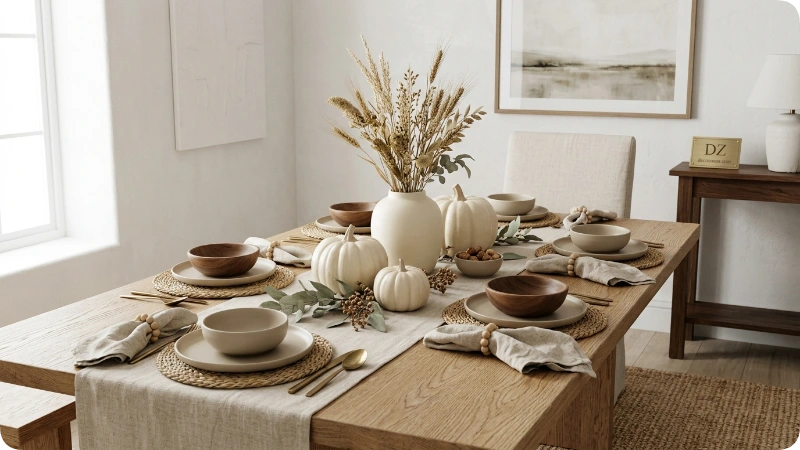
If bright orange decorations don’t suit your home, use a softer autumn palette built around ivory, oatmeal, warm beige, and natural wood. The result still feels seasonal, but it works with everyday dinnerware and furniture you may already own.
Start with an oatmeal colored runner or an ivory tablecloth. Add two or three cream pumpkins, a matte ceramic vase, and a few dried grasses or branches. Natural wood bowls and woven placemats introduce texture without adding another strong color.
The secret to making a neutral table look intentional is contrast. Combine smooth ceramic with textured linen, pale pumpkins with darker wood, and delicate stems with solid, rounded objects.
A practical styling formula:
- Base: Beige linen or a natural cotton runner.
- Focal point: A low cream ceramic bowl or a small group of ivory pumpkins.
- Texture: Wooden accessories, woven placemats, or dried stems.
- Accent: Muted green or antique brass.
Avoid using exactly the same shade and texture for every piece. A little contrast prevents the table from looking flat, especially in a room with pale walls and light furniture.
Bring Autumn Leaves and Branches to the Table
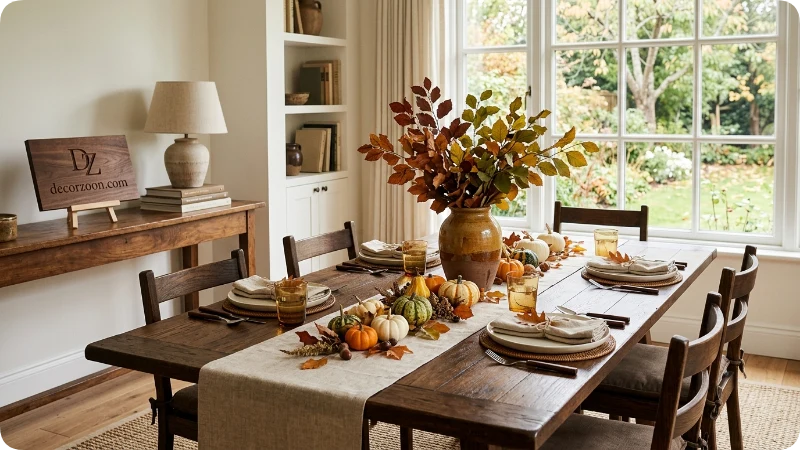
Autumn foliage creates movement and color without requiring a large collection of seasonal ornaments. A few carefully selected branches can become the main feature of a table, especially when placed in a simple vase.
For a long rectangular table, arrange several low branches along a runner or place them in a narrow vase near the center. For a round table, use a compact arrangement that spreads outward rather than rising too high.
Choose foliage in rust, ochre, burgundy, muted olive, or golden brown. Pair it with plain table linens so the leaves remain the main attraction.
Make the arrangement practical:
- Use a sturdy, stable vase that won’t tip easily.
- Trim branches so they don’t extend into diners’ faces or interfere with serving dishes.
- Choose reusable faux foliage if you want a display that lasts throughout the season.
- If gathering natural materials outdoors, use clean, dry, pest free branches and avoid protected plants.
Real leaves can crumble and shed as they dry. For an everyday table, durable faux leaves or a small vase of suitable branches may be easier to maintain than a loose layer of foliage.
Add Warm Candlelight for an Elegant Autumn Setting
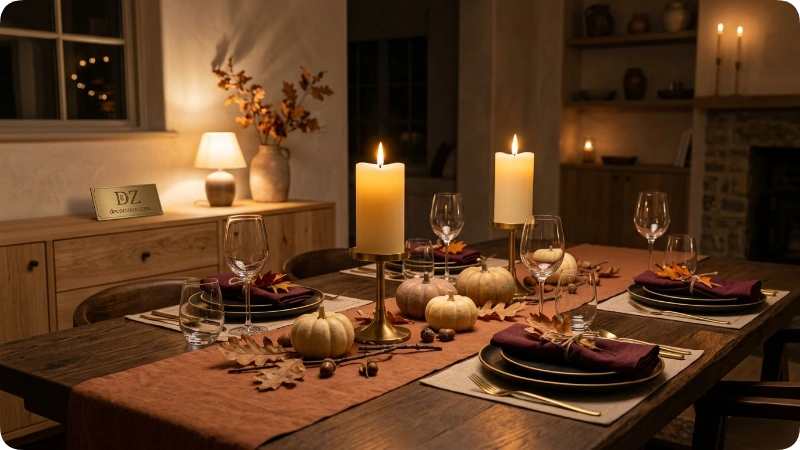
Candles can make an autumn table feel more considered without adding lots of decorative objects. Their vertical shapes also balance low pumpkins, bowls, and greenery.
For a simple arrangement, place two or three candleholders along the center of the table, then add a few small pumpkins or short branches around their bases. Choose ivory candles for a classic look, amber tones for a warmer palette, or muted burgundy for a richer autumn scheme.
Brass candleholders work well with traditional and elegant interiors. Black metal gives the arrangement a more modern edge, while wooden holders suit a relaxed rustic table.
Keep candlelight functional and safe. Use stable holders on a heat resistant surface, keep flames away from dried leaves, fabric, and other flammable decorations, and never leave burning candles unattended. If the centerpiece contains dried foliage or children and pets are nearby, battery operated candles are a sensible alternative.
For everyday meals, a few small LED votives may provide enough visual warmth without requiring extra maintenance.
Decorate With Apples, Pears, and Seasonal Produce
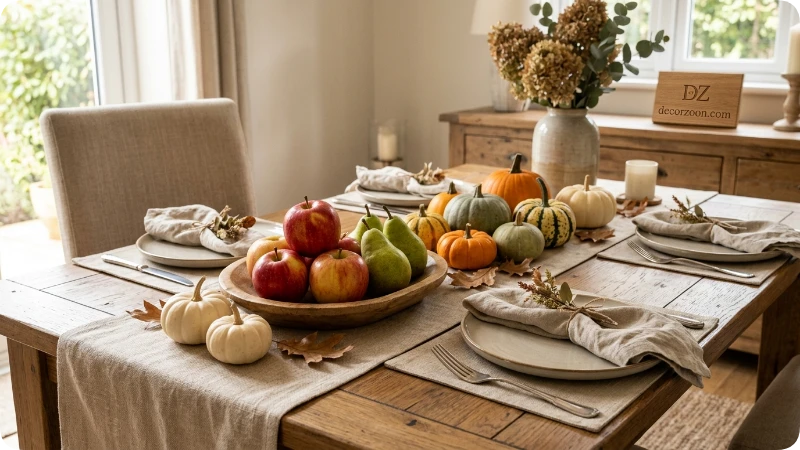
Fresh produce offers an easy alternative to buying decorations that you’ll store away after autumn. Apples, pears, and small gourds provide natural shapes and colors that work beautifully with wood, linen, and simple ceramic dishes.
Place red or golden apples in a shallow wooden bowl, or arrange green pears beside cream pumpkins on a narrow tray. For a more traditional harvest look, add a few small gourds in muted orange and green.
This idea is particularly useful when you want a centerpiece that feels connected to the season without looking overly themed.
How to make it work:
- Choose one main fruit color, such as red apples or golden pears.
- Add a contrasting material, such as a wooden bowl or ceramic platter.
- Use only a few supporting accents, like miniature pumpkins or a short leafy branch.
- Keep the display separate from serving food if decorative materials aren’t food safe.
Fresh produce can bruise or attract insects if left out too long. Check the bowl regularly and replace anything that’s beginning to spoil. If you prefer a longer lasting arrangement, use faux fruit alongside real natural materials.
Use a Fall Table Runner to Tie Everything Together
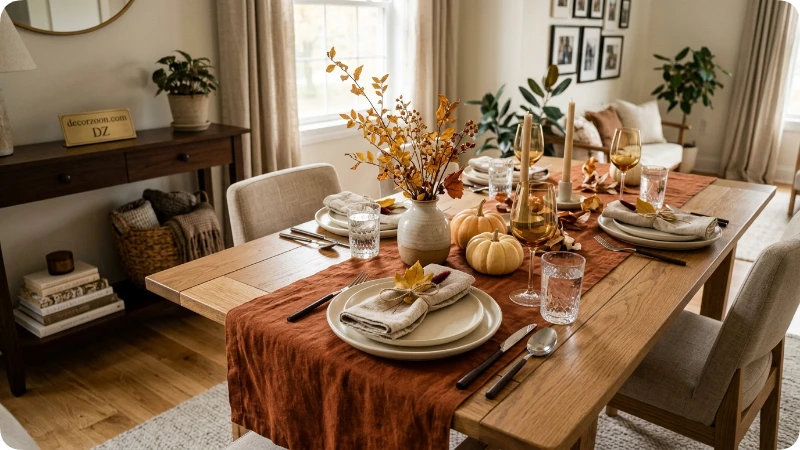
A table runner is one of the easiest ways to introduce autumn color because it creates a visual foundation for the rest of the arrangement. It can also help a few inexpensive decorations look coordinated.
For a traditional fall look, try rust, terracotta, or muted mustard. For a softer style, choose oatmeal, taupe, or warm ivory. Deep olive and burgundy are useful when you want a more dramatic palette.
The runner should complement the table rather than hide its shape. On a beautiful wooden table, a narrow linen runner leaves much of the grain visible. On a plain or older tabletop, a wider runner can create a more finished appearance.
Pair a patterned runner with simple plates and understated decorations. If the runner is solid colored, you have more freedom to introduce patterned napkins or textured placemats.
For a small kitchen table, avoid combining a bulky runner, large placemats, and an oversized centerpiece. One textile layer and one compact focal point are often enough.
Create a Rustic Farmhouse Fall Tablescape
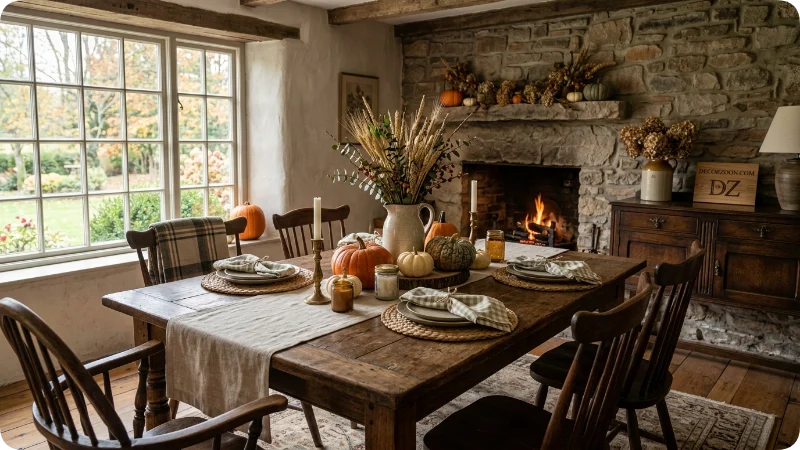
A farmhouse inspired table combines natural materials, simple shapes, and practical objects. Instead of buying a complete matching decoration set, bring together a few pieces with different textures that share a similar color palette.
Start with a wooden table or a plain linen runner. Add a ceramic pitcher filled with dried stems, a small group of pumpkins, and wooden or woven accessories. A vintage style serving board can act as a base for the centerpiece and make the arrangement easy to move when it’s time to eat.
For color, combine warm wood with cream, muted orange, and soft green. If you like a more traditional farmhouse look, introduce a small amount of checked fabric through napkins or a runner.
What makes this style work: The materials feel related, but they don’t have to match perfectly.
Avoid adding too many rustic accents at once. Burlap, distressed signs, metal containers, plaid fabric, and multiple wooden objects can compete for attention. Choose two or three materials and let the rest of the table remain simple.
Arrange a Small Fall Centerpiece for a Kitchen or Apartment Table
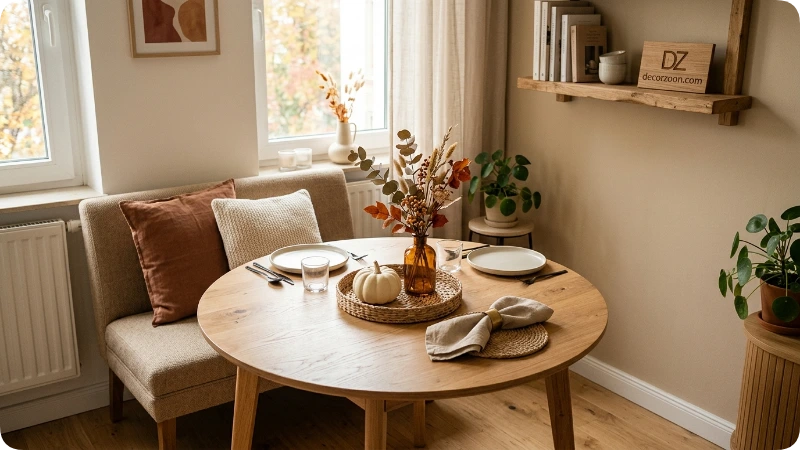
A small table doesn’t need a long runner or a large centerpiece to feel seasonal. In a compact dining area, decorations should leave enough room for plates, drinks, and everyday activities.
Choose one main object, such as a low bowl of mini pumpkins, a small vase of autumn branches, or a compact arrangement of LED candles. Place it on a tray if you want to move the entire display easily.
A round table often looks best with a centered arrangement that follows its shape. On a narrow rectangular table, position a small centerpiece along the middle rather than spreading decorations across the entire surface.
For rental friendly styling, use removable textiles and freestanding accessories. You won’t need to attach anything to walls or alter the furniture.
Try this three piece combination:
- One small cream or orange pumpkin.
- One amber glass vase with a few autumn stems.
- One folded linen napkin or small woven mat underneath.
This combination adds color and texture without taking up much space. It also works well when you need to clear the table quickly for meals or homework.
Set a Burgundy, Rust, and Gold Fall Table
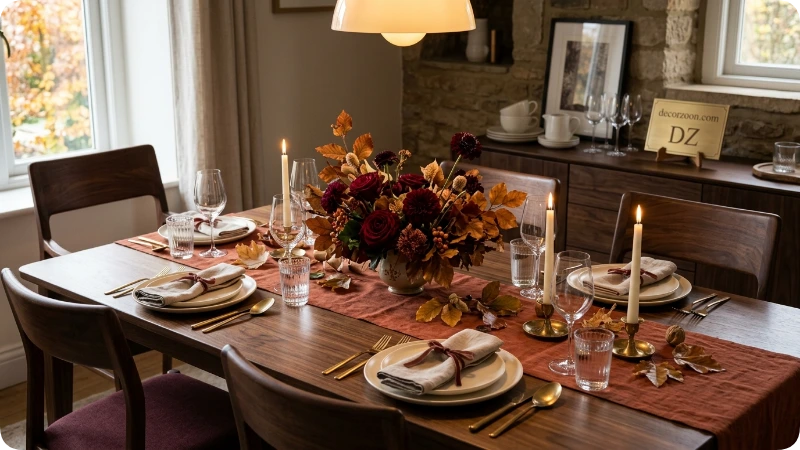
If you prefer deeper colors to pale neutrals, build your fall table around burgundy, rust, and muted gold. These colors create a more dramatic arrangement while retaining a clear connection to autumn.
Use burgundy flowers or napkins as the strongest color, rust colored foliage as the secondary element, and brass or gold toned details as a small accent. A dark wood table provides a natural foundation, while ivory plates keep the arrangement from feeling too heavy.
For example, place a low vase of burgundy flowers in the center of the table, add a rust colored runner, and finish each place setting with a simple neutral napkin.
The important thing is to assign each color a role. If burgundy, rust, gold, and orange all appear in equal amounts, the table can look busy. Let one color dominate and use the others sparingly.
For smaller rooms, replace a dark runner with a light neutral one. You’ll retain the richer seasonal accents without making the entire table feel visually dense.
Make a Simple DIY Fall Table Centerpiece
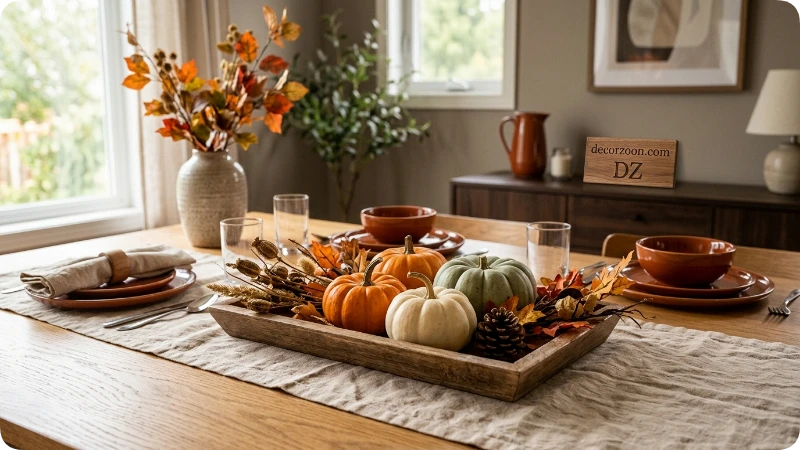
You can make a practical fall centerpiece using items you already own rather than purchasing a new set of decorations.
Start with a shallow wooden tray, a ceramic platter, or a wide bowl. Add three small pumpkins, a few dried stems, and one natural accent such as a pinecone or a small branch. Arrange the pieces in a loose cluster, keeping the taller elements toward the middle and the lower objects around the edges.
A tray is especially useful because it gives the display a defined boundary. You can lift it off the table when serving dinner instead of moving each decoration separately.
Simple DIY steps:
- Choose a container that fits comfortably within the center of your table.
- Select two or three colors that work with your existing dining furniture.
- Place the largest item first, then arrange smaller pieces around it.
- Add dried stems or faux foliage to introduce height and movement.
- Sit at the table and check that the arrangement doesn’t block anyone’s view.
For a longer lasting version, use faux pumpkins and reusable foliage. If you use real produce or natural branches, check the display periodically for spoilage, loose debris, or insects.
The finished arrangement should look complete from every seat, not just from the doorway or a photograph.
How to Choose the Right Fall Table Decor
The best arrangement depends on your table size, existing furniture, and if you decorate for everyday meals or special gatherings.
| Decorating style | Colors and materials | Works best for |
| Classic autumn | Orange, rust, pumpkins, wood | Traditional dining rooms |
| Neutral fall | Cream, beige, linen, ceramic | Minimalist interiors |
| Rustic farmhouse | Natural wood, woven textures, dried stems | Farmhouse kitchens |
| Elegant autumn | Burgundy, brass, dark wood | Formal dinners |
| Small space seasonal | Mini pumpkins, compact vases, small trays | Apartments and breakfast nooks |
Choose one main style and repeat its colors or materials in a few places. You don’t need to follow every detail of a particular look; the aim is to create a table that feels connected to the rest of your home.
Practical Tips for Styling a Fall Table
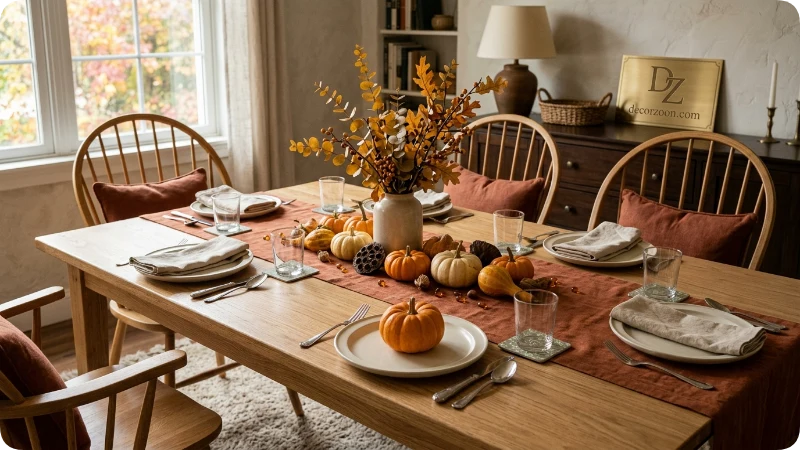
A successful autumn tablescape needs to look good while remaining useful. These small adjustments help you achieve both.
- Check the scale first. Large arrangements can overwhelm small tables, while tiny decorations may disappear on a long dining table. Match the centerpiece to the available surface.
- Keep sightlines open. Choose low arrangements or narrow vases so people can comfortably see across the table.
- Repeat colors selectively. If you use rust in the runner, echo it in a napkin or a few leaves rather than introducing several unrelated colors.
- Leave serving space. Before finalizing the display, add your usual plates, glasses, and serving dishes to check that everything fits.
- Mix textures, not too many themes. Linen, wood, ceramic, glass, and foliage can create variety without making the table look cluttered.
- Plan for maintenance. Real flowers, fruit, and foliage may need replacing. Faux pumpkins and reusable accessories are practical for decorations you want to keep throughout autumn.
- Keep open flames away from decorations. Dried flowers, foliage, runners, and napkins can catch fire. Use battery operated candles when a safe distance from flammable materials cannot be maintained.
Common Fall Table Decorating Mistakes to Avoid
Even attractive decorations can look awkward when they’re poorly arranged. A few common mistakes are easy to prevent.
Using too many small decorations: A collection of miniature pumpkins, scattered leaves, and tiny ornaments can make the table feel cluttered. Group similar pieces on one tray instead of spreading them everywhere.
Choosing a centerpiece that’s too tall: Tall flowers or decorations can interfere with conversation. Check the view from a seated position before deciding where the arrangement belongs.
Mixing too many colors: Orange, red, burgundy, green, gold, and brown can all work for autumn, but they don’t need equal space. Choose a dominant color and one or two supporting shades.
Ignoring the table’s everyday purpose: If your family eats at the table daily, a large fixed arrangement can become inconvenient. Use a removable tray or compact centerpiece that can be cleared quickly.
Making everything match: Matching decorations can feel overly coordinated. A combination of complementary textures and slightly varied shapes usually looks more natural.
Frequently Asked Questions
When should I decorate my table for fall?
You can begin in late summer or early autumn, depending on your preferred seasonal style. Pumpkins, natural foliage, warm textiles, and neutral ceramics work throughout the season, while Thanksgiving specific place cards and settings can be added closer to the celebration.
How can I decorate a fall table on a budget?
Use items you already own, such as wooden bowls, neutral linens, glass vases, and serving trays. Add a few mini pumpkins or suitable natural branches rather than buying a complete seasonal decoration set.
What colors work best for fall table decor?
Rust, burnt orange, golden yellow, burgundy, brown, and muted green are traditional choices. Cream, beige, warm white, and natural wood offer a more understated alternative.
How do I decorate a small dining table for autumn?
Choose one low centerpiece, such as a small pumpkin arrangement or a compact vase of autumn foliage. Avoid oversized runners and tall decorations, and leave enough room for plates and drinks.
How can I make fall table decor work for Thanksgiving?
Start with a seasonal centerpiece, coordinated linens, and simple place settings. Add napkins, place cards, or small individual decorations for the occasion. Keep the central arrangement low enough to accommodate serving dishes and conversation.
Conclusion
The most effective fall table decor ideas combine seasonal color, natural texture, and a layout that suits the way you use your dining space. A group of mini pumpkins, a linen runner, a vase of autumn branches, or a few carefully chosen candleholders can create a complete look without filling every available inch.
Choose a style that complements your existing furniture, keep the centerpiece proportional to your table, and leave enough space for comfortable meals. For everyday decorating, reusable accessories and compact arrangements are especially practical.
When hosting a fall dinner or Thanksgiving gathering, you can build on the same foundation with richer colors, coordinated place settings, and a few personal details. Start with what you already have, add only the pieces that improve the arrangement, and let the natural character of autumn guide your choices.

Sophia Bennett is a passionate Home Decor Enthusiast and Content Writer at DecorZoon.com. She shares well-researched content on home decor, interior design, decorating trends, DIY ideas, and space-styling inspiration, helping readers create beautiful, functional, and stylish living spaces. Through practical tips and creative insights, Sophia makes it easier for homeowners and decor lovers to transform their homes with confidence and style.