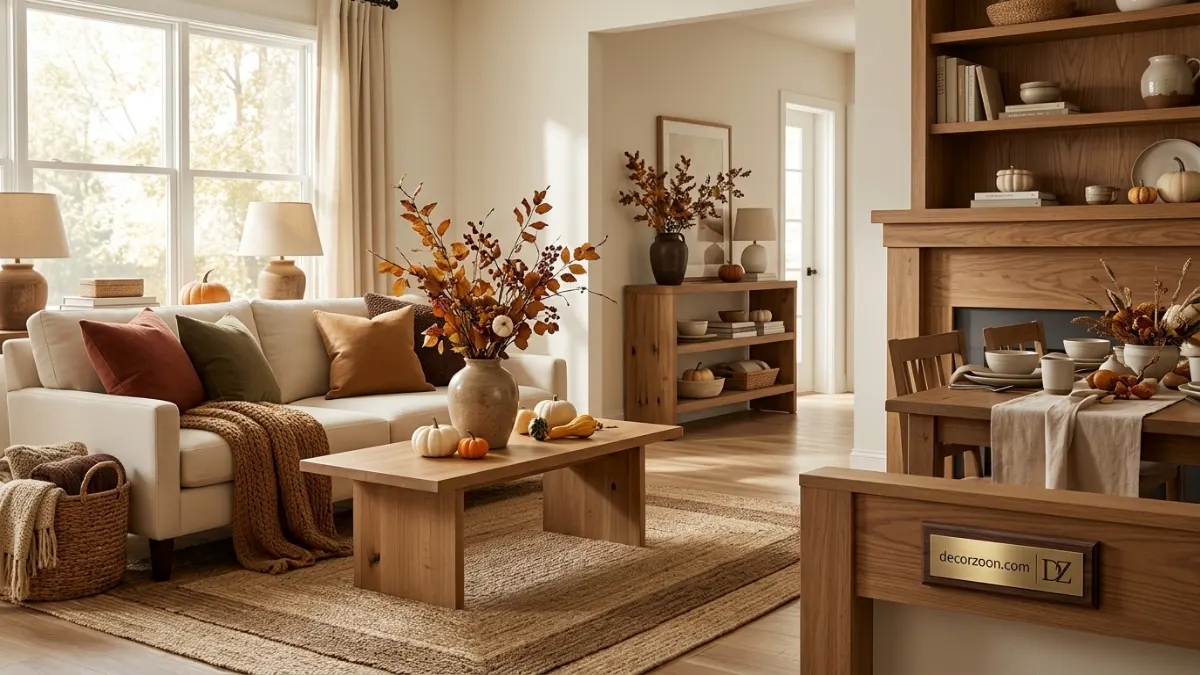
Fall decorating works best when it changes the feeling of a home without requiring a complete redesign. Instead of covering every surface with pumpkins and orange accents, build an autumn look through warmer colors, tactile fabrics, natural materials, softer lighting, and a few well placed seasonal pieces.
Current 2026 decorating coverage is also pointing toward richer earthy colors, natural textures, vintage character, layered comfort, and more restrained seasonal accents rather than heavily themed displays.
The ideas below focus on practical changes you can use throughout the home, If you want a traditional harvest look, a modern autumn palette, a rustic space, or a subtle fall refresh that can transition easily into Thanksgiving and early winter.
Start With a Warm Fall Color Palette
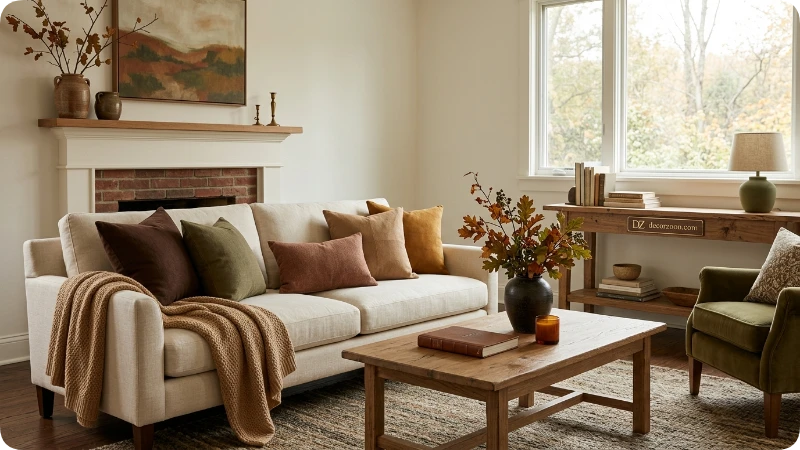
The easiest way to make an existing room feel more autumnal is to change its supporting colors rather than replacing major furniture.
Start with the colors already in your room. If you have a neutral sofa, rug, or walls, introduce rust, caramel, ochre, olive, mushroom, chocolate brown, or muted burgundy through smaller pieces. For cooler interiors, earthy olive and brown can create fall warmth without forcing the room into bright orange.
A simple palette can use:
- Dominant: cream, beige, warm white, or taupe
- Secondary: chocolate brown, olive, camel, or warm gray
- Accent: rust, ochre, burgundy, or muted terracotta
The key is repetition. If you add a rust pillow, repeat a similar tone in artwork, a vase, flowers, or a small textile elsewhere in the room. This makes the seasonal color feel intentional rather than scattered.
For a subtle look, use fall colors in approximately two or three visible areas instead of putting an autumn accent on every table.
Best for: renters, neutral interiors, and anyone who wants seasonal decor without storing large quantities of holiday specific pieces
Layer Cozy Textures Instead of Adding More Decorations
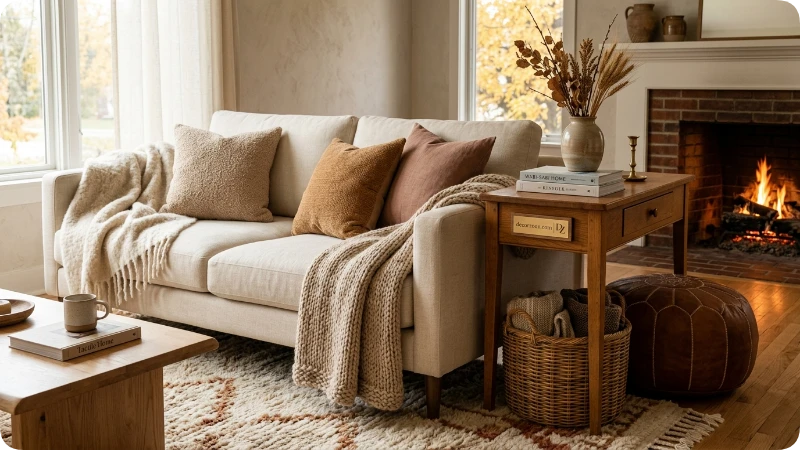
Texture can make a room feel ready for cooler weather without making it look overly seasonal.
Swap lightweight summer throws for wool, boucle, chenille, quilted cotton, or chunky knit blankets. Add one or two textured pillows rather than filling the sofa with matching seasonal cushions. A woven basket beside a chair can hold extra blankets while contributing another natural texture.
For bedrooms, a heavier quilt or folded coverlet at the foot of the bed creates an autumnal layer without requiring a new bedding set.
The strongest combinations mix different surfaces:
- Soft wool with smooth wood
- Linen with woven rattan
- Boucle with aged metal
- Chunky knit with leather
- Velvet with natural stone or ceramic
Avoid using too many textures that have the same visual weight. A room filled with heavy knits, thick rugs, and bulky accessories can feel crowded. Balance one substantial texture with cleaner, simpler surfaces.
Layering comfort is also appearing in current fall decorating coverage, with textiles, rugs, lighting, and everyday comfort treated as part of the seasonal atmosphere rather than decoration alone.
Bring in Natural Fall Elements
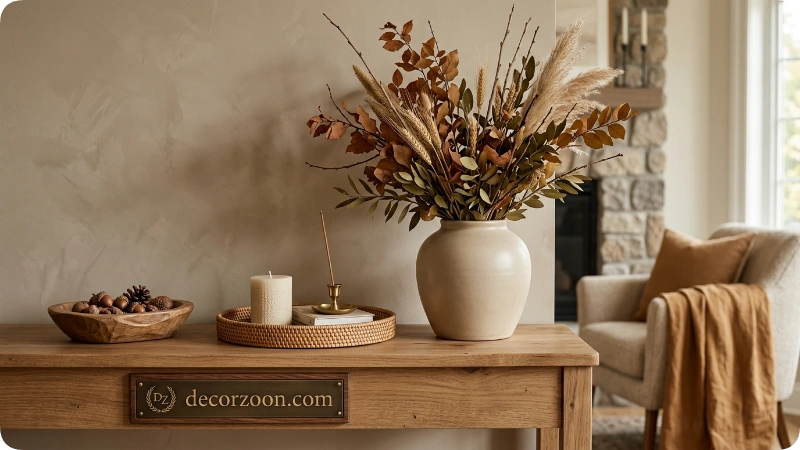
Natural materials give fall decor seasonal character without relying on novelty decorations.
Place dried branches, eucalyptus, wheat stems, pampas style grasses, acorns, pinecones, or preserved foliage in simple vessels. A large ceramic vase with several dramatic branches can create a stronger focal point than several small arrangements scattered around the room.
Wooden bowls, woven trays, stoneware, rattan baskets, and aged wood accessories also work well because they add autumnal texture while remaining useful after the season ends.
For a dining table, try a low arrangement of dried foliage in a ceramic bowl so guests can see across the table. On a console, use taller branches to create height and balance.
Natural materials are particularly useful if you prefer a refined fall style. Recent design coverage has emphasized wood, rattan, linen, wool, stone, dried foliage, and other organic textures as ways to create warmth without excessive seasonal theming.
What to avoid: using large quantities of brittle dried material near candles, fireplaces, heaters, or other heat sources.
Make the Living Room the Main Cozy Zone
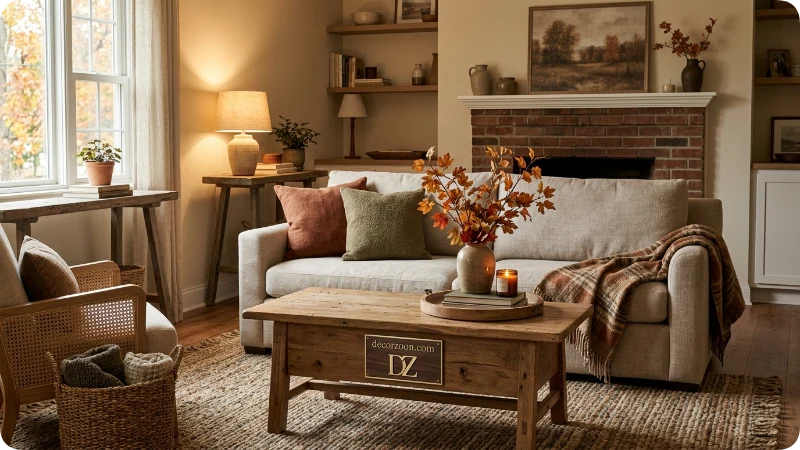
The living room usually gives you the biggest return from a few seasonal changes because it is where textiles, lighting, seating, and accessories naturally come together.
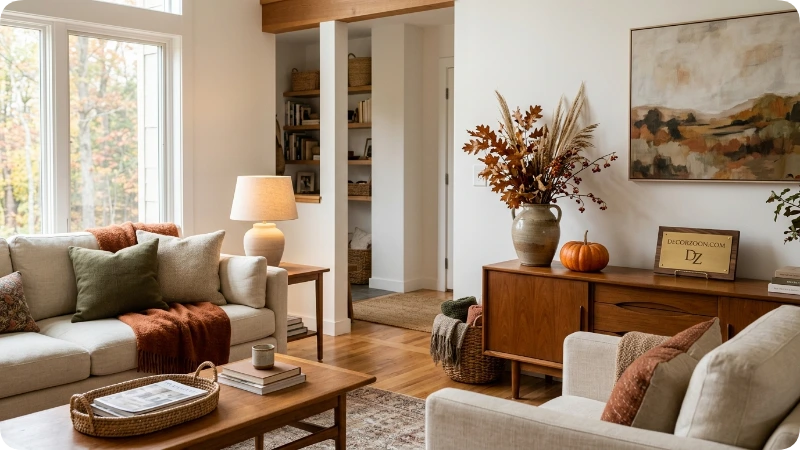
Begin with the sofa. Add a fall colored throw over one arm and two pillows in complementary textures. Then introduce one larger seasonal element, such as a branch arrangement, woven basket, textured rug, or piece of autumn inspired artwork.
A coffee table can use a simple three part arrangement:
- A low tray or stack of books
- A ceramic bowl or vase
- One seasonal natural element such as pinecones, branches, or a small pumpkin
Keep the center of the table visually open enough for everyday use.
If the room already has warm wood furniture, emphasize those tones rather than adding another competing finish. If the furniture is mostly white or gray, use warm textiles and natural materials to soften the cooler base.
The goal is a living room that still looks like the same room in November, with the seasonal elements acting as layers rather than taking over the design.
Create a Fall Entryway That Feels Collected
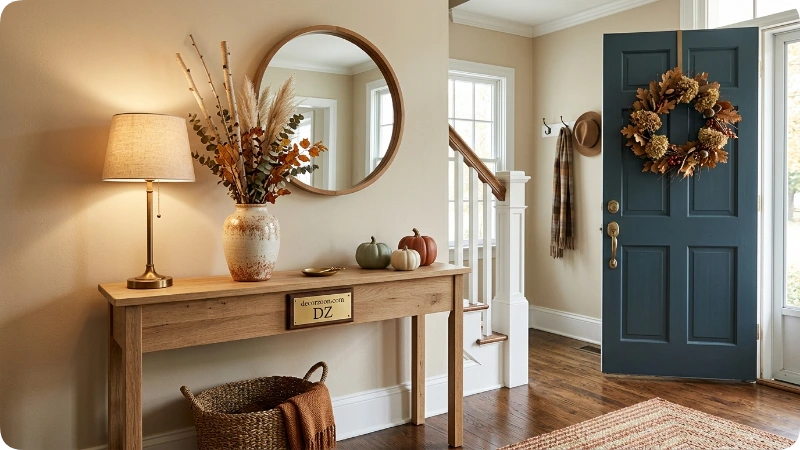
The entryway is an ideal place for a concentrated seasonal moment because it introduces the fall palette immediately without requiring changes throughout the entire house.
For a console table, combine a mirror or artwork, a lamp, a ceramic vessel, and one seasonal arrangement. Keep the tallest object toward one side and balance it with shorter objects on the opposite side.
A narrow entry can use a wall mounted wreath, small vase, seasonal runner, or basket instead of several floor decorations.
For a more traditional autumn look, add a few miniature pumpkins in muted cream, green, or orange. For a modern look, use one substantial vessel filled with branches instead.
Outside the front door, pumpkins, mums, a seasonal doormat, and a simple wreath can establish the same palette. HGTV’s recent fall decorating coverage similarly emphasizes porch containers, pumpkins, chrysanthemums, and welcoming entry details as practical seasonal elements.
Small space tip: choose one vertical element and one floor level element rather than filling a narrow entryway with multiple objects.
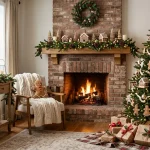
Style the Fireplace Mantel With One Strong Focal Point
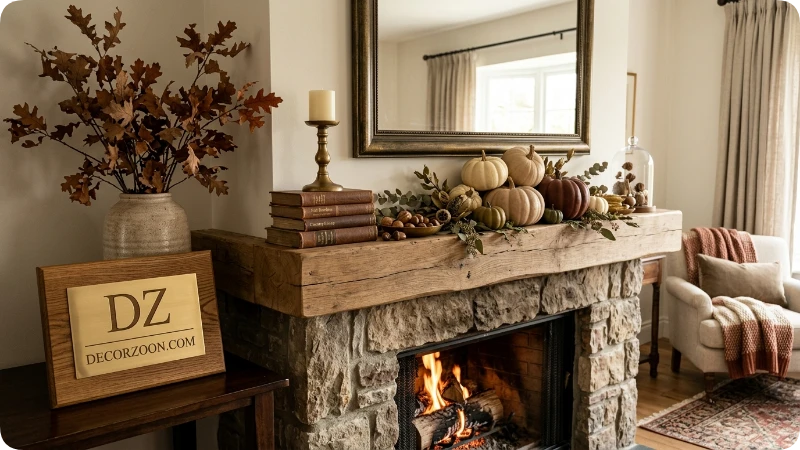
A mantel can become cluttered quickly, so start with the architectural feature that already dominates the room.
If there is artwork or a mirror above the fireplace, let it remain the main focal point. Build around it with two or three supporting elements rather than covering the entire mantel.
A useful arrangement is:
- One tall vase or branch arrangement
- One medium object such as a candleholder or ceramic piece
- A low stack of books or a small bowl
For a traditional fall mantel, introduce muted pumpkins, dried leaves, brass, wood, or deep burgundy accents. For a more sophisticated look, try brown leather bound books, warm metal, dried branches, and earthy ceramics.
Recent fall design coverage has specifically highlighted vintage books and autumnal color as a way to give mantels seasonal character without relying on novelty decorations.
Do not distribute identical objects evenly from one end of the mantel to the other. Varying height and grouping objects in small clusters creates a more natural composition.
Warm Up the Kitchen With Small Seasonal Changes
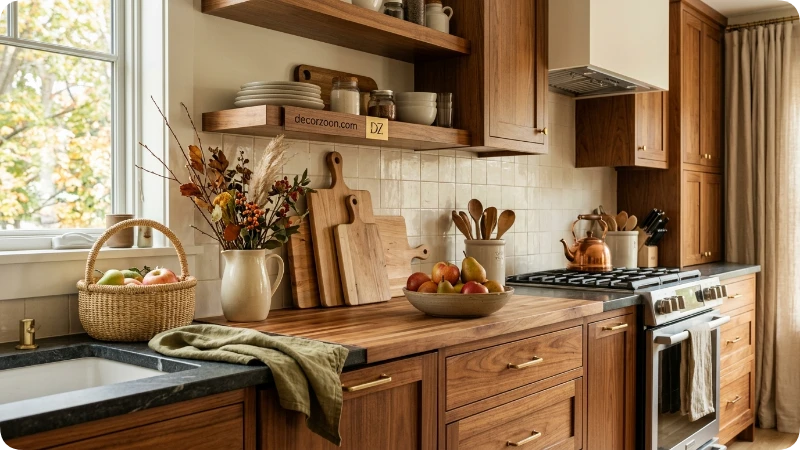
A kitchen does not need pumpkins on every counter to look ready for fall.
Instead, introduce seasonal character through things you already use: wooden cutting boards, ceramic pitchers, woven baskets, linen towels, stoneware bowls, and warm toned serving pieces.
A countertop vignette might include a wooden board leaning against the backsplash, a ceramic pitcher filled with dried stems, and a small bowl of apples or pears. This creates a seasonal arrangement while keeping the counter functional.
Open shelving can use cream or brown ceramics alongside existing dishes. Replace bright summer textiles with towels or runners in olive, rust, camel, or muted plaid.
The kitchen is also a natural place for fall’s sensory elements. Seasonal cooking, baking, warm drinks, and fresh produce can contribute to the feeling of autumn without requiring additional decorative objects.
What to avoid: placing decorative pieces where they interfere with food preparation, appliance use, or cleaning.
Give the Dining Table a Simple Autumn Centerpiece
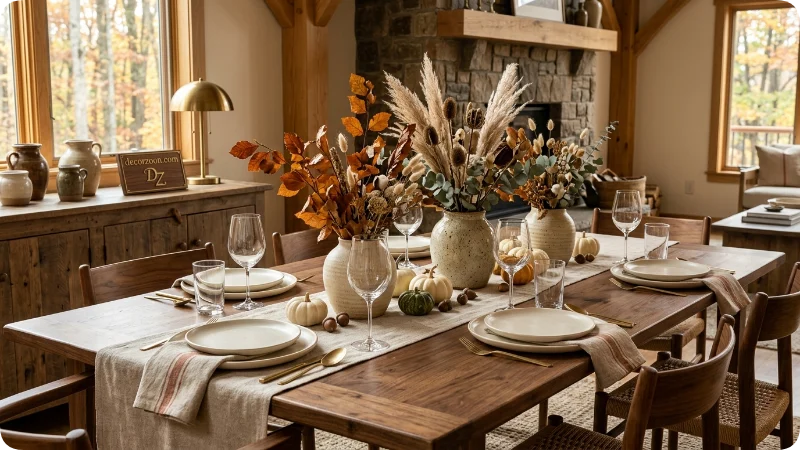
A fall dining table should leave enough room for plates, serving dishes, and conversation.
Instead of a tall centerpiece, try a low runner with several small vessels. Place two or three ceramic or glass containers along the center and fill them with dried branches, grasses, or seasonal foliage. Add a few small pumpkins or gourds only if they support the color palette.
For a modern table, combine cream dinnerware with wood, olive, brown, and aged brass. For a rustic setting, introduce linen, stoneware, woven textures, and darker wood.
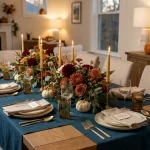
For a more colorful harvest table, use rust, ochre, burgundy, and deep green, then keep the remaining tableware relatively simple.
Fall tablescaping remains a major part of seasonal decorating coverage, but the most useful approach is to treat the table as a working surface first and a decorative display second.
If you entertain frequently, choose reusable materials and arrangements that can remain in place between meals.
Add Fall Atmosphere With Better Lighting
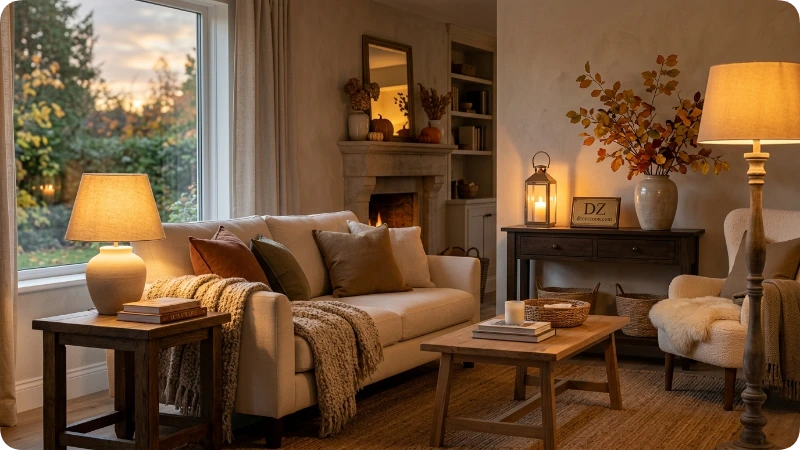
As daylight decreases, lighting becomes one of the most effective ways to change how a room feels.
Instead of relying entirely on overhead fixtures, create several smaller pools of light. Use table lamps, floor lamps, lanterns, battery operated lights, or carefully positioned candles where appropriate.
Warm bulbs generally work well with fall’s earthy palette because they reinforce the warmth of wood, brown, rust, cream, and brass. Place a lamp near a reading chair, add a small light to a console, or use a lantern on a covered porch.
Current interior design reporting has also highlighted portable and atmospheric lighting as an important design direction, making flexible lighting useful beyond the fall season itself.
For safety, keep candles away from dried foliage, fabric, curtains, and other combustible materials. Battery operated candles can provide a similar visual effect in areas where an open flame is inconvenient
Use Fall Decor That Can Transition Into Thanksgiving
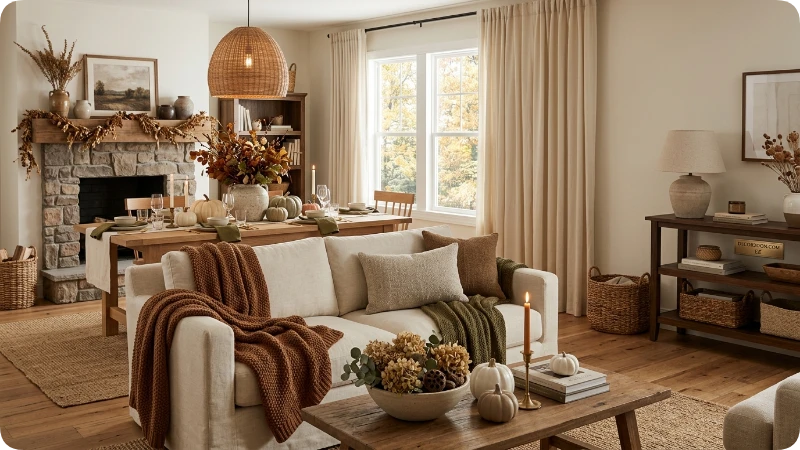
One of the smartest ways to decorate for fall is to avoid making every piece specifically about one holiday.
Fall begins before Halloween and continues through Thanksgiving, so choose elements that can work across the entire season. Earthy colors, dried foliage, wood, woven baskets, neutral pumpkins, candles, textured blankets, and ceramic vessels can remain useful for weeks.
If you decorate for Halloween, keep the holiday specific elements concentrated in one area. After Halloween, remove the black and orange pieces while leaving the broader autumn palette intact.
For Thanksgiving, you can then add a few harvest oriented details to the dining area without redecorating the whole home.
This approach also makes seasonal storage easier. Instead of owning several boxes of single use decorations, build a core collection of reusable pieces and change only a handful of accents each year.
How to Choose the Right Fall Decor for Your Home
Before buying anything new, look at the room as it exists now.
If your home is mostly neutral: add rust, caramel, olive, brown, or muted burgundy through textiles and accessories.
If your home already has dark furniture: use cream, camel, warm white, and natural wood to prevent the room from becoming visually heavy.
If you prefer modern decor: choose fewer pieces with stronger shapes, such as one oversized vase, sculptural branch arrangement, or large textured throw.
If you like rustic decor: combine wood, linen, woven materials, stoneware, plaid, and natural foliage, but keep the pattern mix controlled.
If you rent: focus on removable textiles, tabletop decor, lamps, baskets, artwork that can be hung without permanent changes, and seasonal entryway pieces.
If you have limited storage: prioritize pieces that work beyond fall, such as neutral throws, ceramic vessels, baskets, wood accessories, and warm toned table linens.
The strongest fall home decor is not necessarily the most seasonal looking. It is the decor that fits the room’s existing architecture, color scheme, daily routines, and storage limitations.
Common Fall Decorating Mistakes to Avoid
A few adjustments can keep autumn decor from feeling crowded or overly themed.
Using too much orange: Bright orange can work, but repeating it throughout the room can quickly dominate. Mix it with cream, brown, olive, or muted rust.
Decorating every surface: Leave negative space. A few intentional arrangements usually read better than dozens of small seasonal objects.
Mixing too many patterns: Plaid, checks, florals, stripes, and botanical prints can work together, but they need a shared color connection.
Ignoring scale: Several tiny pumpkins may disappear on a large console. One substantial vase or arrangement may create a clearer focal point.
Buying everything new: Reuse existing baskets, books, ceramics, throws, and vases before purchasing seasonal accessories.
Making the room look like a holiday display: Fall is broader than Halloween or Thanksgiving. A restrained palette and natural materials can carry the room across the entire season.
Current 2026 design coverage has similarly emphasized more intentional seasonal styling, natural textures, richer earthy colors, and fewer small novelty decorations.
Easy Fall Updates for Different Budgets
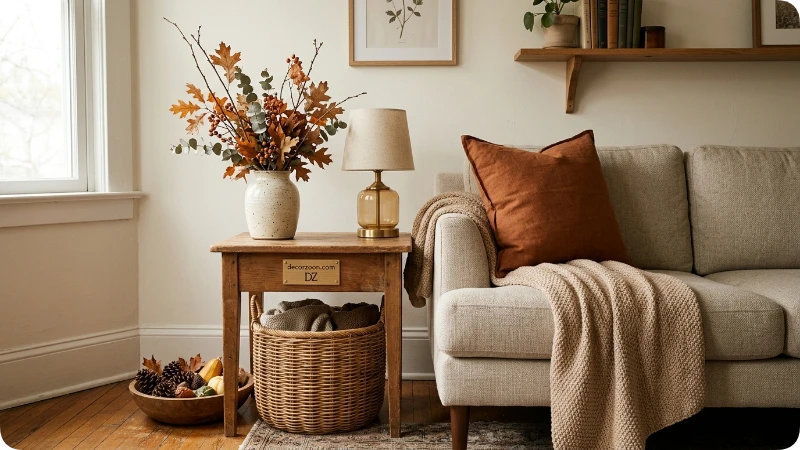
You do not need a large decorating budget to change the seasonal character of a room.
Under $25:
Change pillow covers, gather branches from your yard where appropriate, rearrange existing ceramics, or add a small seasonal bowl or textile.
Around $50–$100:
Focus on one strong textile, a ceramic vessel, a woven basket, or a simple seasonal arrangement.
For a larger refresh:
Consider a new area rug, substantial lamp, upholstered accent chair, larger artwork, or quality throw that can remain useful after fall.
The most effective budget strategy is to spend on pieces that solve an existing decorating need and happen to support the fall palette. A good lamp, rug, basket, or throw can work for multiple seasons instead of becoming storage only decor in December.
Fall Home Decor FAQs
When should I start decorating my home for fall?
Many people begin introducing fall decor in late August or September as summer starts transitioning into cooler weather. Start with subtle changes such as warmer textiles, earthy colors, and natural materials, then add Halloween or Thanksgiving specific pieces closer to those occasions.
What colors are best for fall home decor?
Traditional fall colors include rust, orange, brown, gold, burgundy, and deep green. For a more contemporary look, combine warm white, chocolate brown, olive, camel, muted ochre, and earthy reds.
How can I decorate for fall without using pumpkins?
Use dried branches, foliage, woven baskets, wood, textured blankets, warm lighting, ceramic vessels, seasonal artwork, natural grasses, and autumn colored textiles. These elements create a seasonal feeling without relying on pumpkin decorations.
How can I make fall decor look elegant instead of cluttered?
Use fewer but larger pieces, repeat a controlled color palette, vary textures, and leave some surfaces open. A large branch arrangement or textured throw can have more visual impact than many small seasonal accessories.
How do I decorate for fall on a small budget?
Start with what you already own. Rearrange furniture and accessories, change pillow covers, use natural branches, add warm lighting, and introduce one or two seasonal colors through inexpensive textiles. Prioritize reusable pieces over single purpose decorations.
How can I decorate for fall without making my home look too seasonal?
Use fall as a color and texture direction rather than a theme. Warm wood, cream, olive, brown, linen, wool, woven materials, and subtle foliage can create an autumn atmosphere while remaining appropriate throughout the season.
Conclusion
The best fall home decor ideas do not require a complete room makeover. Start with the colors and materials already present in your home, then add warmth through textured textiles, natural elements, softer lighting, and a few carefully chosen seasonal accents.
Concentrate your effort on the spaces you use most such as the living room, entryway, kitchen, and dining area and let the rest of the home transition naturally.
For a look that lasts beyond Halloween and Thanksgiving, prioritize reusable pieces and an earthy palette over heavily themed decorations.
A well placed throw, a substantial vase of branches, warm lighting, and a restrained autumn color scheme can make the home feel ready for fall without making it feel temporarily redecorated.

Sophia Bennett is a passionate Home Decor Enthusiast and Content Writer at DecorZoon.com. She shares well-researched content on home decor, interior design, decorating trends, DIY ideas, and space-styling inspiration, helping readers create beautiful, functional, and stylish living spaces. Through practical tips and creative insights, Sophia makes it easier for homeowners and decor lovers to transform their homes with confidence and style.