Christmas room decor works best when it feels connected to the room rather than simply adding holiday decorations to every available surface. The goal is to create a clear focal point, repeat a small number of colors and materials, and use lighting, greenery, textiles, and seasonal accents where they actually improve the space.
Current Christmas decorating coverage repeatedly emphasizes warm lighting, natural greenery, layered textiles, smaller trees for compact spaces, and room specific styling rather than treating the entire home as one large display.
The ideas below cover living rooms, bedrooms, dining spaces, small rooms, and overlooked areas so you can choose the level of decorating that fits your home.
Build the Room Around One Christmas Focal Point
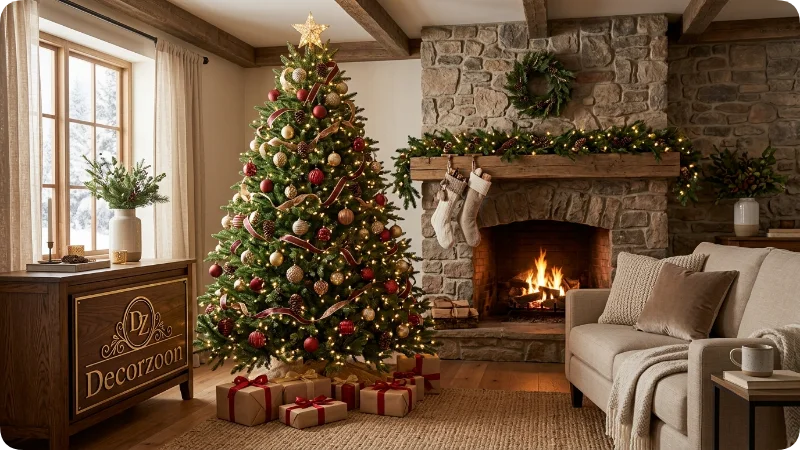
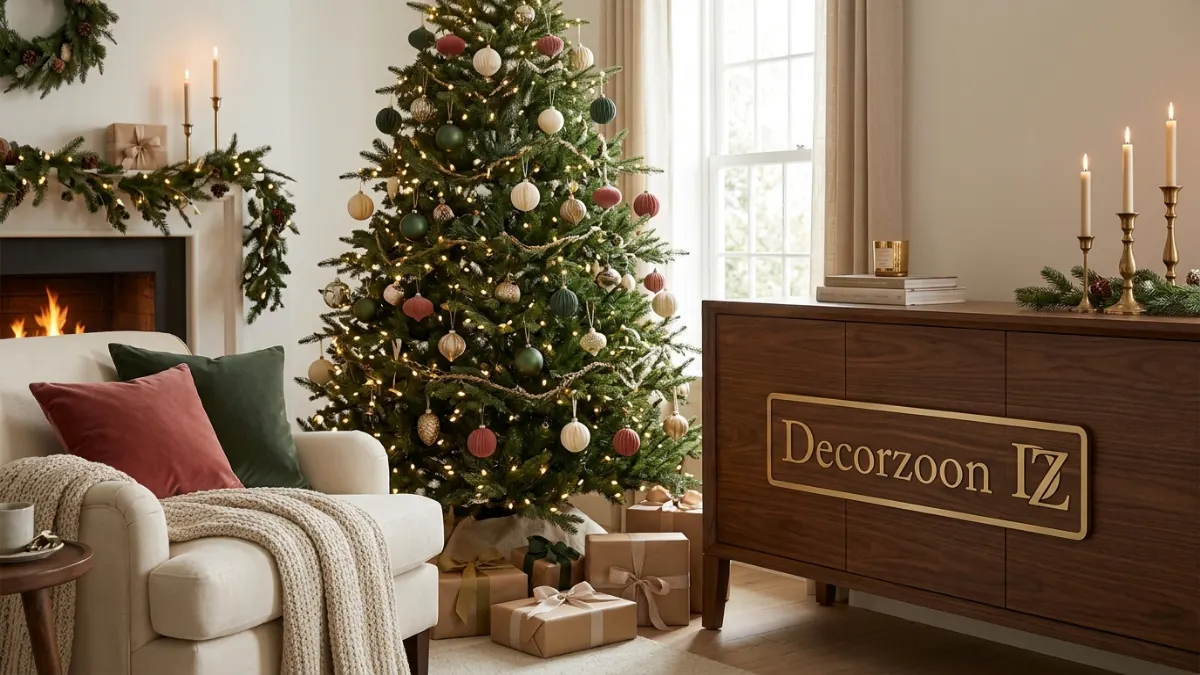
Start by deciding what should catch the eye first. In a living room, that might be the Christmas tree, fireplace, or a large window. In a bedroom, the bed or headboard usually makes more sense. A dining room can naturally center on the table.
Once the focal point is chosen, keep nearby decorations quieter. For example, if a full Christmas tree has heavily decorated branches, use a restrained mantel arrangement instead of competing with it using another elaborate display.
This approach also makes decorating easier because you can concentrate your budget and effort on one strong area.
Try this: Choose one dominant feature, two supporting areas, and leave the remaining surfaces relatively calm.
Avoid: Giving every major surface the same visual weight. Too many competing focal points can make a room feel crowded.
Layer Warm Christmas Lighting
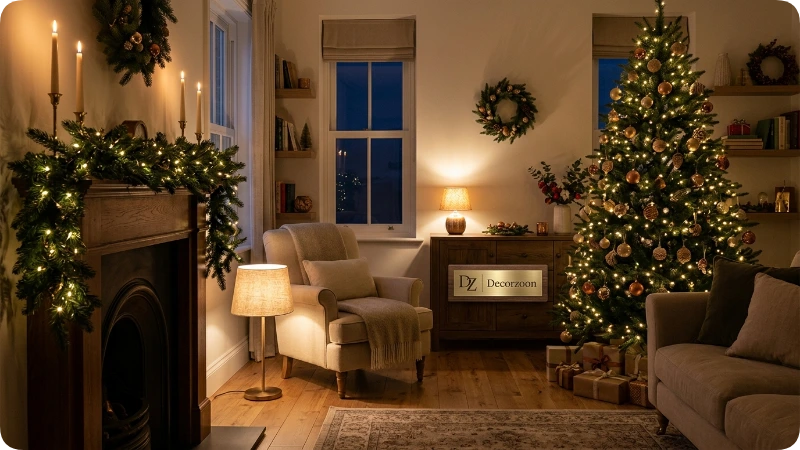
Lighting can change the character of a room without requiring many additional decorations. Combine existing room lighting with warm string lights, illuminated greenery, lanterns, or small lamps.
For a living room, weave micro lights through a mantel garland or place them around a window. In a bedroom, a short strand around the headboard or along a curtain rod can provide a softer seasonal accent.
Use warm white lighting when you want a traditional, cozy appearance. If the room already contains several decorative lights, reduce the number of competing colors and keep the lighting visually consistent.
Battery powered lights are particularly useful for shelves, mirrors, and areas where running a cord would be inconvenient.
Best for: Rooms that already have attractive architecture or furniture but need more evening atmosphere.
Avoid: Excessive exposed cords or bright, cool toned lights that clash with warm furnishings.
Add Greenery Where the Room Already Has Structure
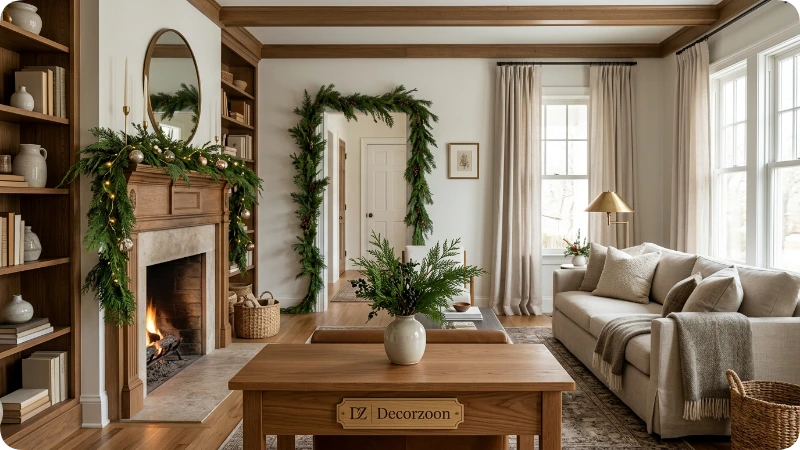
Evergreen branches, eucalyptus, pine stems, wreaths, and faux greenery can introduce Christmas character without requiring dozens of ornaments.
Use greenery to follow existing architectural lines. A mantel can carry a horizontal garland, while a stair railing naturally supports a vertical or cascading arrangement. A bedroom mirror or headboard can take a small wreath instead of a large installation.
Natural wood, pinecones, woven baskets, and neutral textiles pair particularly well with greenery for a relaxed Christmas room. If your furniture is already visually busy, choose simple greenery without excessive ribbons or ornaments.
For faux greenery, select pieces with varied branch lengths and realistic looking foliage. Repeating the same greenery in two or three areas creates continuity without making every room identical.
Make the Living Room Feel Festive With Textiles
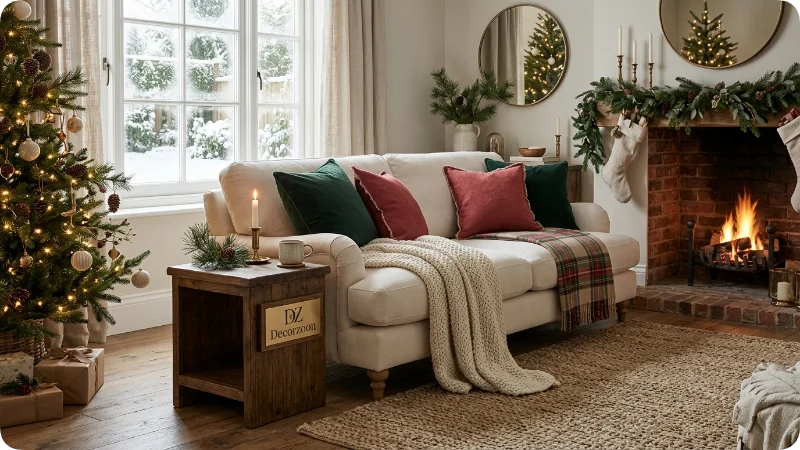
You do not need to replace your living room furniture to create a Christmas look. Seasonal textiles can change the color and texture of the room quickly.
Start with one large element, such as a throw blanket over the sofa or an accent rug, then add smaller coordinating pieces such as pillow covers. Classic combinations include forest green with cream, red with warm neutrals, or burgundy with natural wood.
Plaid works well when the rest of the room is relatively simple. Velvet can add depth to a traditional or more refined scheme, while chunky knits and wool textures suit rustic and Scandinavian inspired rooms.
The key is repetition. If a red plaid pillow is the only red element in a large neutral room, it may look disconnected. Repeat that color subtly in ribbon, ornaments, artwork, or another textile.
Avoid: Mixing too many holiday patterns. One dominant pattern supported by quieter solids usually looks more intentional.
Create a Cozy Christmas Bedroom Without Overdecorating
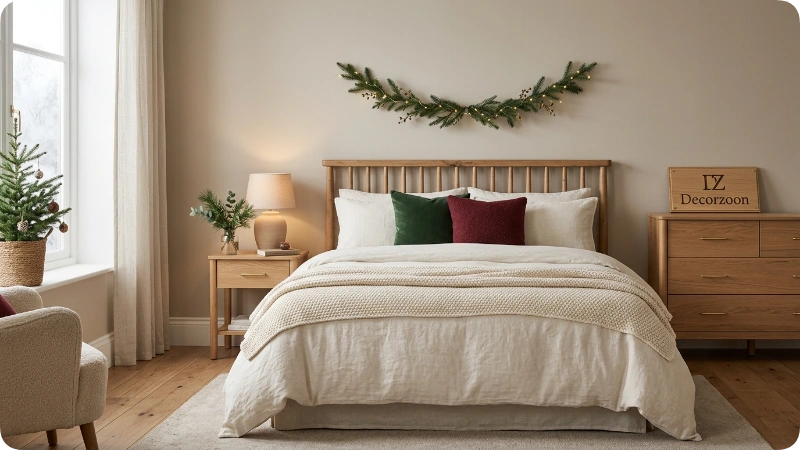
A bedroom benefits from a lighter touch because it needs to remain comfortable and restful. Instead of covering every surface with Christmas decorations, focus on the bed, bedside lighting, and one wall or dresser area.
Start with existing bedding in white, cream, beige, gray, or another neutral. Add a seasonal throw at the foot of the bed and one or two Christmas inspired pillows. A small wreath above the headboard or a simple evergreen arrangement on the dresser can complete the look.
For a traditional bedroom, use deep red and forest green accents. For a softer winter scheme, try ivory, muted green, silver, or champagne colored details.
Keep decorative objects away from areas where they interfere with bedside storage or everyday movement.
Best for: Anyone who wants a noticeable Christmas atmosphere without turning the bedroom into a themed display.
Use a Small Tree When Floor Space Is Limited
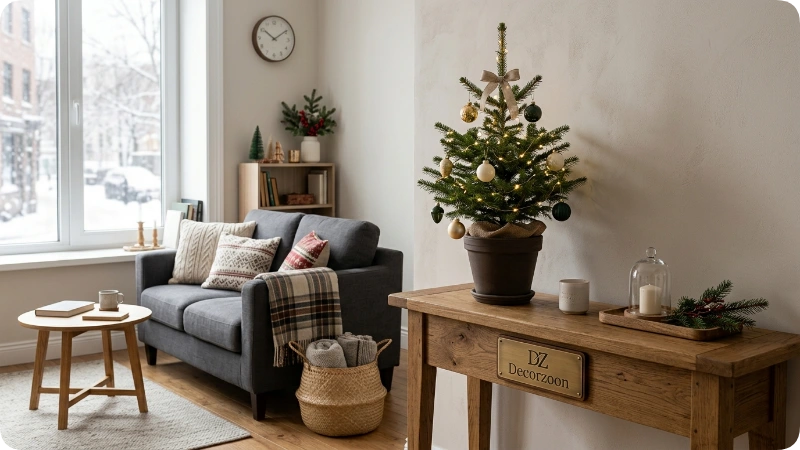
A full size tree is not necessary for a festive room. A tabletop tree, slim pencil tree, wall mounted tree arrangement, or branch display can provide the same seasonal cue while preserving floor space.
Place a small tree on a sturdy console, plant stand, side table, or unused corner where it does not obstruct walkways. Keep the decoration concentrated rather than trying to make a small tree resemble a miniature version of a large one.
A limited ornament palette can make the display feel more intentional. For example, combine matte white ornaments with natural wood, or use burgundy ornaments with warm brass accents.
Small space Christmas decorating guidance similarly emphasizes vertical solutions, compact trees, curated surfaces, and multipurpose textiles when floor area is limited.
Avoid: Placing a tree where it blocks doors, heating vents, frequently used drawers, or the main circulation path.
Style the Dining Room Around the Table
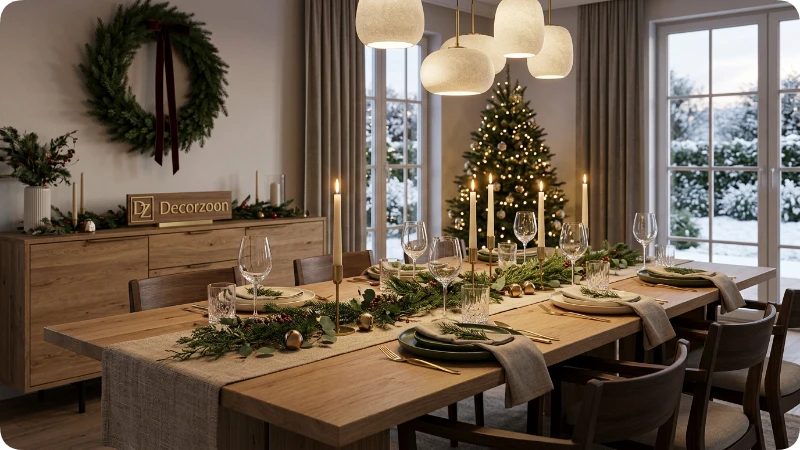
The dining table already provides a natural focal point, so there is usually no need to decorate every nearby surface.
Use a runner, centerpiece, candles or LED lights, and a restrained collection of seasonal greenery. For a long table, create a low horizontal arrangement that allows people to see across the table. For a round table, a compact central arrangement often works better.
A traditional setting can combine evergreen branches, red berries, brass accents, and cream colored linens. A modern setting might use white ceramics, greenery, clear glass, and understated metallic details.
Keep the centerpiece low enough that guests can comfortably talk across the table.
Avoid: Tall arrangements that obstruct sightlines or excessive decorative objects that reduce usable dining space.
Turn an Entryway or Console Into a Christmas Welcome
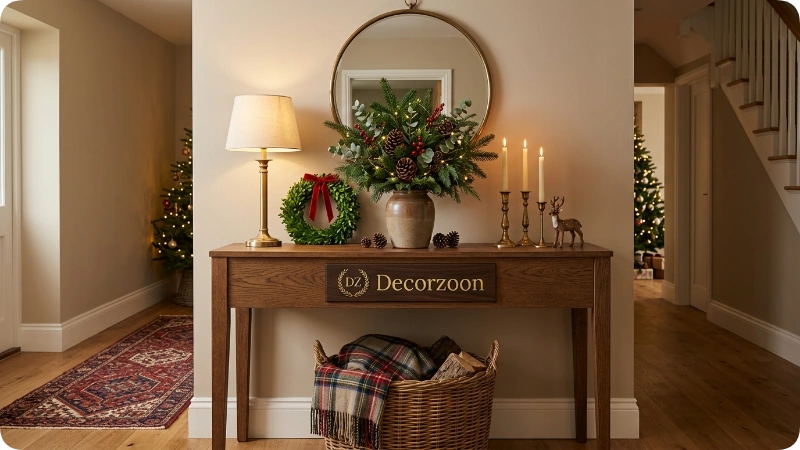
The entryway is a useful place for a small seasonal display because it establishes the Christmas color palette before guests reach the main rooms.
A narrow console can hold a small evergreen arrangement, a bowl of ornaments, a ceramic house collection, or a simple lantern. Add a mirror above the console if one is already part of the space, then use greenery or a small wreath to connect the display visually.
For a narrow entry, prioritize vertical decoration instead of adding objects to the floor. A wreath on the wall or a slim garland around an existing mirror can provide seasonal character without reducing walking space.
Choose durable materials in high traffic areas and keep fragile ornaments away from locations where coats, bags, and shoes are frequently handled.
Choose a Christmas Color Palette Before Buying Decorations
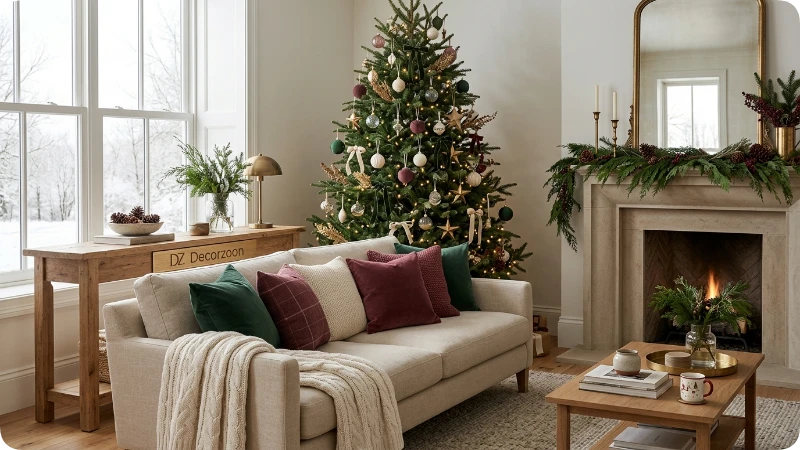
A defined palette helps different Christmas decorations look like they belong together.
Classic Red, Green, and Gold
Use deep red as the accent, evergreen as the supporting color, and gold sparingly for warmth. This combination works particularly well with wood furniture, traditional furnishings, and warm lighting.
Winter White and Green
Pair ivory or soft white with evergreen, natural wood, and subtle metallic accents. This creates a quieter holiday look without removing the Christmas character.
Burgundy and Natural Neutrals
Burgundy can replace brighter red when you want a deeper, more subdued palette. Combine it with cream, tan, brown, or aged brass.
Soft Pink and Red
For a playful approach, use blush or dusty pink alongside red, cream, and warm metallic accents. Keep the pink concentrated in textiles, ornaments, or ribbon so the palette does not become visually scattered.
A useful rule is to select one dominant color, one supporting color, and one accent finish rather than buying decorations in every Christmas color.
Decorate Shelves and Small Surfaces With a Repeated Story
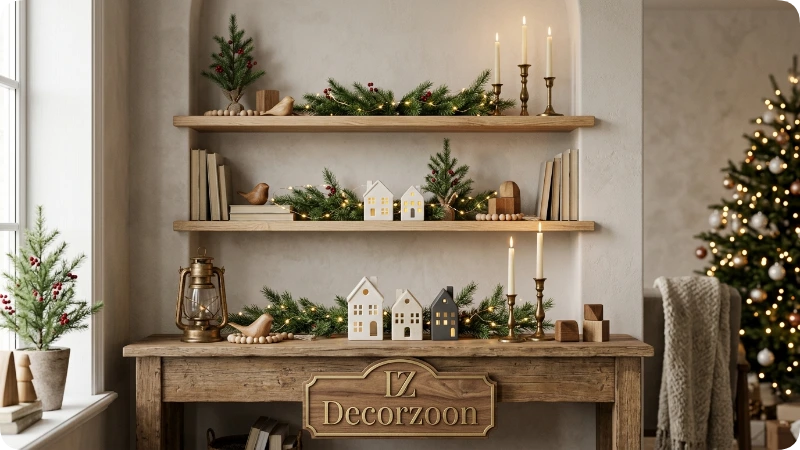
Bookshelves, sideboards, coffee tables, and dressers can carry Christmas details without becoming cluttered.
Instead of placing one random holiday object on every shelf, group related pieces. For example, combine a small ceramic tree with two books and a natural wood ornament. On another shelf, repeat the same green or metallic finish with a candleholder or small wreath.
Vary height while keeping the overall arrangement balanced. Taller pieces should generally sit behind or beside shorter pieces rather than creating a row of identical height objects.
Leave some empty space between groups. Negative space helps seasonal objects stand out and keeps everyday furniture usable.
A simple formula: one seasonal object + one natural element + one functional or existing decorative object.
Bring Christmas Into a Home Office or Reading Nook
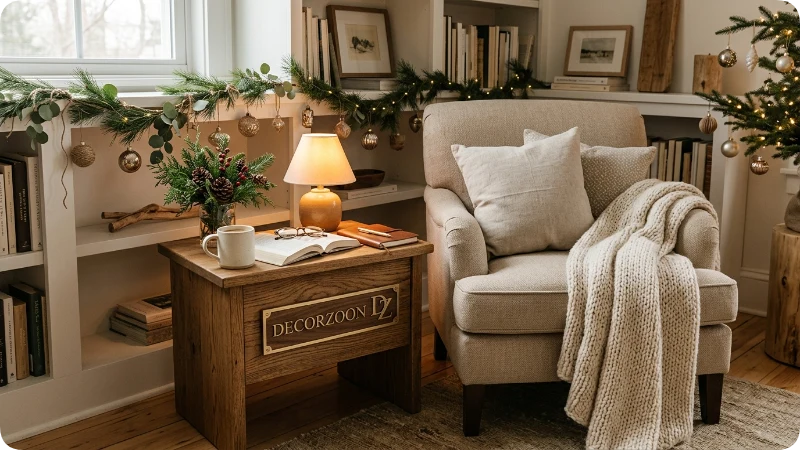
Smaller personal spaces can benefit from a few carefully selected Christmas details.
Place a miniature tree on a desk corner, add a small wreath above a reading chair, or drape a short strand of warm lights around an existing shelf. A seasonal mug, framed winter artwork, or plaid cushion can provide enough holiday character without interfering with work.
If the space is used for video calls, keep decorations outside the main camera area unless you specifically want them visible. A simple wreath or small tree in the background can create seasonal interest without overwhelming the frame.
For a reading nook, prioritize comfort: add a soft throw, warm lamp, and one seasonal accent rather than filling the chair or surrounding floor with decorations.
Make Small Rooms Feel Festive Without Losing Function
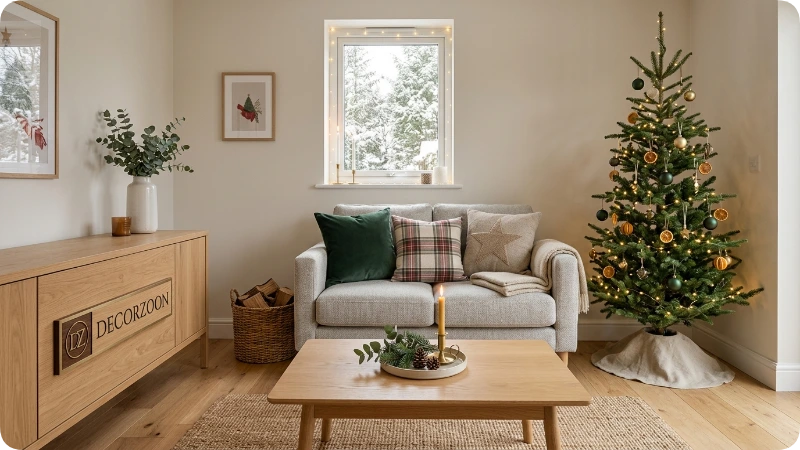
Small rooms require more attention to scale and circulation. Instead of adding more decorations, choose pieces that perform more than one visual role.
A mirror can reflect nearby lights. A decorative throw can introduce Christmas color while remaining useful. A narrow wall mounted tree can create a focal point without consuming floor space. A wreath can decorate a wall without requiring a table.
Keep pathways clear and avoid placing decorative objects where doors, drawers, windows, or seating need to operate.
One strong seasonal arrangement often works better than several small displays scattered throughout a compact room. Small space guides commonly recommend vertical decorating and curated surfaces for this reason.
Mix New Christmas Decorations With What You Already Own
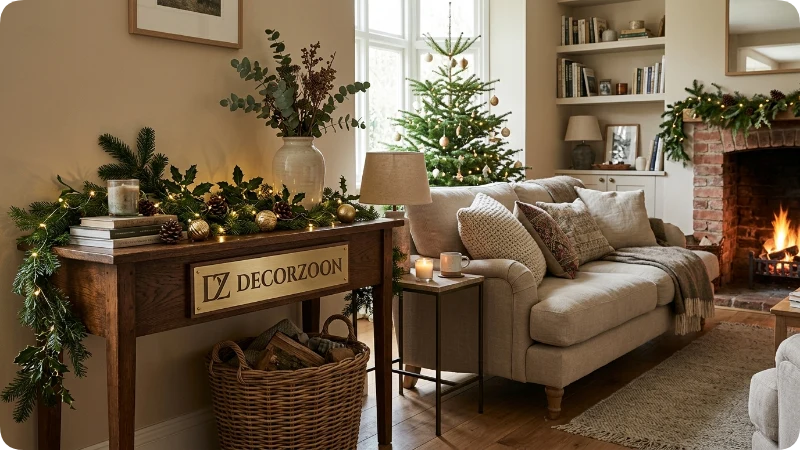
A Christmas room does not need to be built entirely from new decorations.
Start with permanent pieces that already fit the room: baskets, mirrors, neutral pillows, wood trays, ceramic vases, lamps, books, or artwork. Then introduce a smaller number of seasonal pieces around them.
This approach makes the final arrangement feel more connected to the home’s existing style. It can also reduce storage demands because fewer holiday specific items are needed.
For example, a neutral living room might only need evergreen branches, red ribbon, a few ornaments, and a seasonal throw to establish a Christmas palette.
Avoid: Buying a completely new color scheme every year when the existing room already provides a strong foundation.
Use Natural Materials for a Relaxed Christmas Look
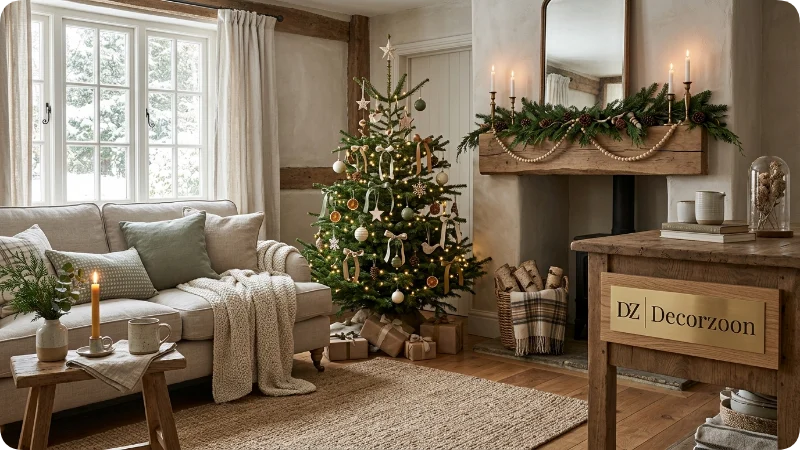
Wood, pinecones, woven baskets, linen, wool, ceramic, and evergreen foliage can make Christmas decorating feel less dependent on shiny ornaments.
A wooden bowl filled with pinecones can sit on a coffee table. Woven baskets can hold blankets beside the sofa. Linen or cotton textiles can soften a traditional red and green palette, while ceramic houses or trees can add smaller points of interest.
Natural materials are especially useful when you prefer rustic, Scandinavian inspired, farmhouse, or understated Christmas decorating.
Balance is important. If everything is matte and neutral, add a small amount of reflective material such as glass, brass, or metallic ornaments to prevent the arrangement from looking flat.
Create a Cohesive Look by Repeating Three Elements
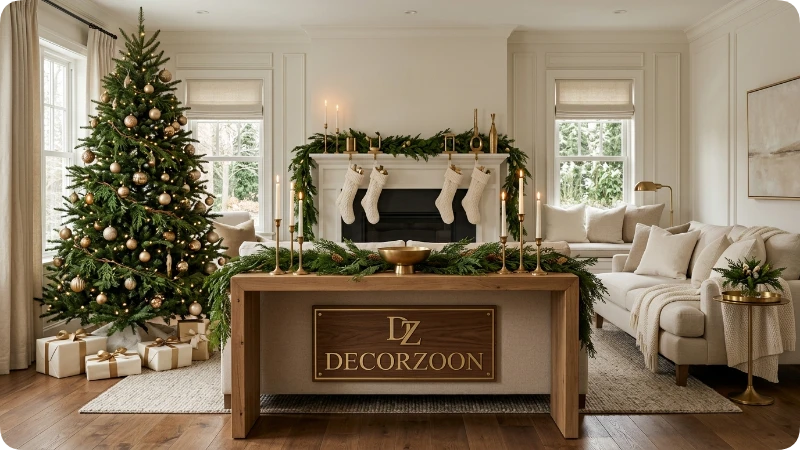
The easiest way to make multiple rooms feel connected is to repeat a small number of visual elements.
Choose three recurring details such as:
- Evergreen greenery
- Warm white lights
- Burgundy accents
Then use them differently from room to room. The living room might have a garland and burgundy pillows, while the bedroom uses a small wreath and burgundy throw. The dining room can repeat the greenery with warm lights and neutral linens.
The rooms do not need to match exactly. Repetition simply creates a visual thread between spaces.
This is particularly useful in open plan homes where the living room, dining area, and kitchen are visible simultaneously.
Christmas Room Decor Tips That Make the Biggest Difference
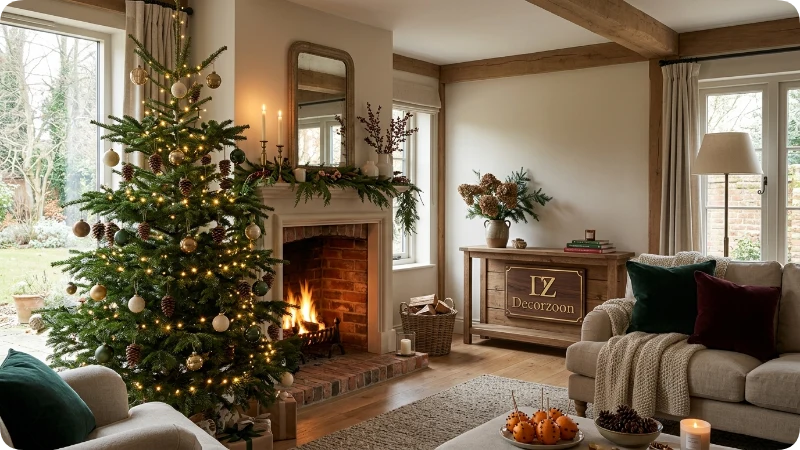
Before finishing your decorating, step back and look at the room from the doorway and from the main seating position.
Check If:
- One area clearly acts as the focal point.
- Your Christmas colors repeat naturally.
- Decorative pieces are appropriately scaled for the room.
- Walkways and everyday furniture remain usable.
- Lighting looks warm and consistent at night.
- The room has enough empty space to prevent visual clutter.
- Seasonal decorations support the existing interior instead of fighting it.
The strongest Christmas rooms usually do not contain the most decorations. They have a clear visual hierarchy, repeated colors, varied textures, and enough restraint for the important pieces to stand out.
Frequently Asked Questions
How can I decorate my room for Christmas without making it look cluttered?
Choose one focal point, then add two or three supporting seasonal details. Use a consistent color palette and leave some surfaces intentionally undecorated. This creates a festive appearance without filling every corner.
What are simple Christmas room decor ideas for a small space?
Use a tabletop or slim tree, wall mounted greenery, warm string lights, seasonal textiles, and vertical decorations. Keep floor space open and choose decorations that do not interfere with normal movement.
How do I make my bedroom look Christmassy?
Start with the bed. Add a seasonal throw, one or two coordinated pillows, warm lighting, and either a small wreath or greenery arrangement. Keep the rest of the room relatively simple so it remains comfortable and restful.
What colors work well for Christmas room decor?
Classic red and green remain versatile, while white and green, burgundy and cream, or soft pink and red offer different moods. The important factor is repeating the chosen colors throughout the room rather than using too many unrelated shades.
How do I decorate multiple rooms for Christmas without making them match exactly?
Choose two or three recurring elements, such as evergreen, warm lights, and one accent color. Repeat those elements differently in each room while allowing each space to retain its own furniture, function, and character.
Conclusion
The most practical Christmas room decor ideas begin with the room itself. Choose a focal point, work with the furniture and architecture already there, then layer in seasonal color, greenery, lighting, and comfortable textiles.
A bedroom may only need festive bedding and a small wreath, while a living room can support a decorated tree and fuller greenery. Smaller rooms benefit from vertical displays and compact trees rather than crowded floors.
Instead of decorating every available surface, repeat a few colors and materials across the space. This creates a Christmas look that feels intentional, comfortable, and connected to the rest of your home while still leaving enough room for everyday life.

Sophia Bennett is a passionate Home Decor Enthusiast and Content Writer at DecorZoon.com. She shares well-researched content on home decor, interior design, decorating trends, DIY ideas, and space-styling inspiration, helping readers create beautiful, functional, and stylish living spaces. Through practical tips and creative insights, Sophia makes it easier for homeowners and decor lovers to transform their homes with confidence and style.