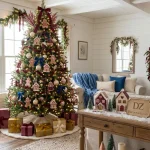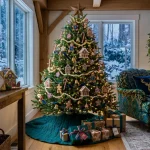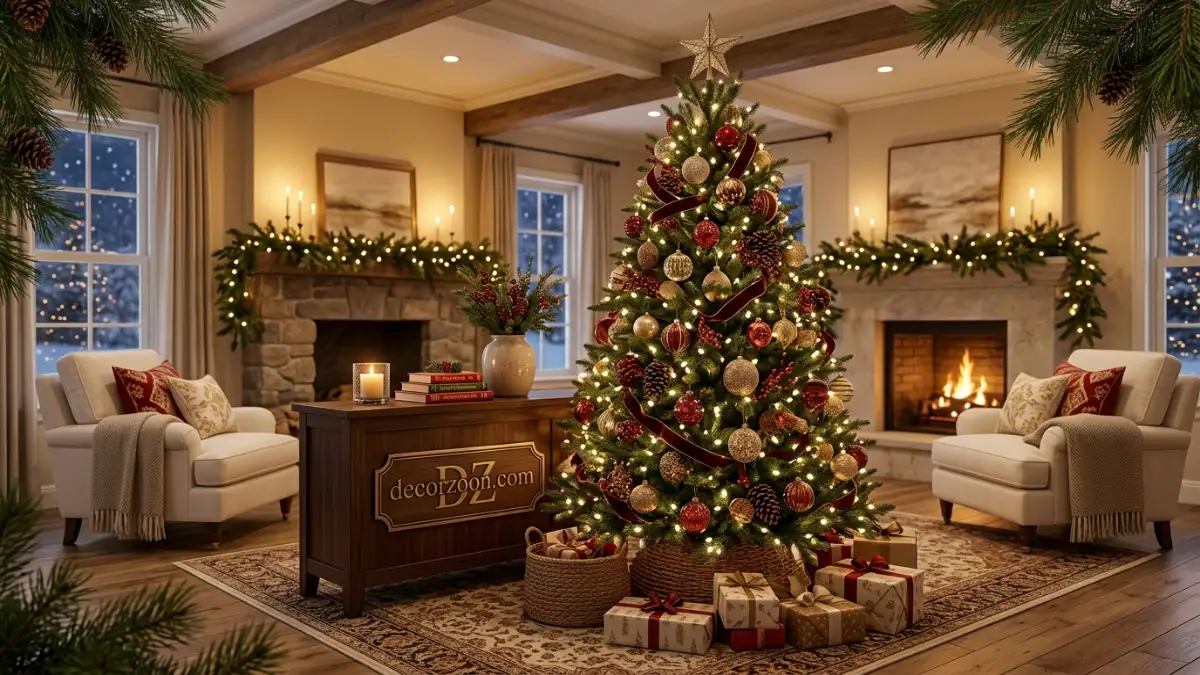
Christmas tree decor ideas can help you turn your holiday tree into a beautiful focal point that complements your home and reflects your personal style. If you love classic red and gold ornaments, modern neutral colors, rustic natural accents, or playful decorations, the right combination of lights, ribbon, and ornaments can make your tree feel festive and inviting.
You don’t need to buy an entirely new collection of decorations to create a fresh look. With a thoughtful color scheme, balanced ornament placement, and a few finishing touches, you can transform a traditional tree into something special.
In this guide, explore 10 stylish Christmas tree decorating ideas for different tastes and spaces, along with practical tips for layering decorations, choosing colors, and creating a polished look from the tree topper to the base.
Start With a Classic Red and Gold Christmas Tree
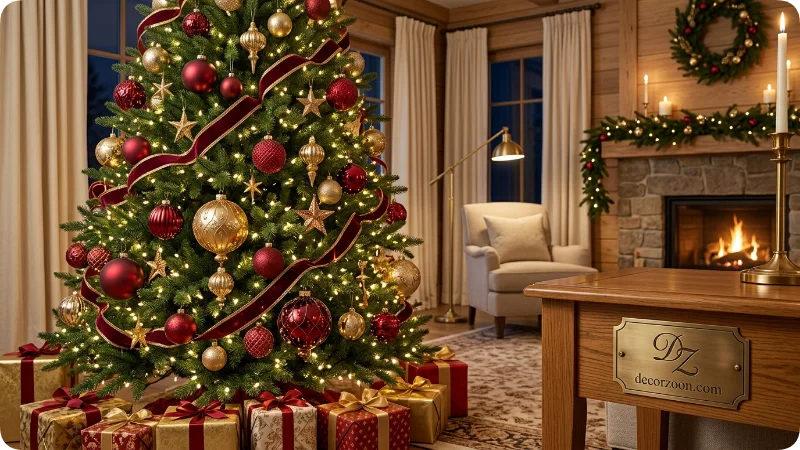
Red and gold remain an easy combination when you want a Christmas tree that immediately feels traditional without becoming visually chaotic. Start with warm white lights, then build the palette around two dominant colors rather than adding every festive shade available.
Use red ornaments in several sizes and finishes matte, glossy, and lightly textured then introduce gold through ribbon, baubles, stars, or smaller decorative picks. Burgundy or deep cranberry can work as a secondary red when you want more depth.
For a fuller appearance, place some larger ornaments deeper inside the branches and keep smaller pieces toward the outer tips. A wide wired ribbon can provide movement without covering the ornaments.
Best for: traditional, transitional, and warm interiors.
Avoid: using too many metallic finishes at once. If red and gold are already strong, let the greenery provide the visual breathing room.
Create a Modern Neutral Christmas Tree
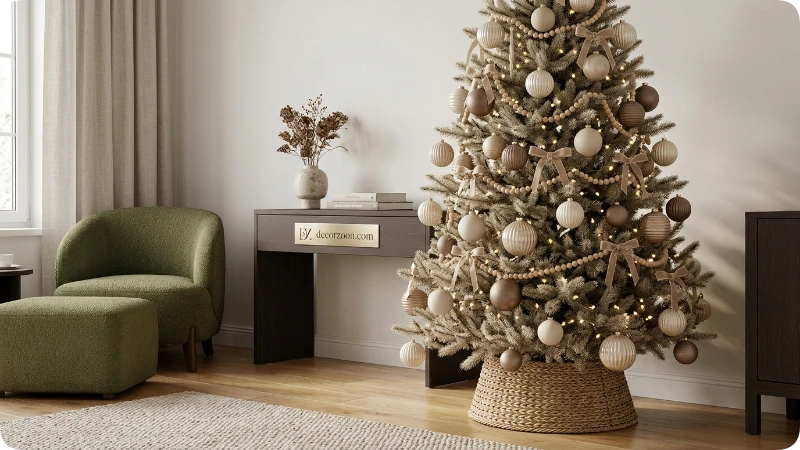
A neutral Christmas tree works especially well when the surrounding room already has a restrained color palette. Instead of relying on bright holiday colors, combine ivory, cream, champagne, taupe, soft brown, and natural wood.
Begin with warm white lights because cool blue white lighting can make creamy ornaments appear gray. Add ornaments in different textures so the restrained palette does not become flat. Ribbed glass, matte ceramic look pieces, velvet ribbon, wooden accents, and subtle metallic ornaments can provide contrast without introducing another dominant color.
Keep the composition slightly irregular. Place larger ornaments toward the center and lower portions of the tree, then distribute medium and small pieces around them. A simple bow or understated topper can finish the top without competing with the neutral palette.
This approach is particularly useful when you want the Christmas tree to coordinate with an existing living room rather than dominate it.
Best for: modern, minimalist, Scandinavian inspired, and neutral interiors.
Avoid: using identical beige ornaments throughout the tree. A neutral palette still needs variation in scale and texture.
Layer Ribbon for Movement and Depth
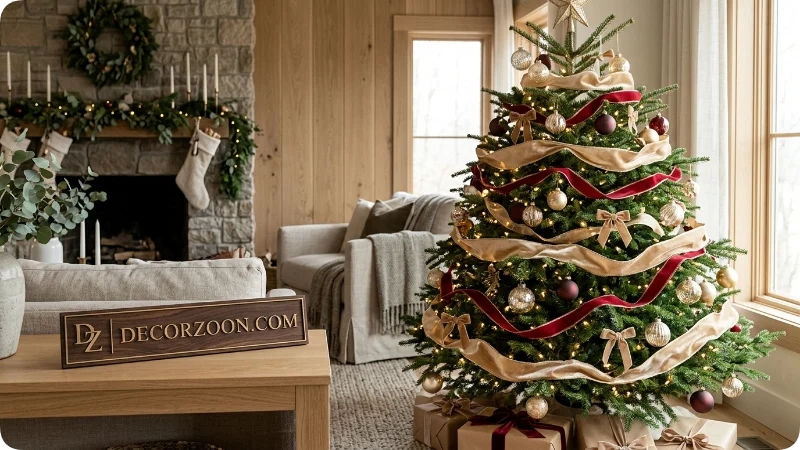
Ribbon can change the overall shape of a Christmas tree because it introduces long visual lines instead of isolated decorative points. Current decorating guides commonly place lights before ribbon and ornaments, allowing each layer to build on the previous one.
Choose one wide wired ribbon as the main layer. A second narrower ribbon can be added when the colors and textures complement each other. Instead of wrapping the ribbon tightly around every branch, create loose folds or cascading sections that tuck naturally into the tree.
For a tall tree, vertical ribbon tails or several controlled cascades can emphasize height. For a wide tree, shorter horizontal swags can reinforce its fuller silhouette.
Secure ribbon discreetly inside sturdy branches rather than pulling it tightly around the outside. The goal is to make the ribbon look integrated with the tree.
Best for: creating a professionally layered appearance without buying dozens of additional ornaments.
Avoid: using several unrelated patterns. If one ribbon is heavily patterned, keep the others relatively simple.
Build a Nature Inspired Christmas Tree
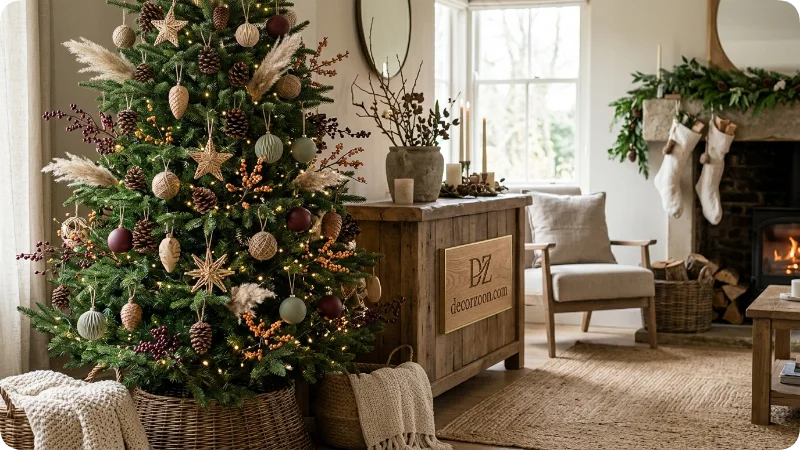
For a softer, organic Christmas tree, use natural looking materials instead of relying entirely on traditional glass or plastic ornaments. Pinecones, wooden ornaments, dried looking botanical picks, berries, woven details, and neutral fabric accents can create a woodland inspired composition.
Warm white lights work particularly well because they keep the natural materials visually connected to the green branches. Use brown, cream, muted green, and small amounts of red or burgundy if you want a little more traditional contrast.
Place natural picks at different depths rather than arranging them in identical rows. Larger pieces can sit closer to the trunk, while lighter branches and berries can extend outward.
This style also gives you flexibility with sentimental ornaments. A few colorful family pieces can be mixed into an otherwise natural tree without making the entire design feel mismatched.
Best for: rustic, farmhouse, cabin inspired, and relaxed interiors.
Avoid: combining too many faux natural materials with highly glossy ornaments. The contrast can make the tree feel disconnected.
Use Oversized Ornaments for a Bold Focal Point
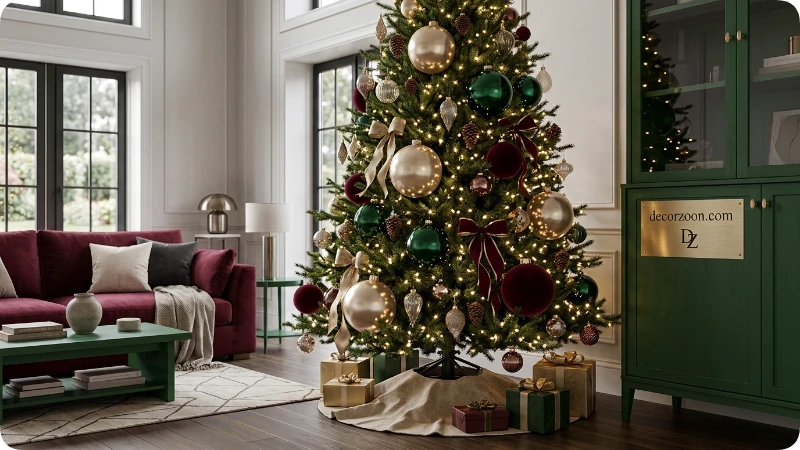
Large ornaments can give a Christmas tree a stronger visual structure, particularly when the tree is tall or has substantial branches. Instead of scattering oversized pieces randomly, treat them as anchor points.
Start with several large ornaments in the lower and middle sections. Space them around the tree so one side does not become noticeably heavier. Then use medium and smaller ornaments to fill the gaps.
Oversized bows can serve a similar purpose at the top or upper third of the tree. Architectural Digest’s recent Christmas tree coverage specifically highlights dramatically scaled bows as a way to give a familiar decorating element more visual impact.
Large ornaments are also useful when you have fewer decorations. Rather than trying to make a sparse collection of tiny ornaments cover the entire tree, combine a smaller number of substantial pieces with ribbon and lights.
Best for: tall trees, high ceiling rooms, and statement decorating.
Avoid: placing all large ornaments on the outside tips. Some should sit deeper inside the branches to create depth.
Mix Sentimental Ornaments With Coordinated Decor
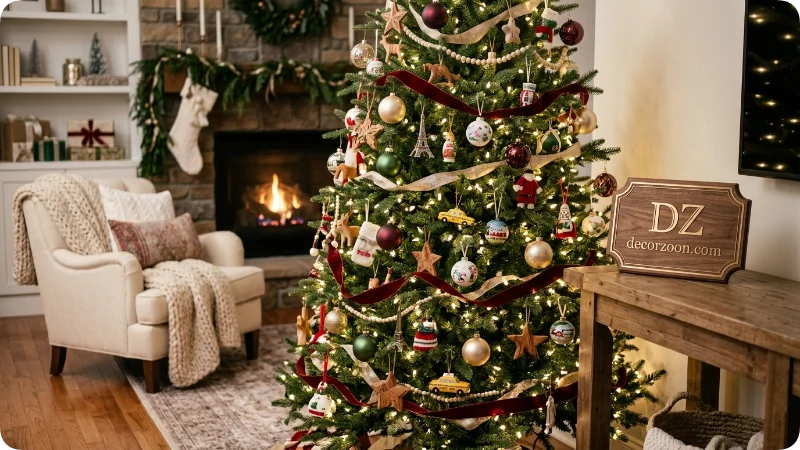
A beautifully styled Christmas tree does not have to look like every ornament came from the same collection. Family ornaments, handmade decorations, travel souvenirs, and childhood keepsakes often give a tree more personality than a perfectly matched set.
The trick is to create a visual framework around the sentimental pieces. Choose a simple base of warm lights and one or two coordinating colors, then use those colors to connect ornaments that otherwise look unrelated.
For example, a collection of colorful family ornaments can be balanced with red ribbon, warm lights, and a few simple gold or wooden ornaments. Place the most meaningful pieces where they can be seen easily rather than burying them behind larger decorations.
You can also reserve the front facing branches for especially important ornaments while using simpler pieces around the sides and back.
Best for: family homes, nostalgic decorating, and collected Christmas styles.
Avoid: forcing every sentimental ornament into one small section. Distribution usually makes the tree feel more intentional.
Try a Scandinavian Inspired Tree With Simple Materials
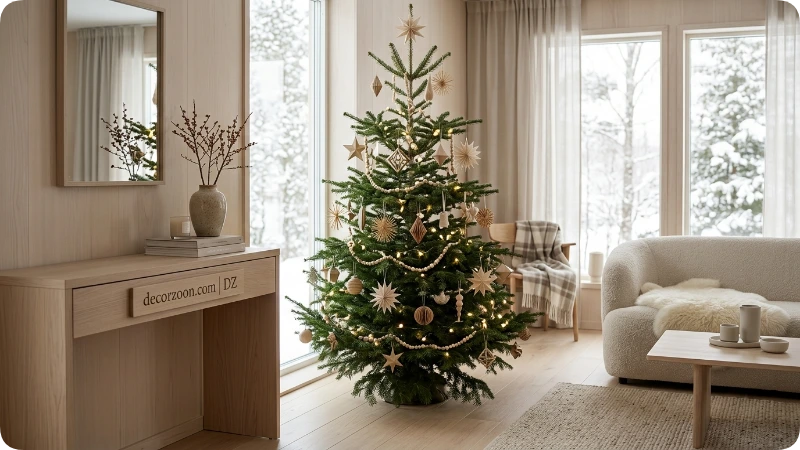
A Scandinavian inspired Christmas tree favors simplicity, natural materials, and a restrained color palette. Wood, paper, straw style ornaments, neutral textiles, and warm lighting can create a quiet holiday look without making the tree feel empty.
Keep the number of decorative elements controlled. Instead of covering every branch, allow some greenery to remain visible. Simple geometric ornaments can be repeated across the tree to create rhythm, while small handmade looking details prevent the design from feeling overly uniform.
Warm white lights are generally a better fit than multicolor lighting for this style. If you want additional color, use small amounts of red, muted green, or natural brown rather than introducing a large collection of bright shades.
Martha Stewart’s Christmas tree coverage includes Scandinavian inspired decorating using materials such as wood, straw style ornaments, beads, and handmade accents.
Best for: minimalist homes, natural interiors, and people who prefer less visual clutter.
Avoid: adding too many shiny metallic decorations, which can shift the look away from the intended simplicity.
Make a Colorful and Playful Christmas Tree
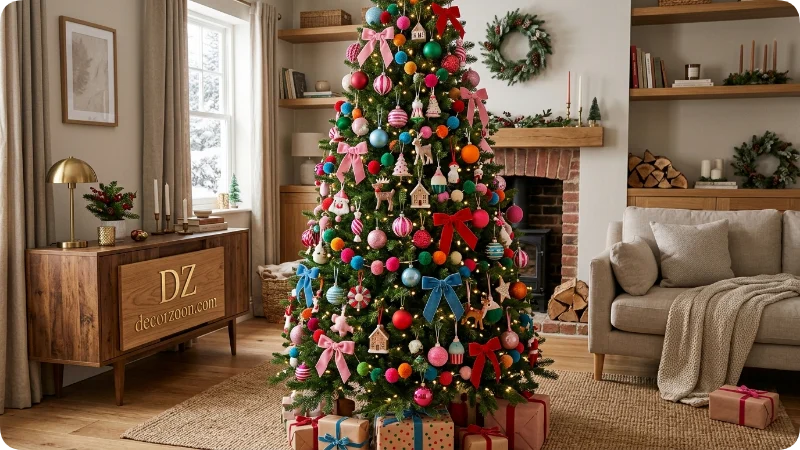
A colorful Christmas tree works best when the variety is intentional. Instead of trying to match every ornament, select a small group of colors that can repeat throughout the tree.
Pink, red, green, blue, orange, or purple can be combined depending on the room and the overall mood. Keep one color dominant, use two or three as secondary colors, and let the remaining shades appear as small accents.
Playful details can include pom poms, candy inspired ornaments, miniature figurines, colorful bows, unusual shapes, or handmade decorations. HGTV’s Christmas tree ideas similarly show that playful ornaments and varied shapes can be used alongside a controlled color scheme rather than simply filling the tree with random decorations.
This style is especially effective in family spaces because children can contribute handmade ornaments without disrupting a rigid decorating scheme.
Best for: family rooms, kids’ spaces, maximalist interiors, and cheerful holiday decorating.
Avoid: distributing every color equally. A clear dominant color helps the tree look designed rather than accidental.
Decorate a Small or Slim Christmas Tree
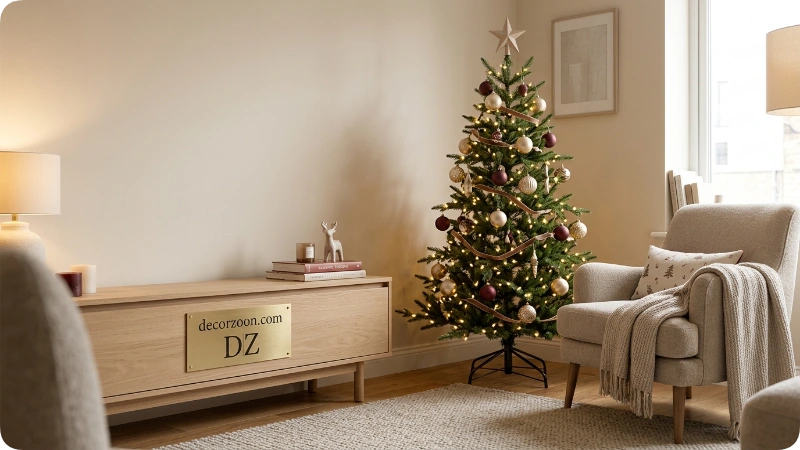
A small Christmas tree does not need miniature versions of every decoration used on a large tree. In a compact space, the most effective approach is to simplify the layers and make each one visible.
Start with lights that follow the tree’s shape closely. Use a narrower ribbon if the branches are small, and select ornaments that are proportional to the tree. A few larger accents can still work, but too many oversized decorations will visually overwhelm a narrow silhouette.
Slim trees are useful beside a media console, in an apartment corner, near a reading chair, or in a bedroom. You can also use a tabletop tree when floor space is limited. HGTV notes that tabletop trees are useful for small spaces such as apartments and condos and can also be distributed throughout different rooms.
For a particularly narrow tree, concentrate the strongest decorations on the visible front and sides while keeping the back simpler.
Best for: apartments, bedrooms, entry areas, offices, and compact living rooms.
Avoid: using long, heavy garlands that overpower the branches.
Finish the Tree With a Coordinated Topper and Base
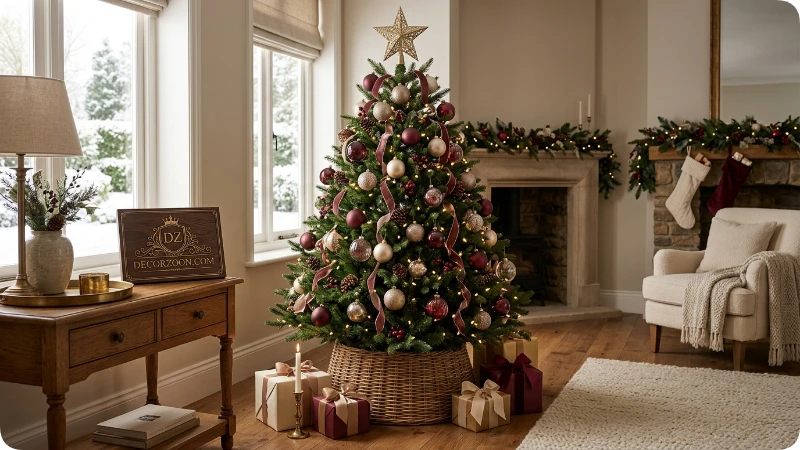
The top and bottom of a Christmas tree are easy to overlook, but they help complete the overall composition. The topper should relate to the tree’s scale and decorating style rather than simply being placed there because every tree is expected to have one.
A traditional star works well on classic trees, while a large bow can reinforce a ribbon focused design. Natural branches, floral picks, or a simple decorative spray can work for rustic and organic styles.
At the base, choose a tree skirt or collar that supports the palette. A woven or natural material base can reinforce an organic tree, while a velvet or patterned skirt can support a more traditional design. Current holiday design coverage also shows continued interest in natural material tree skirts and collars as alternatives to conventional fabric skirts.
Step back several feet after finishing the tree. If the top feels visually heavy, simplify the topper. If the base looks disconnected, repeat one material or color from the tree.
Best for: finishing a complete, coordinated tree from top to bottom.
Avoid: choosing a topper that is too heavy for the branches or a base treatment that introduces an unrelated color.
How to Layer Christmas Tree Decorations in the Right Order
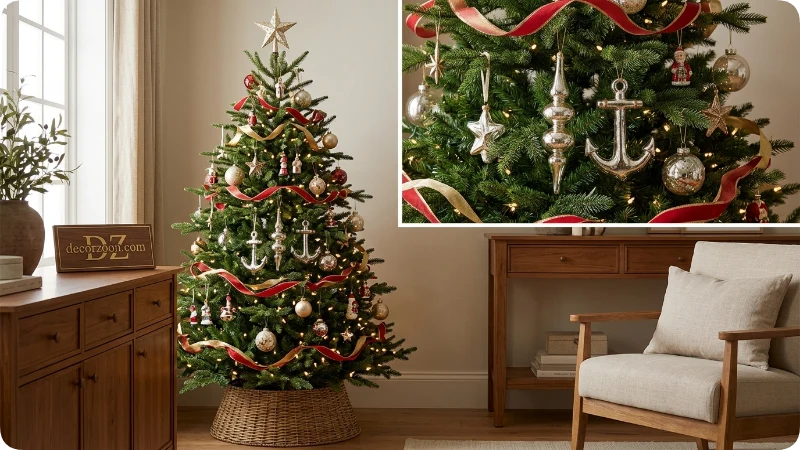
The order in which decorations are added can make the final tree easier to balance. A practical sequence is to shape the branches first, install lights, add ribbon or garland, place larger anchor ornaments, fill with medium and small ornaments, then finish with the topper and base.
Start by fluffing an artificial tree so its branches are separated and the silhouette looks full. On a real tree, check that the stand is stable and the branches can support the decorations you plan to use.
Next, add lighting. Work the lights through the branches instead of leaving every strand on the outer surface. Then add ribbon or garland, keeping the movement loose enough that the greenery remains visible.
Place large ornaments first, followed by medium and small pieces. Tuck some ornaments deeper into the tree to create dimension. Finally, walk around the tree and look for empty patches, overly concentrated areas, or sections where one color dominates.
This layered approach is reflected across current Christmas tree decorating guidance from HGTV, Hallmark, Home Depot, and other decorating sources.
How to Choose a Christmas Tree Color Scheme
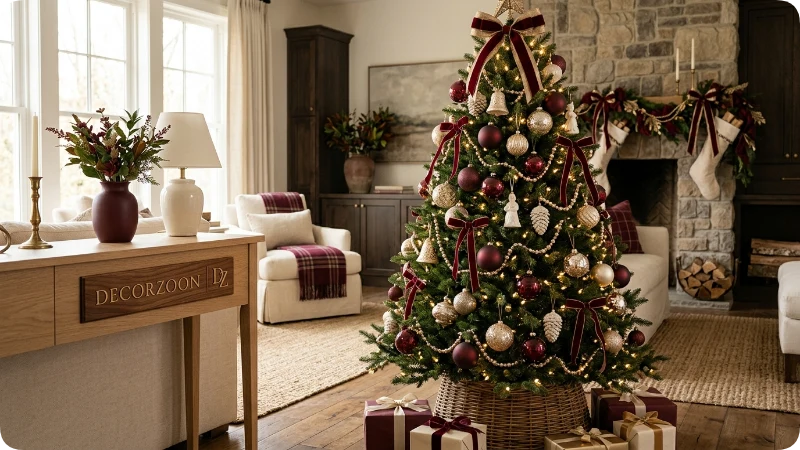
Choosing the color palette before buying additional decorations can prevent a tree from becoming visually crowded. Begin with the room rather than the ornament aisle.
Look at the dominant colors already present in your living room. If the room has warm wood and beige upholstery, red, burgundy, gold, cream, and natural green can connect naturally. If the room uses cool gray, blue, or white, silver, icy blue, white, and soft green may create a more cohesive relationship.
A useful approach is to select:
- One dominant color for the strongest visual presence.
- One or two secondary colors for ornaments and ribbon.
- One accent finish such as gold, silver, wood, or glass.
You do not have to use the exact same colors throughout the room. Repeating one or two tones is usually enough to make the tree feel connected to its surroundings.
Most importantly, choose the palette before buying filler decorations. This makes it easier to reuse ornaments from previous years without letting every old color dictate the new design.
Christmas Tree Decorating Mistakes to Avoid
Many decorating problems come from arrangement rather than the decorations themselves.
Skipping branch shaping: An artificial tree can look sparse when its branches are still compressed. Take time to separate and position the branches before decorating.
Putting everything on the outside: Ornaments placed only on the branch tips create a flat appearance. Move selected pieces closer to the trunk to create depth.
Using one ornament size: A tree covered with identical balls can lack visual hierarchy. Mix large, medium, and small pieces.
Overloading the ribbon: Ribbon should support the composition, not hide the entire tree. Leave visible areas of greenery between sections.
Ignoring the room: A tree can be attractive on its own but still feel disconnected from the surrounding furniture and colors.
Decorating only from the front: If the tree can be viewed from several directions, rotate around it while decorating. Balance the visible sides instead of creating one heavily decorated face.
Adding too many unrelated colors: A colorful tree can be intentional, but random color distribution can make it difficult for individual decorations to stand out.
Frequently Asked Questions About Christmas Tree Decor Ideas
What should I put on my Christmas tree first?
Start by shaping and fluffing the tree, then add lights. After the lighting is in place, add ribbon or garland if you are using it, followed by larger ornaments, smaller ornaments, and the topper. This sequence makes it easier to layer decorations without constantly moving pieces that are already finished.
How many colors should a Christmas tree have?
There is no fixed number, but a controlled palette is generally easier to balance. One dominant color with one or two supporting colors and a metallic or natural accent can create a cohesive look. A multicolor tree can use more shades when one color remains visually dominant.
How do I make my Christmas tree look fuller?
Shape the branches first, then place some ornaments deeper inside the tree rather than keeping everything on the outer tips. Ribbon, picks, and ornaments in different sizes can also fill visual gaps while preserving depth.
Should ribbon or ornaments go on a Christmas tree first?
When using both, ribbon generally goes on before the ornaments. This lets you secure the ribbon directly to the branches without working around finished ornaments.
How can I decorate a Christmas tree without buying everything new?
Keep your existing sentimental ornaments and build a new visual framework around them. Changing the ribbon, adding a new color accent, rearranging ornament placement, or introducing a different topper can make familiar decorations feel fresh without replacing the entire collection.
Conclusion
The strongest Christmas tree decor ideas start with a clear decorating direction rather than a large pile of decorations. Decide If you want a classic red and gold tree, a neutral modern look, a natural woodland design, a colorful family tree, or something simpler for a small space.
Then build the design in layers with lighting, ribbon or garland, anchor ornaments, smaller details, and a coordinated topper and base.The most useful test is to step back from the finished tree and look at it as part of the room.
The colors should relate to the surrounding space, the decorations should have different scales and textures, and the eye should move naturally from the base to the top. That approach makes it easier to create a Christmas tree that feels intentional while still leaving room for the personal ornaments that make the holiday meaningful.

Sophia Bennett is a passionate Home Decor Enthusiast and Content Writer at DecorZoon.com. She shares well-researched content on home decor, interior design, decorating trends, DIY ideas, and space-styling inspiration, helping readers create beautiful, functional, and stylish living spaces. Through practical tips and creative insights, Sophia makes it easier for homeowners and decor lovers to transform their homes with confidence and style.