Valentine’s Day decor ideas can help you create a warm, romantic atmosphere at home with a few carefully chosen decorations. From classic red and pink accents to soft neutral colors, floral arrangements, and simple DIY details, the right approach can make your space feel festive without looking cluttered.
This guide shows you how to decorate your home for Valentine’s Day step by step. You’ll learn how to choose a color scheme, style your living room and dining table, decorate mantels and entryways, arrange flowers, and create affordable displays for small spaces.
You’ll also find practical tips for choosing decorations that match your existing furniture and can be reused after February 14.
Whether you prefer a traditional romantic look or a subtle, modern style, start with one focal point, build around two or three coordinating colors, and use accessories that fit your space. These simple decorating guidelines will help you create a beautiful Valentine’s Day look that feels personal, balanced, and easy to maintain.
Create a Classic Red and Pink Color Palette
Red and pink are traditional choices for Valentine’s Day, but the way you combine them determines whether the room feels playful, elegant, or overly busy.
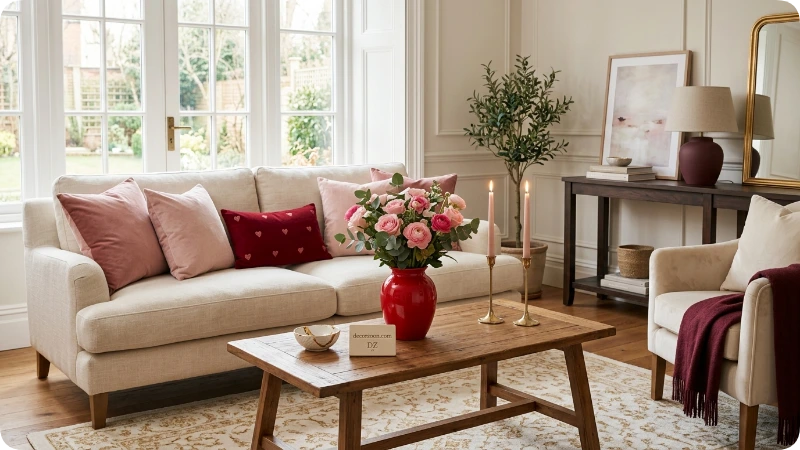
For a classic look, pair cherry red with blush pink, warm ivory, and small touches of gold. Red provides the strongest visual accent, while pink softens the contrast and ivory gives the arrangement room to breathe. This combination works especially well in living rooms, dining areas, and entryways.
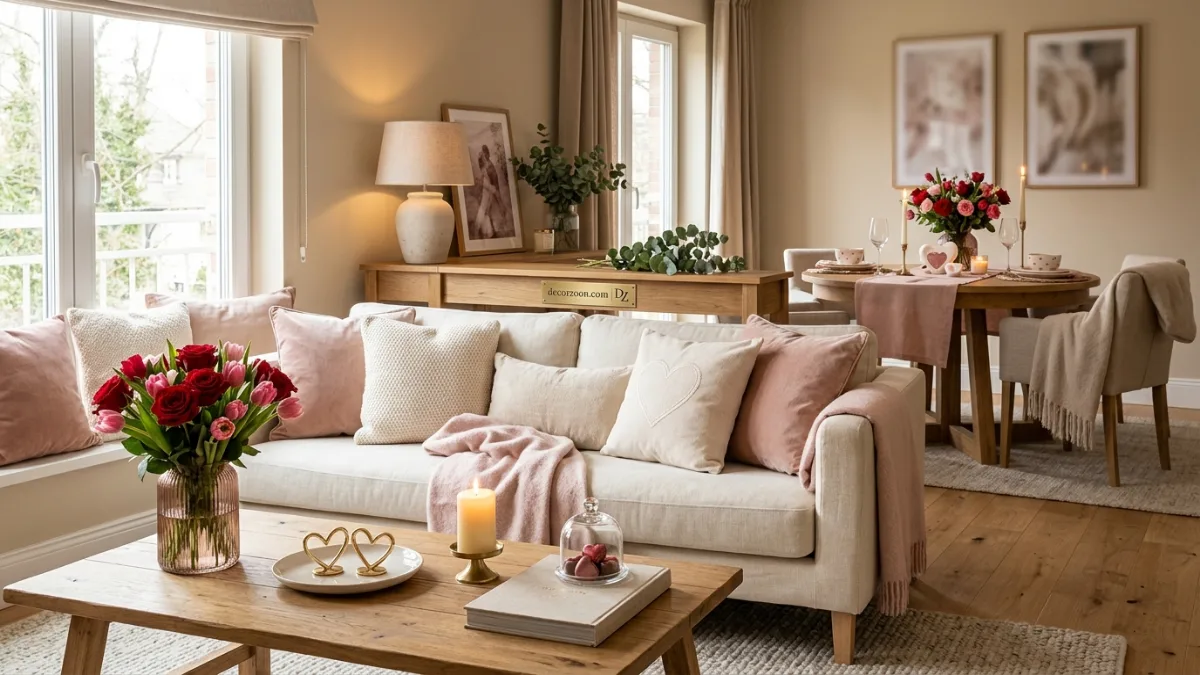
If your home already features neutral furniture, you do not need to introduce several new colors. Add two blush pillow covers to a cream sofa, place a red vase on a wooden coffee table, and finish with a small bouquet of pink flowers. Repeating these colors in two or three places makes the room feel coordinated.
For a more restrained style, use burgundy, dusty rose, and beige. These deeper and softer shades work well with dark wood, traditional furniture, and warm lighting.
Styling tip:
Choose one dominant color, one supporting shade, and one neutral. Too many competing reds, pinks, and purples can make a small room feel visually crowded.
Decorate Your Living Room With Romantic Textiles
Your living room is one of the easiest places to introduce Valentine’s Day decorations because cushions, blankets, and small accessories can change its appearance without requiring permanent alterations.
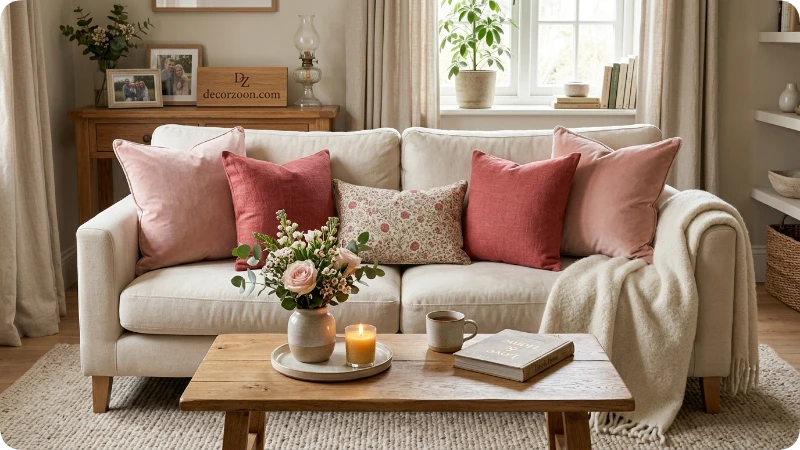
Start with the sofa. Replace one or two everyday pillow covers with blush velvet, muted red linen, or a subtle floral pattern. Keep the remaining pillows in their usual colors so the seasonal additions feel intentional rather than mismatched.
Drape a soft ivory or dusty pink throw over one end of the sofa. If you have a patterned rug or colorful artwork, choose a throw that picks up one of its existing shades. This creates a connection between the new decorations and the rest of the room.
A coffee table can complete the arrangement. Place a small ceramic vase with flowers on a tray, then add a book or decorative bowl. Leave enough open space for drinks, remote controls, and everyday use.
For a modern home, choose solid colors and simple shapes. For a farmhouse inspired room, consider gingham, subtle heart patterns, or natural linen. If your furniture is already colorful, keep the Valentine’s accents neutral and let one red or pink accessory provide the seasonal touch.
Style a Romantic Valentine’s Day Coffee Table
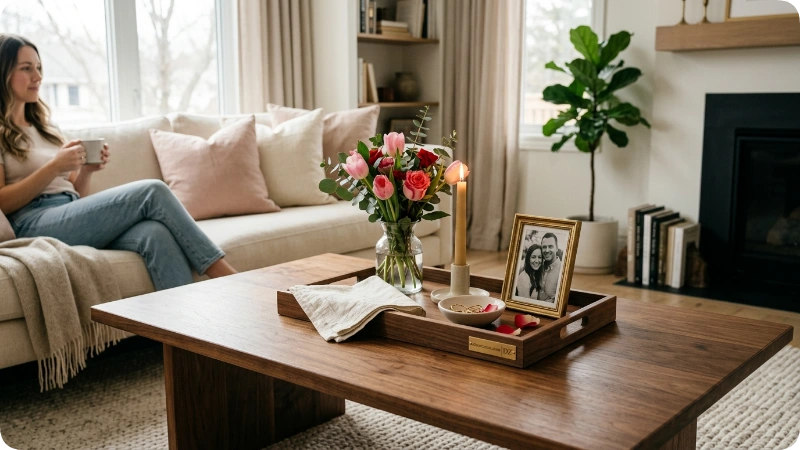
A coffee table offers a convenient place to create a small decorative display without changing the entire living room.
Begin with a tray that suits the table’s material. A wooden tray works well with rustic or farmhouse interiors, while glass, ceramic, or brushed metal trays suit contemporary spaces. Use the tray to group a few accessories so the arrangement looks organized.
Add a small vase of fresh flowers, a decorative candleholder, and one meaningful object, such as a framed photograph or a favorite keepsake. A folded linen napkin beneath the vase can introduce texture without adding another large object.
Vary the heights of the accessories. A medium height floral arrangement paired with a lower candleholder and a small decorative dish creates a more balanced composition than several objects of identical height.
Avoid filling every available inch of the table. The display should leave room for everyday activities and remain easy to move when guests arrive.
Best for:
Apartments, small living rooms, and anyone who wants a simple Valentine’s Day update that can be assembled in a few minutes.
Decorate the Fireplace Mantel With Flowers and Candleholders
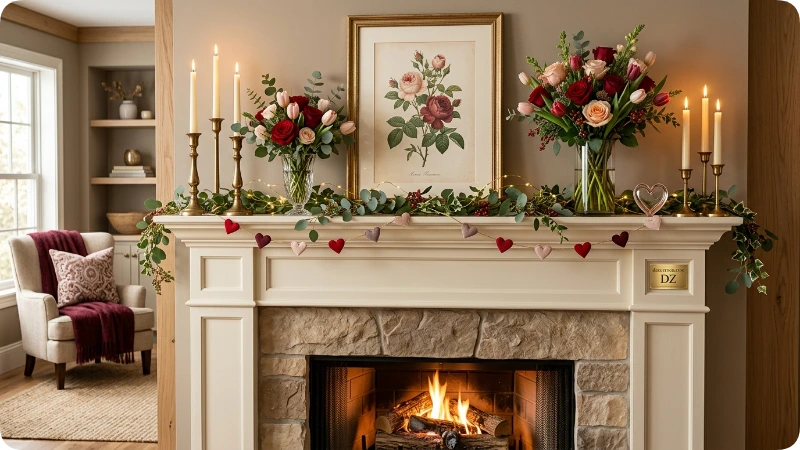
A fireplace mantel naturally attracts attention, making it a useful focal point for seasonal decorating. Even if your fireplace is decorative or unused, the shelf above it can hold a balanced arrangement of flowers, framed art, and candleholders.
Begin by deciding whether you want a symmetrical or relaxed layout. For a symmetrical design, place matching candleholders at opposite ends and position a framed print or mirror in the center. Add small floral arrangements to connect the elements.
For a more casual look, place a larger vase on one side and balance it with two smaller objects on the other. A short garland of greenery or a few removable heart ornaments can introduce the Valentine’s theme without covering the entire mantel.
Red roses create a traditional romantic display, while blush tulips and white flowers give the arrangement a softer appearance. Use ceramic, glass, or brass vessels that complement your existing furniture.
If you hang a garland, secure it properly and keep it away from flames, hot surfaces, and fireplace openings. Never place combustible decorations where they could ignite.
What to avoid:
A crowded mantel with too many small hearts, signs, and unrelated ornaments. A few larger pieces usually create a cleaner visual effect.
Make a Valentine’s Day Dining Table the Main Attraction
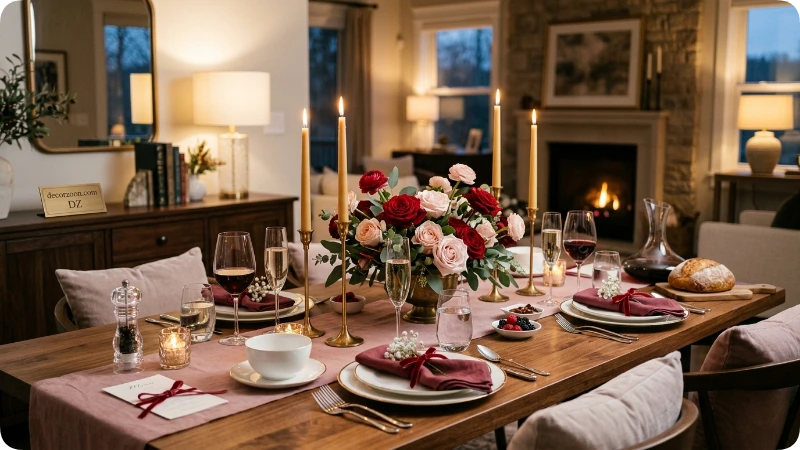
A thoughtfully decorated dining table can make an ordinary meal feel like a special occasion. You can create a romantic tablescape for two, a family dinner, or a Valentine’s gathering with friends.
Start with the table itself. A white or ivory tablecloth creates a light foundation, while a dusty rose runner adds color without covering the entire surface. If you have an attractive wooden table, leave the wood visible and use cloth napkins or a narrow runner instead.
For each place setting, use your regular dinnerware and introduce one seasonal detail. This might be a pink napkin, a red ribbon around the napkin, or a small flower beside the plate. Coordinated details look more polished than a different decoration at every seat.
Place a low floral arrangement near the center. Short arrangements allow guests to see each other across the table, while several small bud vases can be spread along a longer table. Add candleholders if desired, leaving adequate space between the flames and napkins, flowers, and other combustible materials.
A simple color combination of ivory, blush, and red works for most interiors. For a more dramatic setting, use burgundy napkins with white dinnerware and dark wooden accents.
Keep serving space in mind. The table should still have room for food, drinks, and comfortable movement.
Arrange Fresh Flowers in More Than One Room
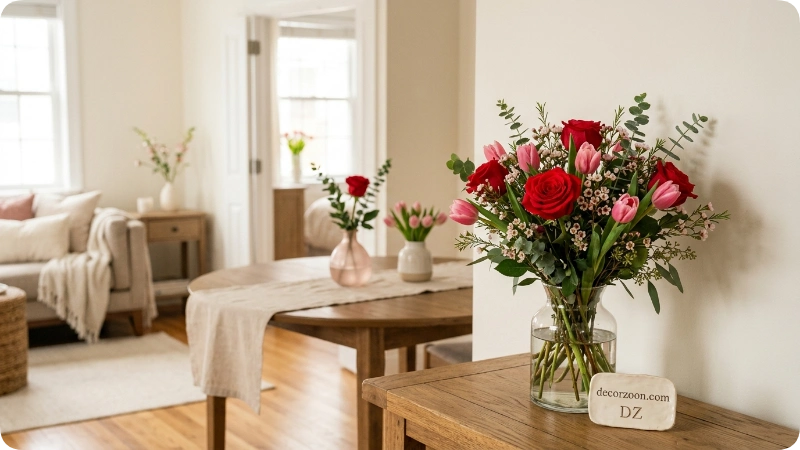
Fresh flowers are one of the most recognizable Valentine’s Day decorations, but you do not need a large bouquet in every room. A few well placed arrangements can make a stronger impression while keeping costs manageable.
Red roses provide a classic romantic look. Pink tulips feel relaxed and fresh, while white roses, carnations, and mixed seasonal flowers work well in neutral interiors. Choose flowers according to your preferred color palette rather than feeling limited to one variety.
Place the main bouquet on a dining table or living room console. Then use a few individual stems in smaller bud vases on a bedside table, bathroom vanity, or kitchen counter. Repeating the same flower color across different rooms creates continuity without requiring identical arrangements.
Vase choice matters, too. Clear glass keeps the display light and understated. Colored glass adds a decorative accent, while ceramic vases work well with rustic, traditional, and minimalist interiors.
Trim stems to different heights and remove leaves that would sit below the waterline. Refresh the water regularly and keep flowers away from direct heat.
If you have pets, check whether the flower varieties you choose are safe for them. Lilies, for example, are extremely dangerous to cats, so they should not be brought into a cat owning household.
Hang a Simple Valentine’s Day Wreath on Your Front Door
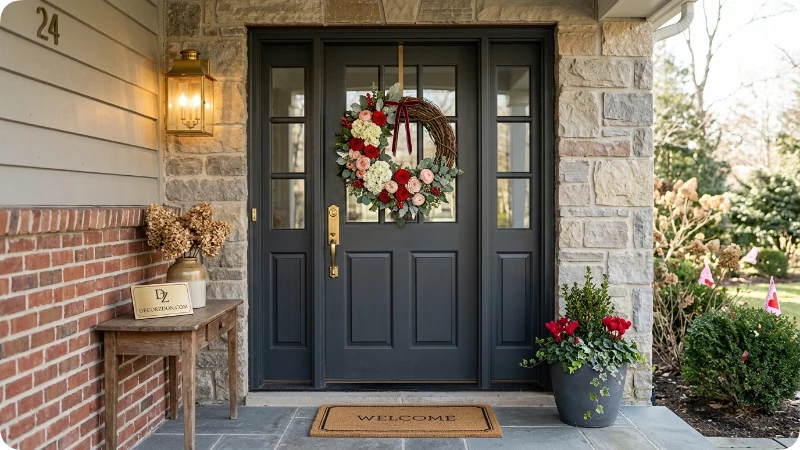
A wreath can introduce the Valentine’s Day theme before visitors enter your home. It also offers a useful alternative to decorating multiple indoor surfaces.
For a classic design, choose a grapevine or natural twig base and add a small arrangement of red, pink, or ivory flowers. A narrow ribbon in burgundy or blush can finish the design without making it look overly ornate.
If you prefer a modern style, use a simple metal or wooden hoop decorated with greenery and a small cluster of flowers along one side. Leaving part of the base exposed creates a lighter, less crowded appearance.
A felt heart or fabric wreath can work well indoors or on a sheltered door. For outdoor use, choose materials that can tolerate your local weather. Paper flowers and delicate fabric decorations may fade or become damaged when exposed to rain and direct sunlight.
Renters should consider an over the door hanger or another attachment method permitted by the lease. Check that the wreath does not interfere with the door closing or block a peephole, handle, or other necessary hardware.
After Valentine’s Day, replace the heart shaped accents with neutral ribbon or greenery if you want to keep using the wreath into early spring.
Add Heart Garlands Without Overdecorating
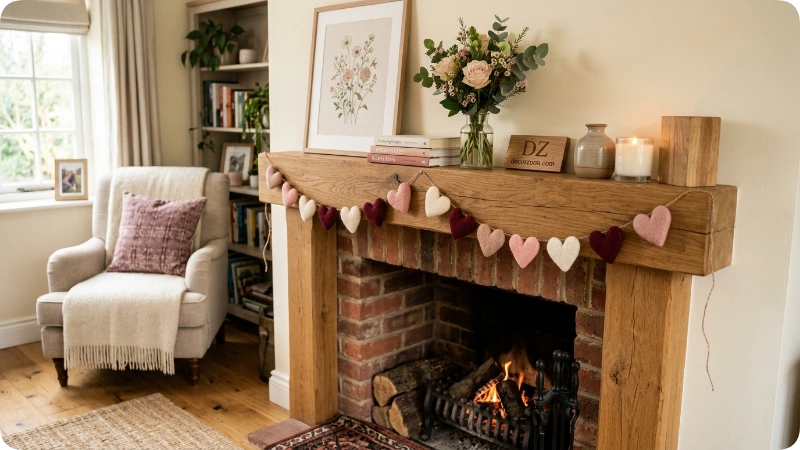
Heart garlands offer an easy way to introduce a recognizable Valentine’s Day motif. They are especially useful in homes where there is little room for tabletop decorations.
Paper hearts can be strung across a mantel, attached to a decorative branch, or hung in a window. Felt and fabric versions provide a softer texture, while wooden hearts suit rustic and farmhouse interiors.
Choose a single material and a limited color palette. For example, a garland made from blush, ivory, and burgundy felt will feel more cohesive than one combining glitter, plastic, metallic foil, and several unrelated shades.
Placement makes a difference. Hang a garland along the front of a mantel, across a small shelf, or above a console table. Keep it proportionate to the surface beneath it; a very long garland can overwhelm a narrow shelf.
For renters, removable hooks or freestanding branches can provide alternatives to nails. Always follow the adhesive manufacturer’s instructions and avoid placing decorations where they could fall onto candles, heaters, or walkways.
If you enjoy crafting, use leftover fabric or sturdy paper to make reusable hearts. Store them flat or in a labeled container after the holiday.
Create a Cozy Valentine’s Day Bedroom
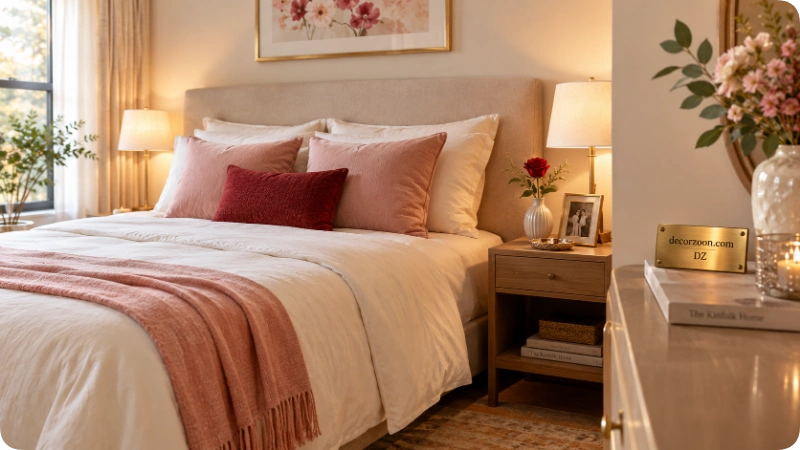
Bedroom decorations should feel calm and comfortable rather than resembling a party display. Soft textiles, subtle colors, and warm lighting can create a seasonal look without replacing your usual bedding.
Begin with the bed. Keep your everyday duvet or comforter and introduce one or two accent pillows in blush, muted red, or dusty rose. A lightweight throw folded at the foot of the bed can add another layer of color.
If your bedding is already patterned, choose plain accent pillows. If your bedding is neutral, a small floral pattern or delicate heart motif can provide more personality.
A bedside table is another place to add a seasonal detail. Use a small vase with a single flower, a framed photograph, or a decorative dish for jewelry. Keep the arrangement compact so that lamps, books, and other essentials remain accessible.
Lighting can make the room feel warmer. Use the bedside lamps you already have, or choose warm white bulbs that are suitable for the fixtures. Avoid placing fabric, paper, or dried flowers near hot bulbs or exposed flames.
For a look that lasts beyond February 14, favor solid color textiles and simple accessories over decorations that rely entirely on holiday slogans.
Style an Entryway Console With a Valentine’s Day Display
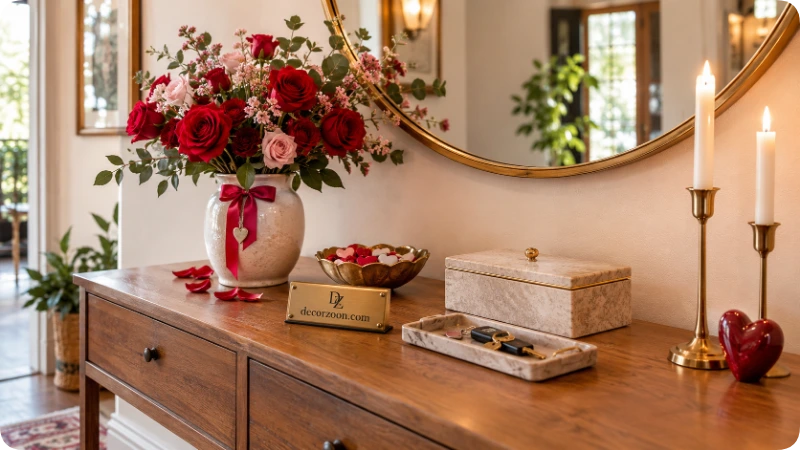
An entryway console can provide a concentrated burst of seasonal color without requiring a full room makeover. It is also one of the first places guests see when entering your home.
Start with a mirror or framed artwork above the console. Below it, position a vase of flowers slightly to one side. Balance the vase with a small bowl, a decorative box, or a pair of candleholders.
A narrow tray can keep keys and other everyday items organized while making the display feel intentional. If you want a more obvious Valentine’s Day theme, add one heart shaped object or a small framed print in a coordinating color.
For a traditional interior, use red flowers, brass accents, and a dark wooden surface. For a contemporary home, try blush flowers, a white ceramic vase, and a simple glass or metal accessory.
Keep the height of the arrangement appropriate for the space. A tall vase may work beneath a high mirror but can obstruct the view in a narrow hallway. Leave enough room for keys, bags, and other items that belong near the door.
Use Candles and Warm Lighting to Set the Mood
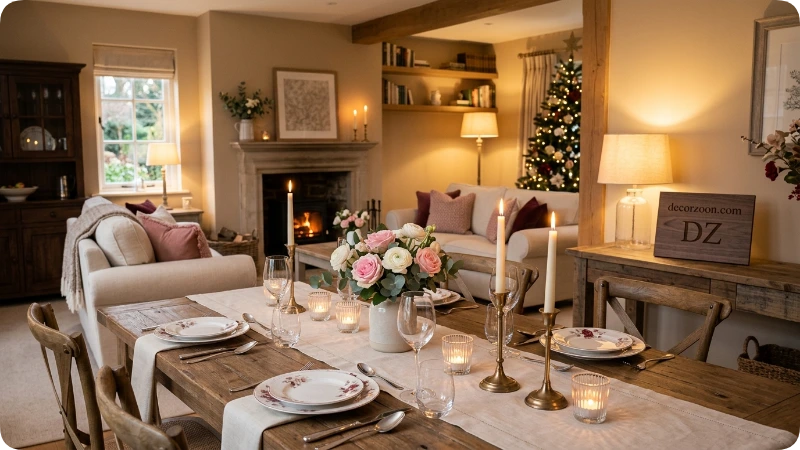
Lighting affects how the entire room feels, so it is often more effective to adjust the lighting than to add more decorations.
For a Valentine’s Day dinner, use existing lamps to create a warm background and add candlelight only where it can be used safely. Glass votive holders, simple taper holders, and small lantern style accessories can complement different decorating styles.
Group candles in odd numbered arrangements if that suits your table or mantel, but vary their heights only when the display remains stable and uncluttered. Place them on heat resistant surfaces and leave adequate clearance from curtains, flowers, paper garlands, and other combustible objects.
Battery operated candles are a practical choice for homes with pets, young children, or limited safe display space. Choose versions with a warm glow rather than harsh, cool toned lighting.
Fairy lights can be used in a glass vase, around a freestanding decorative branch, or along a shelf when the product is designed for that application. Keep cords tidy and follow the manufacturer’s instructions.
The aim is to make the room comfortable and inviting, not dark. Maintain enough light for dining, reading, and moving around safely.
Decorate Kitchen Counters With Small Seasonal Details
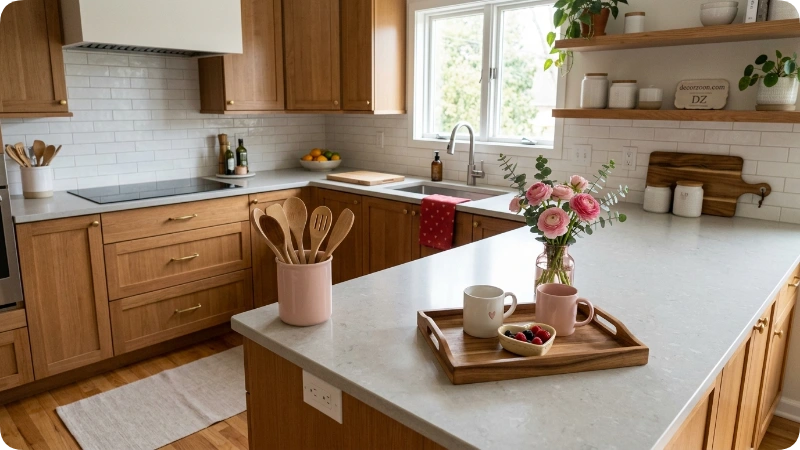
The kitchen does not need a complete makeover for Valentine’s Day. One or two well chosen accessories can bring the theme into the room without taking away valuable preparation space.
Start by clearing a small area of the counter. Place a red or pink ceramic utensil holder beside your regular cooking tools, or use a small vase of flowers on a section of the counter that is away from the stove and food preparation area.
A decorative tray can group a sugar bowl, mugs, or a small jar of wrapped treats. Choose accessories that you will continue to use after the holiday, such as a heart shaped serving dish, a red tea towel, or pink glassware.
If you have open shelves, display a few coordinated mugs or bowls rather than filling every shelf with Valentine’s Day objects. Repeating a color already present in your kitchen will make the decorations feel integrated.
Keep seasonal decor away from hot appliances, open flames, sinks where it could become wet, and areas used for chopping or preparing food. Avoid placing loose decorations near food that will be served.
Make a Small Valentine’s Day Centerpiece for Any Table
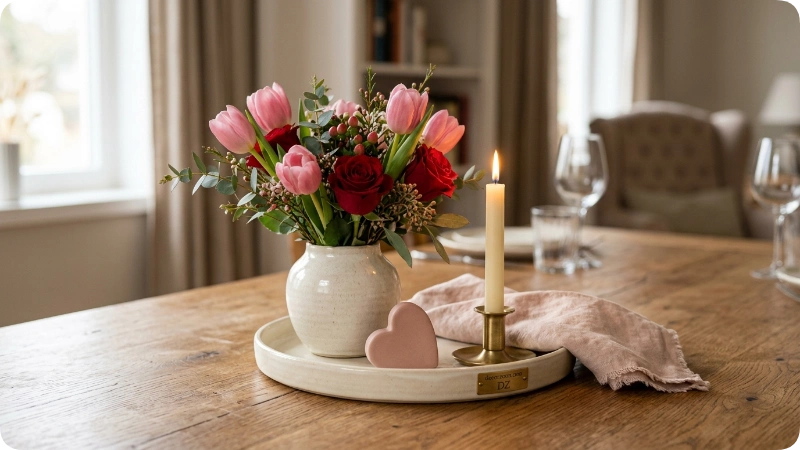
A centerpiece does not need to be large or expensive. In fact, a compact arrangement can be more useful for coffee tables, apartment dining tables, and narrow consoles.
Choose a base first. A shallow ceramic dish, small wooden tray, or simple fabric runner can define the display. Add a low vase with a few flowers, then introduce one or two supporting objects, such as a decorative heart, a small bowl, or a compact candleholder.
Use the scale of the table to guide your choices. A small round table may need only one vase and a single accent. A long dining table can accommodate several small arrangements spaced evenly along the center.
If the table is used for meals, make sure the centerpiece can be moved easily. Heavy arrangements and oversized decorations often become inconvenient when serving dishes arrive.
For a budget friendly version, use a vase you already own and buy a small bunch of flowers that can be divided among several containers. A few stems arranged thoughtfully can look more polished than a large, crowded bouquet.
Try Neutral Valentine’s Day Decor for a Subtle Look
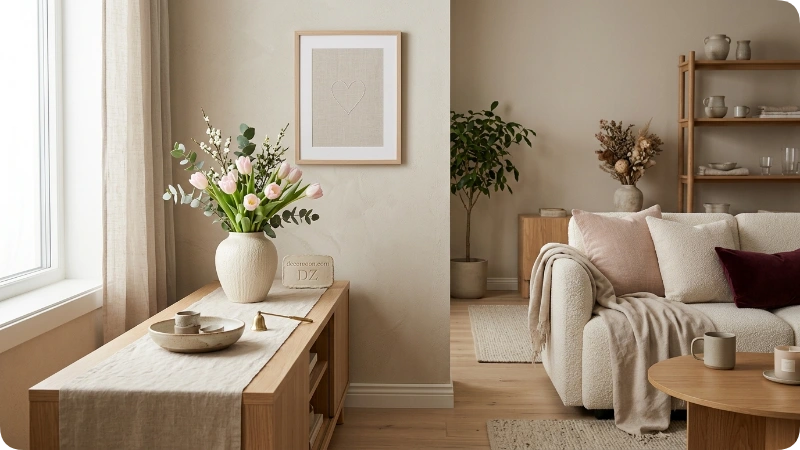
Not every home needs bright red decorations. Neutral Valentine’s Day decor can feel romantic while remaining consistent with minimalist, Scandinavian, modern, and natural interiors.
Build the display around ivory, beige, warm white, taupe, and soft blush. Add a few rounded shapes, delicate flowers, textured fabric, or a small heart motif to suggest the occasion without making it the dominant feature.
For example, place a cream ceramic vase filled with pink tulips on a wooden console. Add a linen runner and a small framed print in a muted color. The result feels seasonal because of the flowers and color accents, but the pieces can remain in place well into spring.
Natural materials are especially useful here. Wood, linen, cotton, stoneware, and woven baskets create visual texture without relying on shiny or highly saturated decorations.
If your room already contains many neutral shades, introduce contrast through one darker accent, such as burgundy or warm brown. This keeps the arrangement from appearing flat.
Neutral decorating is also a practical choice when you want to reuse most of your accessories throughout the year.
Make DIY Paper Decorations for an Affordable Update
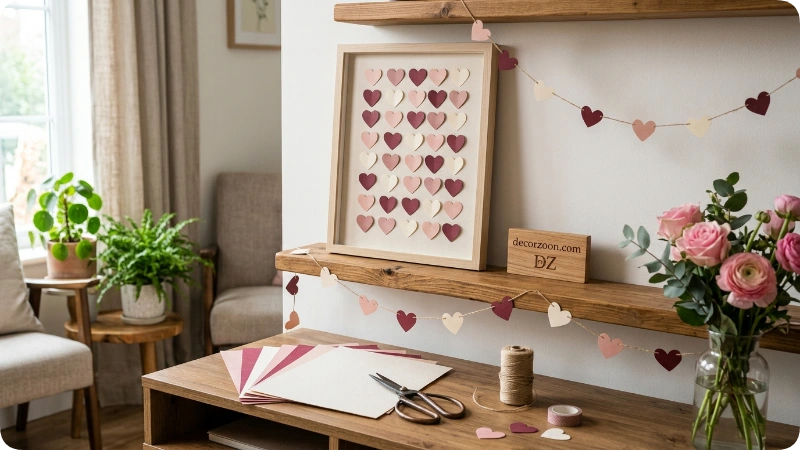
Paper decorations are inexpensive, customizable, and easy to adapt to the colors already in your home. They can be particularly useful for renters or anyone who wants to decorate without purchasing many permanent accessories.
Cut hearts from sturdy colored paper, fold them for a dimensional effect, or arrange them in a simple garland. Choose matte paper for a soft, understated finish or textured cardstock for a more substantial look.
You can also create a framed heart display. Arrange paper hearts in a simple grid on a sheet of cardstock, place it inside an existing frame, and display it on a console or shelf. Use colors that coordinate with your living room or bedroom.
For a more personal project, cut hearts from old greeting cards or leftover craft paper. Combining a few related shades can create a layered design without requiring additional supplies.
Use removable adhesive suitable for your wall surface if you want to display paper shapes directly on a wall. Test it in an inconspicuous area first and follow the manufacturer’s guidance to reduce the risk of paint damage.
Keep paper decorations away from candles, fireplaces, heaters, and cooking appliances. After the holiday, store reusable decorations flat to prevent creasing.
Create a Valentine’s Day Decor Display on a Budget
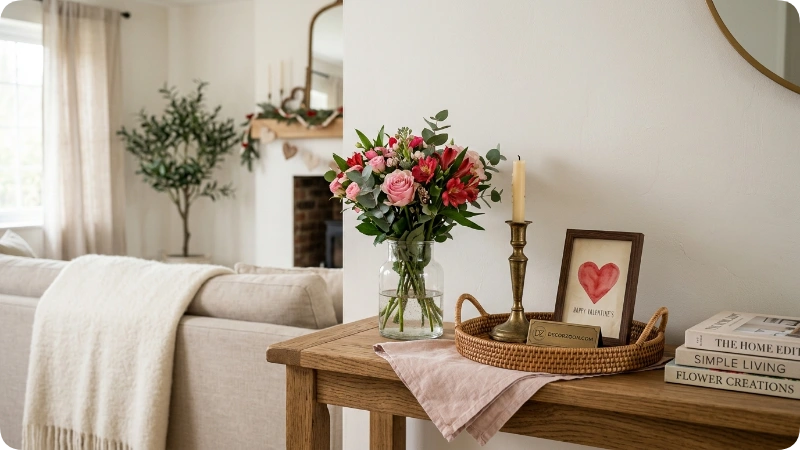
A festive home does not require a shopping trip for every room. The most cost effective approach is to reuse your existing accessories and purchase only the items that will make the biggest difference.
Start by checking what you already own. White vases, neutral pillow covers, framed artwork, trays, candleholders, and glass jars can all become part of a Valentine’s Day display with small changes.
Next, choose one focal point. A decorated dining table or living room console can provide a stronger visual result than spreading inexpensive decorations throughout the entire house.
Use fresh flowers selectively. A single bouquet can be divided among several small vases, while a few branches or reusable artificial stems can fill out an arrangement. If you choose artificial flowers, select colors and materials that work with your usual decor so they can be reused.
DIY paper hearts, fabric ribbons, and homemade framed prints can add personality at relatively low cost. Thrifted vases and secondhand candleholders are other options when you want more variety without buying a complete matching set.
Before purchasing anything, consider where it will be stored and whether you will use it again. Reusable pieces often offer better long term value than decorations designed for a single day.
Decorate a Small Apartment Without Creating Clutter
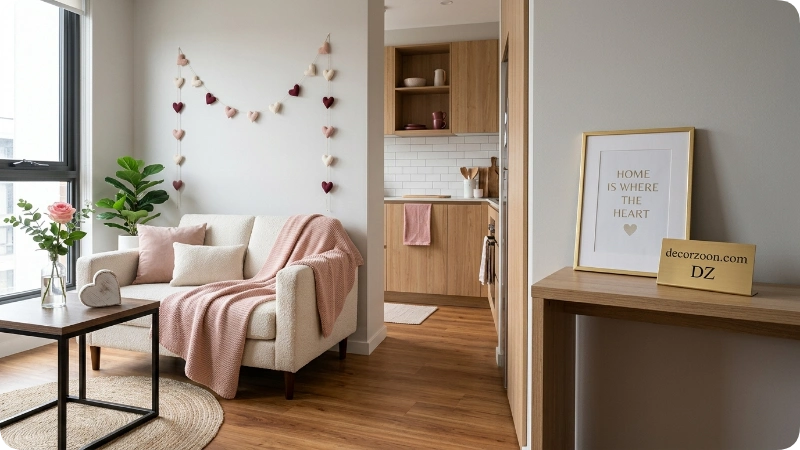
Small apartments benefit from focused decorating. Instead of trying to style every surface, choose one or two areas that are visible from the main living space.
A coffee table, windowsill, bedside table, or entryway shelf can be enough. Use a compact vase, a single framed print, and one seasonal accent rather than several small objects scattered across the room.
Vertical space can help when floor and tabletop space are limited. A removable wall hook can hold a lightweight wreath, while a narrow garland can decorate a shelf. Always check the suitability of the hanging method for the wall or door and your rental agreement.
Choose decorations that serve another purpose. A pink throw provides warmth, a red serving bowl remains useful for meals, and a small vase can hold flowers throughout the year.
Avoid oversized arrangements that obstruct walkways or block natural light. If your living room and kitchen share one open area, repeat the same two or three accent colors to connect the spaces without adding more objects.
When February 14 passes, remove the explicitly seasonal pieces and leave the neutral textiles, glassware, and flowers that still suit the room.
Choose Valentine’s Day Decorations You Can Reuse in Spring
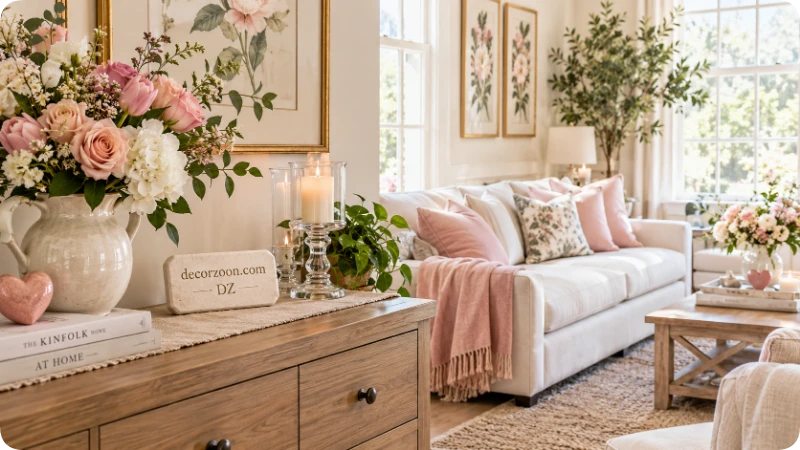
The most practical seasonal decorations are often those that do not need to be packed away immediately after the holiday. Choosing versatile colors and materials can help your home transition naturally from Valentine’s Day into spring.
Blush pillow covers, white ceramic vases, clear glass candleholders, linen runners, and botanical artwork are all easy to reuse. They can be paired with fresh flowers and lighter fabrics as the season changes.
If you buy heart shaped accessories, choose one or two that fit your usual style rather than a large collection of novelty pieces. A simple ceramic heart or subtle framed print may work on a shelf long after February, depending on your preferences.
Natural greenery and floral arrangements can also carry the look forward. Replace deep red flowers with white, pale pink, or other seasonal blooms while keeping the same vases and trays.
Storage matters when choosing decorations. Fold fabric items neatly, wrap fragile ornaments, and keep paper crafts flat in a dry container. Labeling the storage box makes it easier to find the pieces next year.
A reusable decorating plan saves money, reduces clutter, and makes it easier to refresh your home without starting from scratch each February.
How to Choose the Right Valentine’s Day Decor for Your Home
The best Valentine’s Day decorations are those that suit your room, budget, and preferred style. Before buying anything, consider the following:
- Match your existing colors. If your home features beige and cream, use blush, ivory, and warm metallic accents. If it has dark wood or dramatic furniture, burgundy and deeper red may feel more natural.
- Choose a focal point. Decide whether your main display will be the dining table, mantel, coffee table, or entryway. This helps prevent unnecessary purchases.
- Consider the scale. Use compact accessories in small rooms and larger arrangements only where there is enough space around them.
- Mix textures thoughtfully. Pair soft fabrics with smooth ceramics, natural wood, glass, or metal to create contrast without adding too many colors.
- Think about everyday use. Dining tables, kitchen counters, and entryways still need to function. Keep decorations out of the way of food preparation, serving, and movement.
- Prioritize reusable pieces. Choose accessories that can be styled for birthdays, spring decorating, dinner parties, or everyday use.
- Plan for safety. Secure hanging decorations, keep open flames away from fabrics and paper, and select pet safe flowers for your household.
You do not need to follow every decorating idea in this guide. Two or three coordinated changes can be enough to give your home a clear seasonal look.
FAQs
How can I decorate my home for Valentine’s Day?
You can decorate your home for Valentine’s Day with fresh flowers, red and pink cushions, heart garlands, decorative candles, and a romantic dining table. Choose two or three coordinating colors and focus on key areas, such as the living room, entryway, or dining table, to create a festive look without adding clutter.
What are the best Valentine’s Day decor ideas for a living room?
Some of the best Valentine’s Day decor ideas for a living room include adding blush or red pillow covers, draping a soft throw over the sofa, styling a coffee table with flowers, and decorating the mantel with candleholders. Choose accessories that complement your existing furniture and color scheme for a coordinated appearance.
How can I decorate for Valentine’s Day on a budget?
You can decorate for Valentine’s Day on a budget by reusing vases, trays, candleholders, and pillow covers you already own. Make paper heart garlands, create framed heart artwork, or divide one bouquet into several small arrangements. Focusing on one main display can also help you create an attractive look without buying decorations for every room.
What colors are best for Valentine’s Day home decor?
Red and pink are classic Valentine’s Day colors, but blush, ivory, burgundy, beige, and warm white also work beautifully. Pair one dominant color with a supporting shade and a neutral to keep the room balanced. For a subtle, modern look, use neutral colors with a few soft pink or burgundy accents.
How can I decorate a small apartment for Valentine’s Day?
In a small apartment, focus on one or two areas, such as a coffee table, windowsill, bedside table, or entryway console. Use a compact vase, a framed print, and one seasonal accent instead of spreading decorations across every surface. Reusable textiles and wall decorations can add a festive touch without taking up valuable floor space.
What are some easy DIY Valentine’s Day decorations?
Easy DIY Valentine’s Day decorations include paper heart garlands, framed heart artwork, fabric heart ornaments, and decorative arrangements made with existing vases or trays. You can use leftover craft paper, old greeting cards, or fabric scraps to create personalized decorations at a low cost. Keep paper and fabric crafts away from candles, fireplaces, and heaters.
How can I decorate a dining table for Valentine’s Day?
Start with an ivory tablecloth or a dusty pink runner, then add coordinated napkins, a low floral centerpiece, and candleholders if desired. Red, blush, and ivory create a classic romantic look, while burgundy and white offer a more dramatic style. Leave enough space for serving dishes and keep candles away from flowers, napkins, and other flammable materials.
What flowers are best for Valentine’s Day decorations?
Red roses are a traditional choice for Valentine’s Day, while pink tulips, white roses, carnations, and seasonal mixed flowers can create softer or more natural displays. Use a larger bouquet as a focal point and place individual stems in smaller vases around the home. If you have pets, check that your chosen flowers are safe for them.
How can I decorate my bedroom for Valentine’s Day?
Create a cozy Valentine’s Day bedroom with blush or muted red accent pillows, a soft throw, warm lighting, and a small vase of flowers on the bedside table. Keep your regular bedding and add just a few seasonal details. Simple colors and reusable accessories help the bedroom feel romantic without becoming overly decorated.
How can I make Valentine’s Day decorations look elegant instead of cluttered?
To create an elegant look, choose a limited color palette, use a few well-proportioned accessories, and leave open space around decorative displays. Combine different textures, such as linen, wood, glass, and ceramic, rather than adding too many competing colors or patterns. A single focal point, such as a floral centerpiece or styled mantel, can make a stronger impression than numerous small decorations.
How can I make Valentine’s Day decorations that I can reuse in spring?
Choose versatile items such as blush pillow covers, white ceramic vases, glass candleholders, linen table runners, and botanical artwork. After Valentine’s Day, remove heart-shaped ornaments and replace deep red flowers with lighter seasonal blooms. These simple changes allow many decorations to remain useful well into spring.
When should I take down Valentine’s Day decorations?
You can take down Valentine’s Day decorations after February 14 or whenever you want to refresh your home for the next season. Remove holiday-specific signs, heart garlands, and themed ornaments while keeping versatile accessories such as neutral textiles, vases, candleholders, and floral displays that suit your everyday decor.
Final Thoughts
Valentine’s Day decor ideas work best when they complement the home rather than compete with it. A carefully chosen color palette, a bouquet of flowers, a styled dining table, or a few soft textiles can create a warm atmosphere without filling every room with holiday decorations.
Start with the space you use most, select a small group of coordinating accessories, and pay attention to scale, placement, and everyday practicality. Whether you prefer traditional red and pink, understated neutrals, handmade paper hearts, or a romantic candlelit table, the goal is to create a setting that feels personal and comfortable.
Choose decorations you genuinely enjoy, reuse what you already own, and save the pieces that can transition into spring. With a little planning, your home can feel festive for Valentine’s Day without becoming cluttered or ex.

Sophia Bennett is a passionate Home Decor Enthusiast and Content Writer at DecorZoon.com. She shares well-researched content on home decor, interior design, decorating trends, DIY ideas, and space-styling inspiration, helping readers create beautiful, functional, and stylish living spaces. Through practical tips and creative insights, Sophia makes it easier for homeowners and decor lovers to transform their homes with confidence and style.