Blue and white Christmas decor offers a fresh and versatile way to decorate your home while keeping the holiday look polished and cohesive. Instead of relying on traditional red and green, this palette combines shades such as navy, icy blue, powder blue, and crisp white to create different moods, from classic and sophisticated to soft and winter inspired.
The challenge is keeping cool blue tones from making the room feel too cold or overly coordinated. Warm white lighting, evergreen branches, natural materials, and layered textures can solve that problem while adding depth to the display.
If you are decorating a Christmas tree, mantel, dining table, living room, bedroom, entryway, or a small apartment, blue and white can be adapted to your existing space. The ideas below focus on practical ways to choose shades, combine decorations, create focal points, and maintain a balanced Christmas look.
How to Choose a Blue and White Christmas Color Scheme
Before buying or arranging Christmas decorations, decide how you want the blue and white palette to behave in the room. The same two colors can create very different results depending on the shades, proportions, patterns, and materials you use.
Choose One Dominant Shade of Blue
Navy blue is a strong choice when you want the Christmas decor to feel traditional, elegant, or dramatic. Because navy has considerable visual weight, it works particularly well on ribbon, stockings, larger ornaments, and a few statement accessories.
Powder blue creates a softer effect and works well in bedrooms, neutral living rooms, and smaller spaces. Icy blue can support a winter inspired appearance, especially when combined with white branches, glass ornaments, and frosted details.
You do not need to use equal amounts of every shade. Choose one primary blue and let the other shades act as supporting accents. For example, navy can be the main color, powder blue can appear in smaller ornaments, and white can provide the largest visual foundation.
This approach prevents the palette from becoming confusing. It also makes it easier to reuse decorations from previous Christmas seasons without making the room look mismatched.
Use White to Create Visual Breathing Room
White should not simply be treated as another decorative color. It can act as the visual space that separates different blue elements.
On a Christmas tree, white ornaments can break up clusters of navy decorations. On a mantel, white stockings or white foliage can keep darker ribbon from becoming too heavy. On a dining table, a white tablecloth or plates can provide a clean foundation for blue napkins and glassware.
If your room already has white walls, furniture, or curtains, use those existing elements as part of the color scheme rather than adding unnecessary white decorations.
The goal is balance. Too much dark blue can make the display feel heavy, while too much plain white can make it feel unfinished. Combining different white textures ceramic, knitted fabric, glass, matte ornaments, and greenery can add depth without introducing additional colors.
Create a Blue and White Christmas Tree
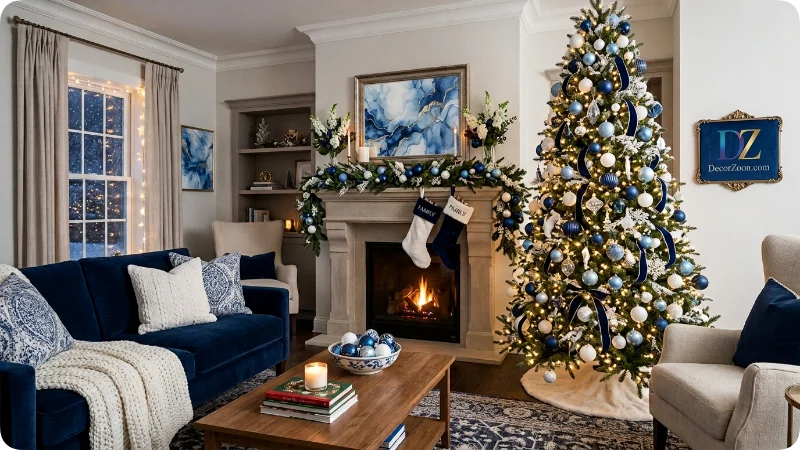
The Christmas tree can serve as the central focal point of a blue and white decorating scheme. Because the tree has considerable height and depth, it gives you room to combine different shades, textures, and ornament sizes while keeping the overall palette consistent.
Layer Blue and White Ornaments
Start with warm white lights before adding ornaments. Once the lights are in place, distribute larger white ornaments throughout the tree rather than keeping them all on the outside branches.
Next, add your dominant blue ornaments. Navy works well for larger baubles and statement pieces because it provides contrast against both the green branches and white decorations.
Smaller powder blue or icy blue ornaments can then fill visual gaps. This creates a gradual variation in color rather than making every ornament compete for attention.
Use different finishes as well. Matte ornaments absorb light, while glass and glossy ornaments reflect it. Ceramic pieces can introduce a more substantial texture, while fabric ornaments can make the tree feel softer.
Try to distribute the darker blue ornaments from top to bottom and from side to side. A tree can look unbalanced if all the darkest decorations are concentrated in one area.
Add Ribbon and Decorative Focal Pieces
Ribbon is useful because it creates movement across the tree and helps connect individual ornaments.
For a sophisticated appearance, navy velvet ribbon can be loosely folded through the branches. White ribbon can create a lighter effect, while blue and white patterned ribbon can introduce visual detail.
Do not feel that ribbon has to be wrapped evenly around the entire tree. Allowing sections to fall naturally can create a more relaxed composition.
You can also add a few larger focal decorations, such as white stars, snowflakes, blue floral picks, or patterned ornaments. Place these pieces strategically instead of using too many of them.
A tree generally looks more interesting when large, medium, and small decorations are mixed. The larger pieces establish the structure, medium ornaments create the main color distribution, and smaller pieces fill gaps.
Style a Blue and White Christmas Mantel
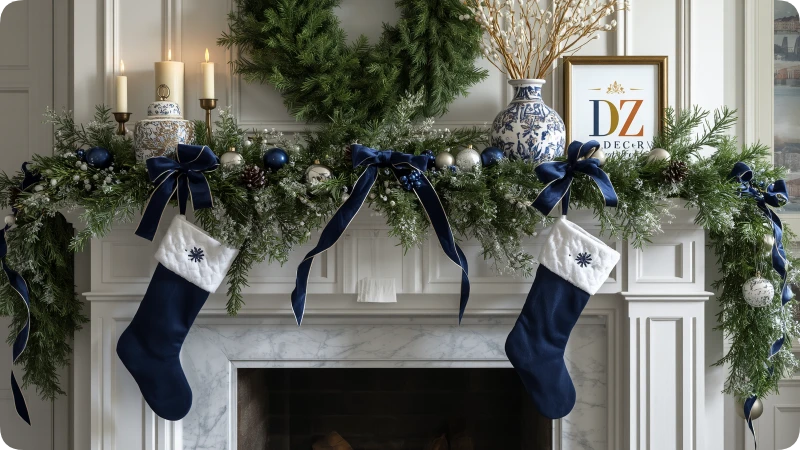
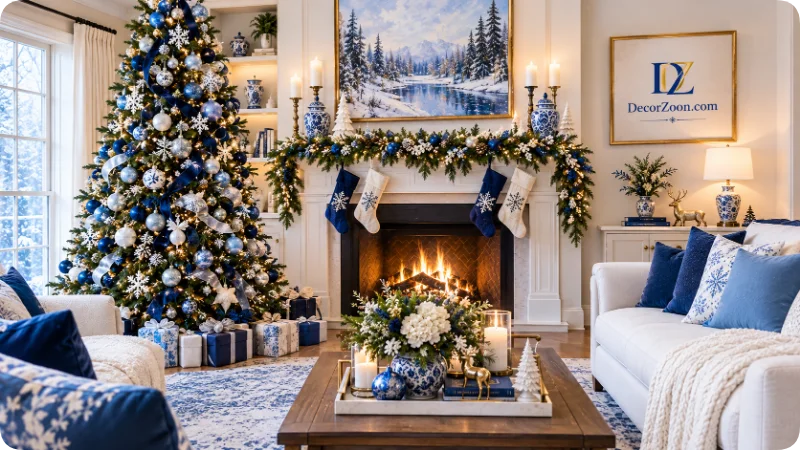
A mantel is an ideal location for building a layered blue and white Christmas display because its horizontal shape naturally supports greenery, ribbon, stockings, candles, and decorative accessories.
Build a Greenery Base
Start with an evergreen garland, faux greenery, or a frosted branch arrangement. Greenery provides a natural color between the cool blue and white elements.
Let some of the greenery remain visible rather than covering it completely with decorations. This gives the arrangement a more natural appearance.
If your mantel is narrow, use a thinner garland and avoid stacking too many objects in front of it. If you have a wide mantel, you can create more variation by placing taller objects at the sides and lower decorative pieces toward the middle.
White berries, pinecones, and frosted branches can add seasonal texture without introducing strong additional colors.
Add Blue Ribbon, Stockings, and White Accents
Once the greenery is established, introduce blue through ribbon, ornaments, stockings, or ceramic pieces.
Navy stockings can create a strong contrast against white walls or a pale mantel. White stockings can provide a softer appearance when the garland already contains plenty of blue.
A blue and white ceramic vase or ginger jar can act as a decorative anchor. Add a few small white ornaments around it rather than surrounding the entire object with decorations.
Warm white candles or battery operated candles can provide another layer of light. Keep candles away from greenery and other combustible materials, and choose safer alternatives where children or pets can easily reach the mantel.
The finished arrangement should have variation in height without becoming crowded. Leaving small areas of the mantel visible can make the whole display easier to appreciate.
Add Blue and White Textiles to the Living Room
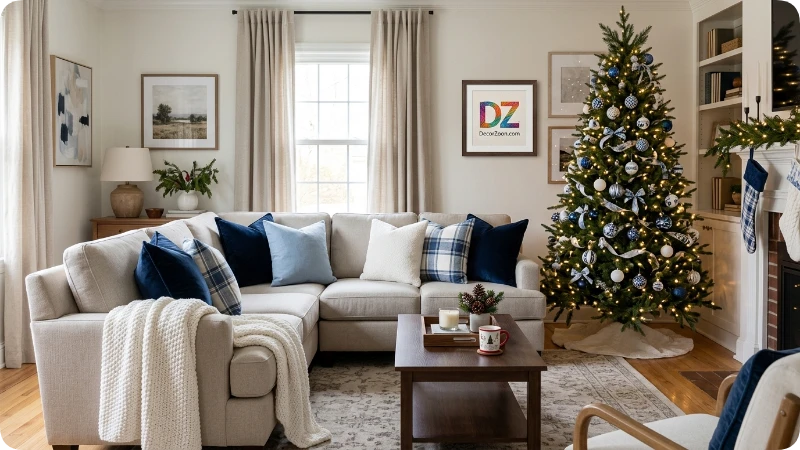
Textiles provide an easy way to introduce Christmas color without making permanent changes to the room. This is particularly useful if your existing furniture is neutral or if you are decorating a rental.
Combine Different Blue and White Fabrics
Start with two or three pillow styles instead of covering the entire sofa in matching Christmas patterns.
A navy velvet pillow can provide depth, while a white boucle or knitted pillow introduces texture. A blue and white plaid or patterned pillow can connect the colors and add visual interest.
For a softer room, use powder blue rather than navy. In a room with dark furniture, navy can create continuity, but it may need to be balanced with more white.
A white or cream throw can be draped over the arm of a sofa or chair. If the room already contains plenty of white, a blue throw can become the stronger seasonal accent.
Keep Everyday Decor in the Composition
You do not need to remove everything from the room before decorating for Christmas.
Existing neutral rugs, curtains, furniture, artwork, and lamps can provide visual breathing room. Seasonal accessories should be layered around them rather than replacing the entire room.
For example, a neutral sofa can remain unchanged while blue and white pillows, a knitted throw, a small tabletop tree, and a few evergreen branches introduce the holiday palette.
This approach is also practical because fewer seasonal items are needed. Instead of buying a complete set of Christmas furniture and accessories, you can change a handful of smaller pieces each year.
Design a Blue and White Christmas Tablescape
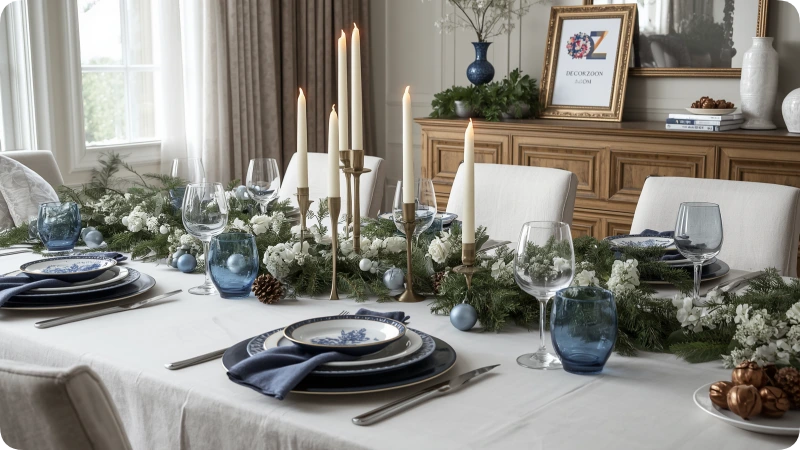
A blue and white tables cape can make the dining area feel connected to the rest of the holiday decor. The most useful approach is to establish a simple foundation and then layer the color through dinnerware, textiles, greenery, and a restrained centerpiece.
Start With White as the Foundation
White plates, a white runner, linen napkins, or neutral placemats can create a clean base.
Once the foundation is established, use blue for the pieces that need to attract attention. Navy napkins, blue glasses, patterned plates, or blue and white serving pieces can provide contrast without overwhelming the table.
If your dining room already has a blue color scheme, you may need only a few white Christmas accents to connect the table to the rest of the room.
Avoid using several competing patterns. If the plates are strongly patterned, keep the napkins and centerpiece relatively simple.
Create a Practical Centerpiece
A centerpiece should look attractive without interfering with the table’s primary purpose.
Combine evergreen branches with white flowers, blue ornaments, pinecones, or small candles. For a long table, repeat a few small arrangements instead of creating one oversized centerpiece.
Keep the height low enough that guests can comfortably see across the table. Decorative objects that block eye level views may look impressive in photographs but become inconvenient during an actual meal.
You can also repeat one element from the Christmas tree, such as the same blue ornament style or ribbon. This small connection helps the dining area feel like part of the same decorating scheme.
Use Blue and White Ceramic Decor Throughout the Home
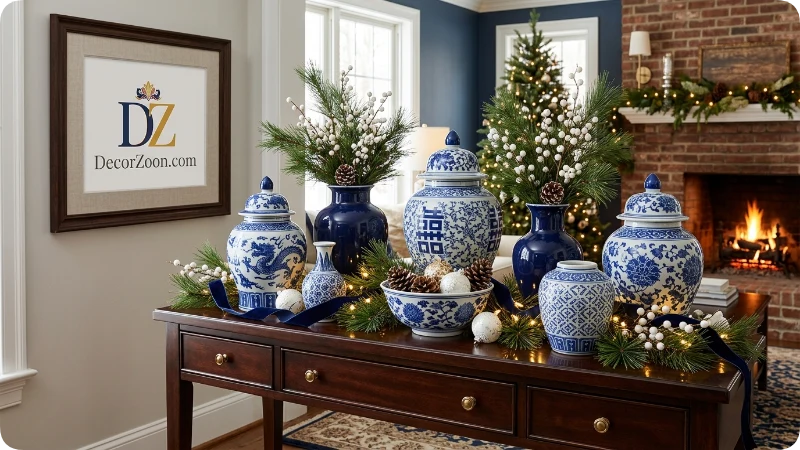
Blue and white ceramic pieces can bridge everyday decorating and Christmas styling. They are especially useful when you want seasonal decor that does not have to be packed away immediately after the holiday.
Decorate With Ginger Jars and Vases
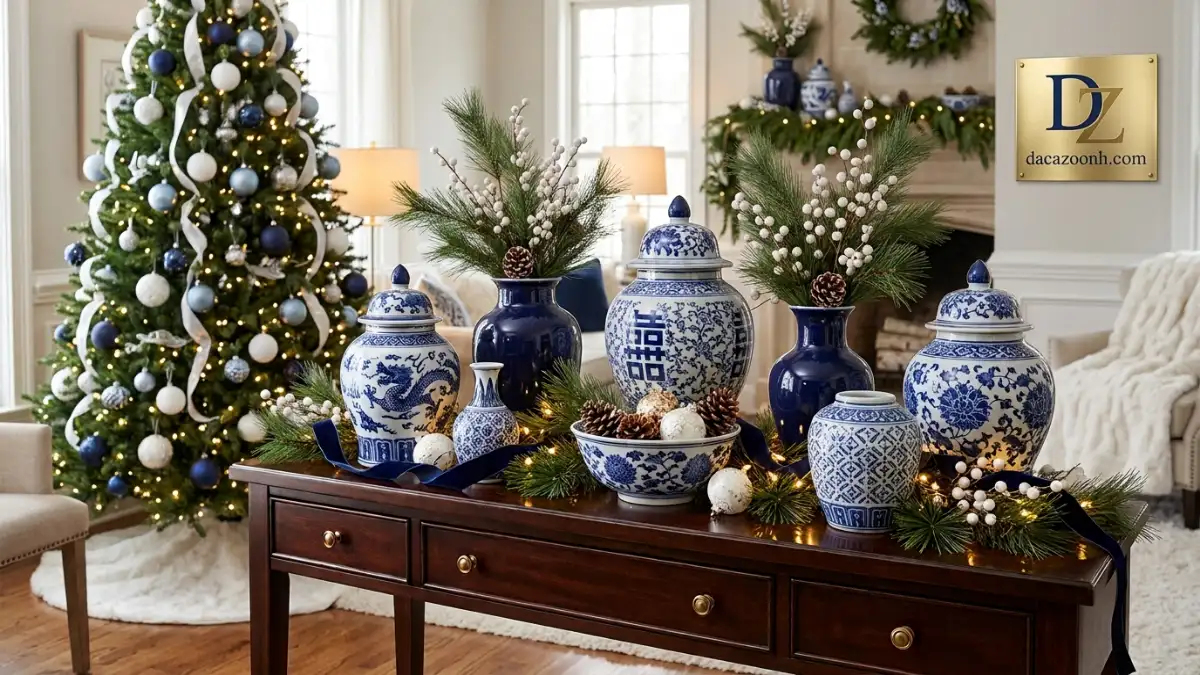
A blue and white ginger jar can become a focal point on a console, sideboard, bookshelf, or mantel. Add evergreen branches, white stems, or a few seasonal picks to give the piece a Christmas connection.
A smaller ceramic vase can work on a bedside table or bathroom counter. You can also use a decorative bowl to hold small ornaments, pinecones, or wrapped seasonal treats.
Because these pieces already contain the two main colors, they can make the overall palette feel intentional without requiring many additional decorations.
Choose the size according to the furniture. A very large ceramic piece on a narrow shelf can make the arrangement feel cramped, while several tiny objects may disappear on a large sideboard.
Mix Patterned and Solid Pieces
Patterned blue and white ceramics provide visual detail, but they should be balanced with simpler objects.
If you use an intricate patterned vase, pair it with solid white ornaments or a plain blue candleholder. This gives the eye a place to rest.
For a traditional interior, more detailed ceramic patterns can fit naturally with the surrounding furniture. For a modern room, choose cleaner silhouettes and fewer decorative details.
The aim is to create repetition without making every item look identical.
Use Warm White Lighting to Balance Cool Blue
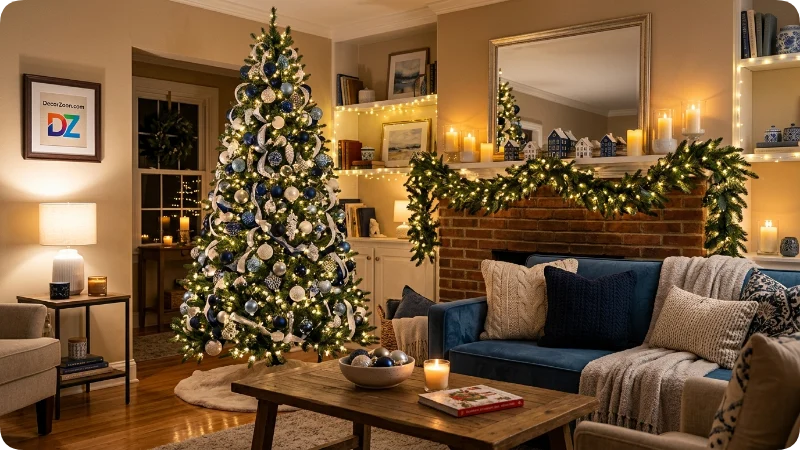
Blue and white decorations can sometimes appear visually cool, especially when pale blue and bright white dominate the room. Lighting can help introduce the warmth associated with Christmas decorating.
Choose Warm White Christmas Lights
Warm white lights work well on Christmas trees, mantels, stair railings, windows, and entryways.
Their warmer appearance can soften navy, icy blue, silver, and white decorations. They also reflect nicely from glass and metallic ornaments.
Try to keep the lighting temperature consistent throughout the main decorating area. Mixing dramatically different lighting colors can make an otherwise coordinated palette look less cohesive.
Add Small Points of Light
You do not need to rely exclusively on the Christmas tree.
A small lamp, lantern, LED candle, or string of micro lights can create additional points of warmth around the room.
Battery operated lighting can be useful on shelves, mantels, and tables where electrical outlets are inconvenient.
For any candle or heat producing light, keep the item away from fabric, greenery, paper decorations, and other flammable materials. Use flameless alternatives where appropriate.
Decorate the Entryway With Blue and White Christmas Accents
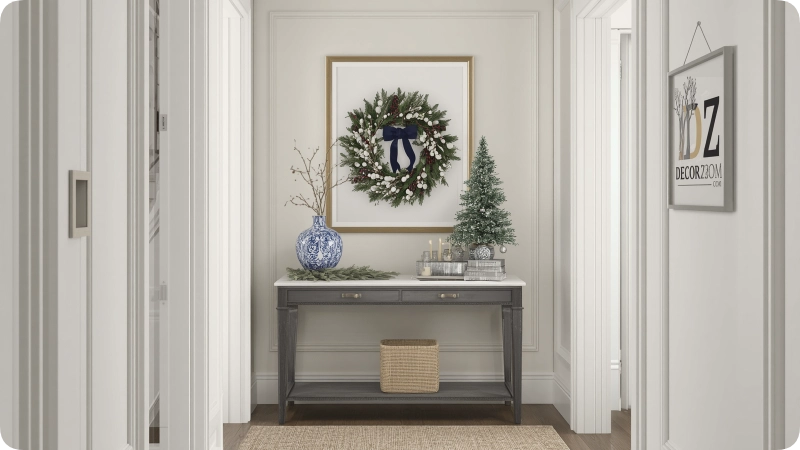
The entryway can introduce the color scheme without requiring a large amount of decoration.
Create a Blue and White Wreath
A wreath combining evergreen branches, white berries, navy ribbon, pinecones, and white ornaments can establish the palette immediately.
For an understated look, keep the wreath mostly natural and use blue only in the ribbon or a few small decorations.
For a stronger look, use several blue ornaments distributed around the wreath so the color does not appear concentrated in one location.
Make sure the wreath is securely attached and does not interfere with the door’s movement.
Style a Small Console Display
If you have an entryway console, use one taller object, one medium object, and a few smaller accents.
A blue and white vase can provide height, while a small Christmas tree or bowl can create a secondary focal point. Add greenery to connect the arrangement to the rest of the home.
Keep the walkway clear. Entryways are high traffic areas, so decorative objects should not protrude into walking space.
For very narrow spaces, prioritize a wall mounted wreath or vertical decoration instead of filling the floor or console with accessories.
Mix Different Blue Shades for More Depth
A blue and white Christmas palette does not have to rely on one exact shade of blue. Related shades can make a large display feel more layered.
Combine Dark, Medium, and Light Blues
Use navy for the strongest visual elements, such as ribbon or large ornaments. Add medium blue through patterned decorations and use powder or icy blue for smaller accents.
This creates a visual hierarchy.
For example, a green Christmas tree could have navy ribbon, white flowers, powder blue ornaments, and a handful of icy glass pieces.
The colors should appear throughout the arrangement rather than being divided into separate sections.
Use Patterns Carefully
Patterns can add character to a blue and white display. Stripes, checks, botanical motifs, snowflakes, and traditional decorative patterns can all work.
However, patterns should support the color scheme rather than becoming the main focus of every object.
If the tree has patterned ornaments, use more solid color decorations around them. If the pillows already contain several patterns, keep the throw and nearby accessories relatively simple.
Add Silver and Natural Materials for Contrast
Blue and white can be supported by materials that add warmth, sparkle, or texture.
Use Silver for Subtle Sparkle
Silver ornaments, candleholders, glass accessories, and small decorative accents can complement the cool side of blue and white.
Use silver selectively. A few reflective pieces can catch the warm Christmas lights and create sparkle without changing the main palette.
If you use too much silver, the room may begin to look metallic rather than soft and seasonal.
Bring in Wood and Greenery
Natural wood can make blue and white feel more relaxed. Pinecones, woven baskets, wooden ornaments, and natural branches can add texture.
Evergreen greenery is particularly useful because it introduces a natural middle tone between the cool decorations and the rest of the room.
For a casual Christmas style, combine navy, white, greenery, and light wood.
For a more formal look, reduce the natural materials and use more glass, silver, velvet, and polished ceramic.
Carry Blue and White Christmas Decor Into the Bedroom
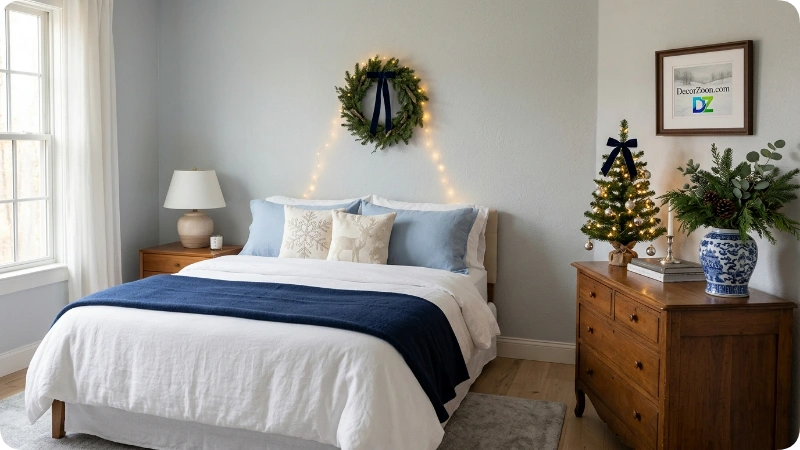
The bedroom usually benefits from a lighter decorating approach than the main entertaining spaces.
Add Seasonal Blue and White Bedding
White bedding provides a simple foundation for a few blue accents.
A navy or powder blue throw at the end of the bed can establish the color without requiring new bedding. Add one or two seasonal pillows if the existing arrangement allows them.
If the bedroom already contains blue curtains or an upholstered headboard, repeat that shade rather than introducing another unrelated blue.
Use Small Christmas Accents
A miniature Christmas tree on a dresser, a blue and white vase with greenery, or a small wreath can provide enough seasonal character.
Avoid filling the nightstands and dresser with decorations. Bedrooms are easier to keep comfortable when surfaces remain functional.
A few carefully selected pieces will usually feel more appropriate than a complete Christmas display.
Make Blue and White Christmas Decor Work in Small Spaces
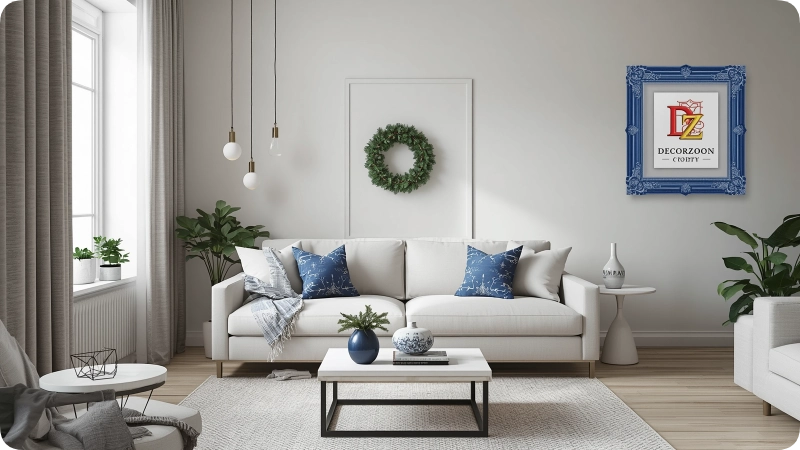
Small homes and apartments can use this palette effectively by concentrating the decorating effort on one or two focal points.
Choose One Main Focal Area
A tabletop Christmas tree, narrow mantel, console, window, or small entryway can become the main seasonal display.
Use white as the foundation and introduce blue through ribbon, ornaments, pillows, or ceramic pieces.
This approach prevents the room from becoming crowded while still creating a clear decorating theme.
Use Vertical and Reusable Decor
Wall mounted wreaths, narrow garlands, hanging ornaments, and compact tabletop trees can provide visual impact without taking up much floor space.
Blue and white ceramics are particularly useful for small homes because many pieces can remain in use outside the Christmas season.
Choose decorations that can serve more than one purpose. A blue and white vase can hold Christmas greenery in December and ordinary flowers during another season.
How to Keep Blue and White Christmas Decor From Looking Too Cold

The combination of blue and white naturally leans toward the cooler side of the color spectrum, so balance is important.
Start with warm white lighting. Then introduce greenery to provide a natural color between the blue decorations and the rest of the room.
Texture also makes a major difference. Velvet ribbon, knitted blankets, boucle pillows, woven baskets, wood, matte ceramic, and soft fabrics can make the room feel warmer without changing the color scheme.
You can also mix finishes. Glossy glass and silver reflect Christmas lights, while matte ornaments, ceramic, and fabric absorb light. The contrast gives the display more dimension.
If your room still feels too cool, add a small amount of natural wood or warm neutral fabric instead of introducing several new colors.
The objective is not to eliminate the cool quality of blue. That quality is part of what makes the palette distinctive. Instead, balance it with materials and lighting that make the room comfortable.
Blue and White Christmas Decor Mistakes to Avoid
Using Too Much Dark Blue
Navy is visually strong, so using it on every ornament, pillow, ribbon, and accessory can make the room feel heavy.
Balance dark blue with white, pale blue, greenery, and neutral textures.
Mixing Too Many Blue Shades
Not every blue works equally well together. Choose one dominant blue and one or two supporting shades.
This gives the display enough variation without losing its identity.
Ignoring Existing Colors
Look at your walls, furniture, curtains, rugs, and artwork before choosing decorations.
A room with navy furniture may need less navy Christmas decor. A neutral room can handle a stronger blue accent.
Making Every Decoration Match
Cohesion comes from repeating colors and materials, not from buying every item from the same collection.
Mix ornament sizes, finishes, patterns, and textures while maintaining the blue and white foundation.
Using Only Shiny Decorations
Glossy decorations reflect light, but an entire display of shiny surfaces can feel repetitive.
Mix glass with matte ornaments, velvet ribbon, ceramic, wood, knitted textiles, and natural greenery.
Forgetting Practical Space
Decor should not block walkways, cover necessary table space, or create unstable arrangements.
This is especially important around stairs, entrances, dining tables, and homes with children or pets.
FAQs
Is blue and white a good Christmas color combination?
Yes. Blue and white can work with traditional, classic, modern, winter inspired, and relaxed Christmas decorating styles. The final appearance depends on the shades of blue, the amount of white, lighting, materials, and supporting accents.
What colors go well with blue and white Christmas decor?
Silver, greenery, natural wood, cream, and other neutral tones can work well with blue and white. A small amount of gold can also add warmth if you want the overall display to feel less cool.
What shade of blue looks best for Christmas decorations?
Navy works well for a classic and sophisticated look, while powder blue creates a softer appearance. Icy blue is useful for a winter inspired style. Combining a darker blue with a lighter shade can add depth.
How do you make blue and white Christmas decor cozy?
Use warm white lights, evergreen branches, velvet ribbon, knitted textiles, wood accents, candles or flameless lights, and varied textures. These elements add warmth without changing the main color palette.
Can blue and white Christmas decor work with a green Christmas tree?
Yes. A traditional green tree provides a natural background for blue and white ornaments. Navy ribbon, white ornaments, warm white lights, and lighter blue accents can create a balanced arrangement.
Can blue and white Christmas decor work in a small apartment?
Yes. Concentrate the theme on one or two areas, such as a tabletop tree, console, window, or entryway. Use compact decorations and reusable blue and white accessories to avoid overcrowding the room.
Conclusion
Blue and white Christmas decor gives you plenty of flexibility while maintaining a clear and recognizable holiday palette. The easiest way to make the combination work is to choose one dominant blue, use white as the foundation, and repeat those colors across several important areas rather than decorating every surface.
A blue and white Christmas tree can become the main focal point, while coordinated accents on the mantel, dining table, living room, bedroom, and entryway connect the rest of the home. Warm white lighting, evergreen branches, natural wood, velvet, knitted fabrics, ceramic, and subtle silver details can add warmth and texture to the cooler color scheme.
If you prefer deep navy and crisp white or soft powder blue and icy white, thoughtful proportions, varied materials, and practical placement will help the decorations look coordinated without becoming repetitive.

Sophia Bennett is a passionate Home Decor Enthusiast and Content Writer at DecorZoon.com. She shares well-researched content on home decor, interior design, decorating trends, DIY ideas, and space-styling inspiration, helping readers create beautiful, functional, and stylish living spaces. Through practical tips and creative insights, Sophia makes it easier for homeowners and decor lovers to transform their homes with confidence and style.